
 Buy Crypto
- Markets
 Futures
- Spot
- Copy Trade
- Earn
- More
What is Canton Network: Pioneering Institutional Crypto with Canton Coin (CC) and Privacy-Preserving Blockchain Innovation

Picture a world where the ironclad vaults of traditional finance open to blockchain’s relentless 24/7 pulse—without the usual chaos of exposed data or regulatory nightmares. That’s the reality Canton Network is building. Launched in May 2023 by a powerhouse consortium including Goldman Sachs, Microsoft, and Deutsche Bank, this public-yet-permissioned Layer 1 isn’t another speculative side project. It’s the settlement layer where real-world assets (RWAs) and stablecoins finally live and breathe on-chain. As of late 2025, with Canton Coin (CC) trading near $0.13 and daily transactions topping 600,000, Canton Network is quietly closing the gap between Wall Street caution and crypto speed.
What Makes Canton Network the Institutional Crypto Standard?
Canton Network runs on a “network of networks” architecture: each institution keeps its own private sub-ledger, syncing seamlessly via a shared global synchronizer. Unlike typical public chains that broadcast every transaction to every node—inviting compliance disasters—data here flows encrypted and only to parties specified in the smart contract. Sensitive operations, like the $280 billion daily U.S. Treasury repo market, remain confidential yet fully auditable.
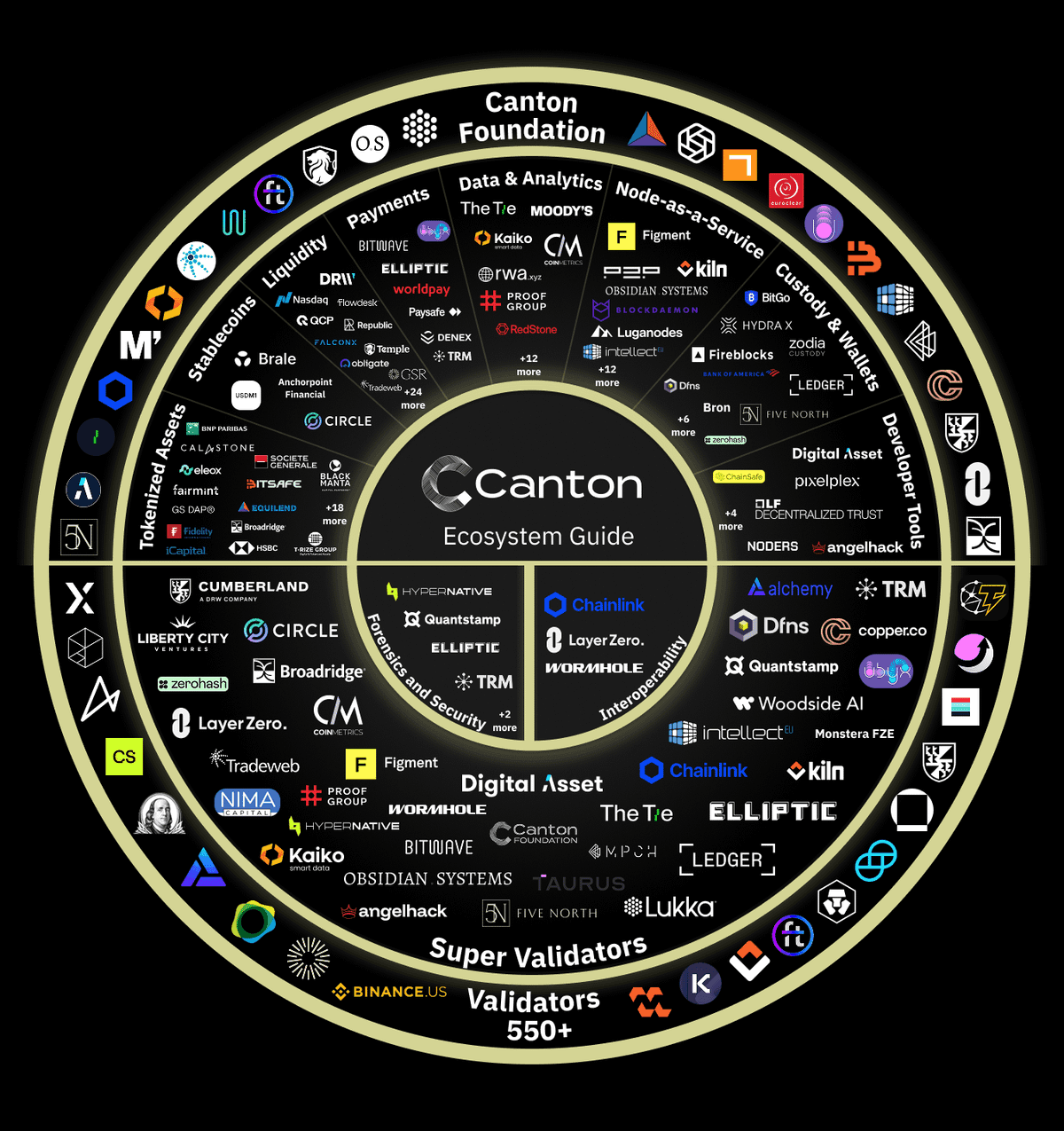
Think of it as a secure diplomatic summit: participants share only what’s required for the deal, but the entire agreement locks in atomically across borders. Governed by the independent Global Synchronizer Foundation under the Linux Foundation, the network now boasts over 600 validators and 31 super validators. Monthly transaction volume exceeds 15 million, with more than $6 trillion in assets tokenized. Major U.S. exchanges—Binance U.S., Crypto.com, Gemini, and Kraken—are fully integrated, turning institutional adoption into an unstoppable trend.
The Privacy Advantage: Why Canton Network Crypto Stands Apart
While most blockchains scream transparency, Canton whispers. Its synchronizers distribute encrypted messages only to relevant parties, enabling real-time settlement across bonds, treasuries, and even tokenized real estate—without the silos that trap capital in legacy systems. Just this week, Franklin Templeton’s Benji Token went live on the network, proving how Canton unlocks collateral mobility while staying MiCA-compliant.
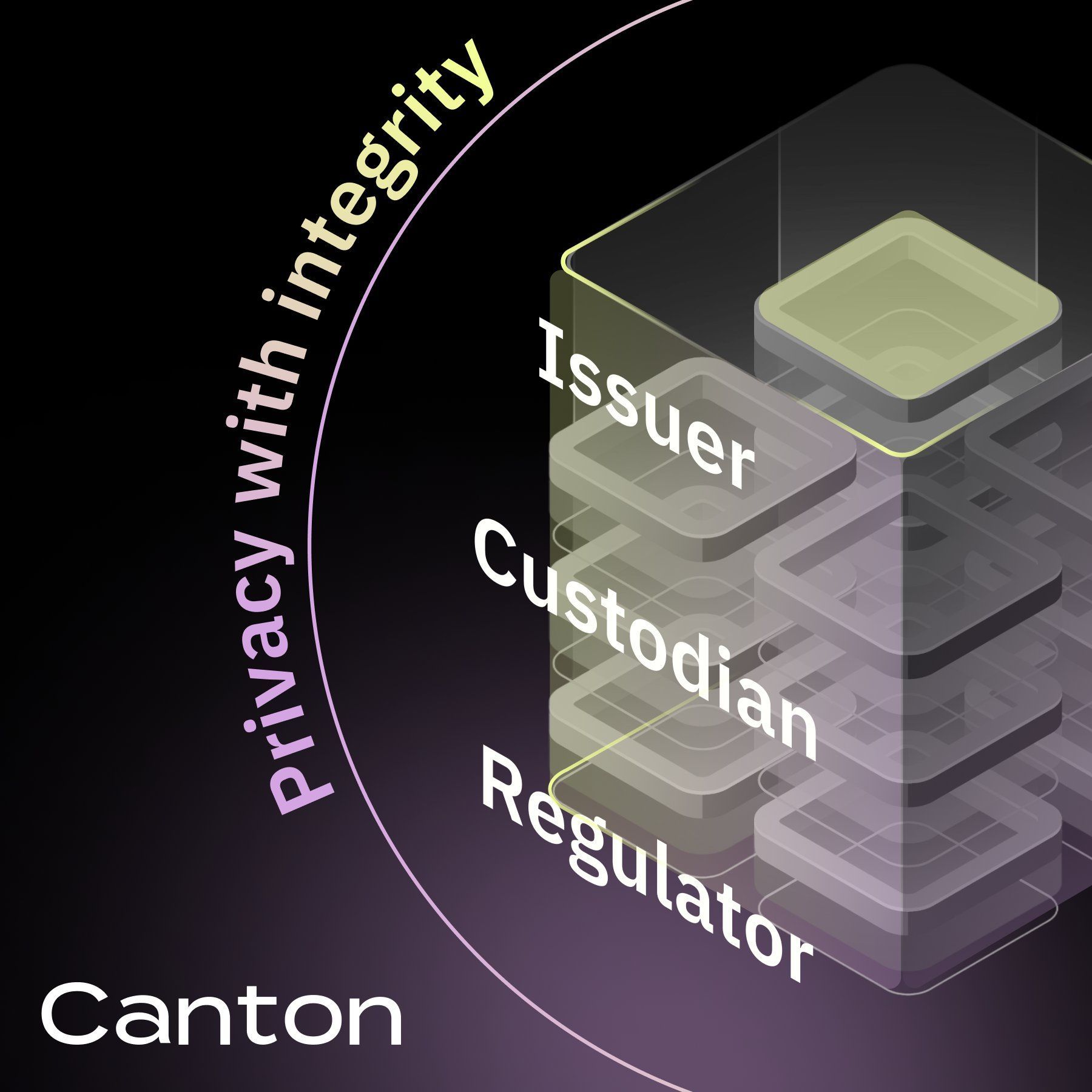
This rare balance of decentralization and control makes Canton Network coin the backbone of RWAs. Assets aren’t just “on-chain”—they’re programmable, reusable, and regulator-friendly, delivering a capital efficiency revolution already powering institutional DeFi pilots.
Inside Canton Coin: The CC Token Powering a Fair, Utility-First Economy
Canton Coin (CC) isn’t built for hype—it’s engineered for real work. Outlined in the Canton Network whitepaper, CC is the native payment and incentive layer that rewards actual network contribution, not speculation. No pre-sales. No team allocations. No VC lockups. Tokens are minted only through verifiable utility: running validators, deploying applications, or driving traffic.
Every 10 minutes, in structured mining rounds, stakeholders earn redeemable coupons based on liveness, validation, and app activity. Pay gas in CC? It’s automatically burned. The more the network is used, the tighter supply becomes—creating a self-regulating deflationary loop tied directly to real economic activity. With 22 billion CC in circulation and a 100 billion cap over the first decade (followed by 2.5 billion annually), this model echoes Zcash’s privacy legacy but supercharges it with institutional-grade infrastructure.
CC Coin Tokenomics Breakdown: Minting, Burning, and Long-Term Alignment
The minting curve is deliberately bootstrapped: early years favor super validators to fund backbone infrastructure, but by year five, regular validators dominate rewards. The split starts 50/50 between infrastructure and applications, then shifts to 75% for app providers—ensuring builders, not just operators, thrive. External parties can delegate minting via AmuletRules_Transfer, but unredeemed rewards expire, keeping the system merit-driven and lean.
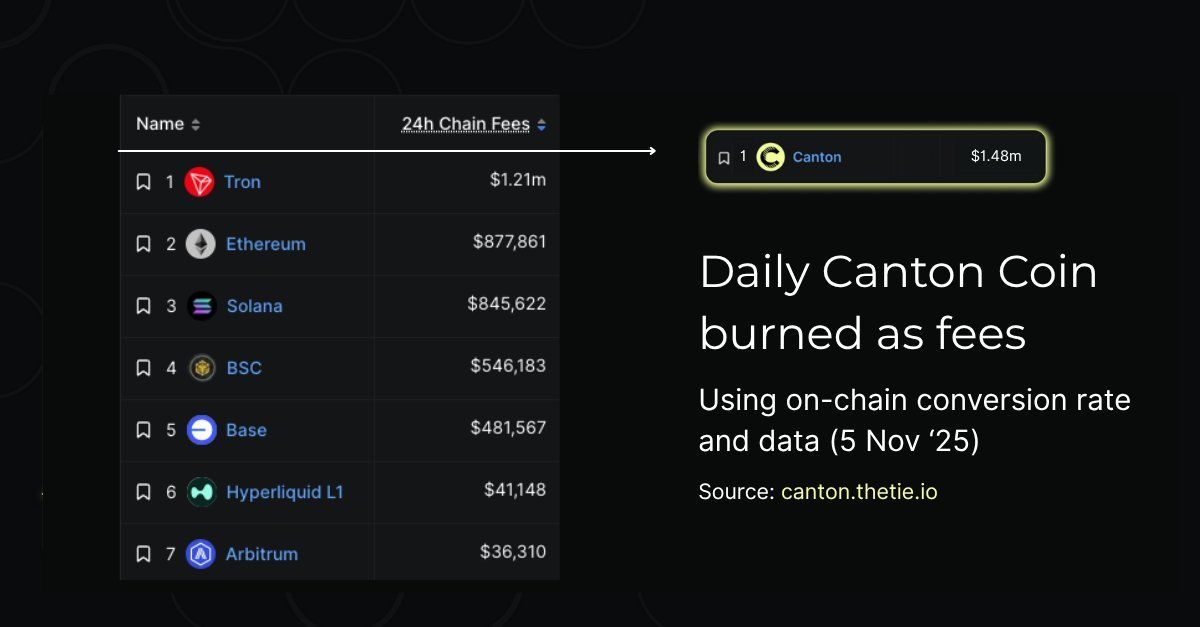
This design kills speculation at the root. Despite a post-listing dip to $0.126, CC sees $80 million in daily volume across top exchanges. Recent $540 million treasury commitments—including Tharimmune’s strategic pivot—signal growing conviction in CC’s long-term value, backed by $1.48 million in daily fees and real RWA throughput.
Canton Network’s 2025 Breakout: Listings, Integrations, and Real-World Traction
This year has been explosive for Canton Network crypto. CC launched October 31 at $0.11, rapidly listing on Gate.io, Bybit (via Launchpool with 355% APR staking), MEXC (zero-fee trading through November 24), and now WEEX—offering deep liquidity, tight spreads, and a seamless mobile experience for traders worldwide. Whether you’re spot trading CC/USDT or staking for yield, WEEX delivers institutional-grade execution with retail-friendly simplicity, making it a go-to platform for accessing Canton Network coin alongside KuCoin, Phemex, and others.
Network momentum is undeniable: Talos joined as a super validator this month, Chainlink’s SCALE integration unlocked oracle and cross-chain functionality across 22+ networks, and Broadridge now processes $4 trillion in monthly ledger repos on-chain. Copper Research reports over 500,000 daily transactions—proof that Canton isn’t promising the future; it’s running it.
On X, the conversation is electric. Threads dissect the $500 million treasury round from DRW and Liberty City Ventures. AMAs spotlight privacy’s role in institutional DeFi. One viral post sums it up: “Canton now has 598 validators and growing—this is what real on-chain adoption looks like.”
Why is Canton Network the Settlement Layer for RealFi?
Compare Canton to meme-driven chains chasing viral pumps, and its strength is clear: while others tokenize hype, Canton tokenizes reality—national debts, repurchase agreements, precious metals—making them liquid, auditable, and programmable. Its BFT consensus with privacy scales without gas wars. Partnerships like Nasdaq’s listings and HSBC’s pilots underscore a shift from DeFi speculation to RealFi—real finance, on-chain.
With a $4.5 billion market cap and year-end price targets between $0.08 and $0.17, CC’s upside isn’t driven by unlocks—it’s fueled by burn mechanics that reward usage. As stablecoins become settlement engines and RWAs go programmable, Canton Network coin isn’t just bridging TradFi and crypto—it’s fusing them.
This is the infrastructure where the future of global capital markets is being built, one private, atomic sync at a time.
Frequently Asked Questions (FAQ)
- What is Canton Coin (CC), and how is it different from other crypto tokens?
Canton Coin is the native utility token of Canton Network, designed to reward real network activity—validation, app deployment, traffic—rather than speculation. With no pre-mine or VC allocation, CC is minted only through contribution, and fees paid in CC are burned, creating a supply model tied directly to usage and long-term ecosystem health.
- Where can I buy and trade Canton Network coin (CC) right now?
CC is live on WEEX, KuCoin, Phemex, Gate.io, Bybit, and MEXC with USDT and USDC pairs. WEEX stands out for fast deposits, low-latency trading, and strong mobile support—ideal for active traders. Always use secure wallets and enable 2FA. DYOR before investing.
- What’s the outlook for Canton Network crypto in 2026 and beyond?
With 600+ validators, $6T in tokenized assets, and growing integrations (Chainlink, Talos, Franklin Templeton), analysts expect CC to rise as RWAs go mainstream. If repo volumes sustain $280B daily, valuation could double or more by 2027—positioning Canton as the default settlement layer for institutional blockchain.
You may also like
How to Invest in Bitcoin (BTC) 2026: 2 Best Ways to Buy Bitcoin
Bitcoin hit $99,500 in November 2024 — just shy of the historic $100,000 mark. That is a 150%+ increase from its January price of around $40,000.
But here is the real story: Bitcoin is no longer just for crypto enthusiasts. Institutions like BlackRock, Fidelity, and MicroStrategy are piling in. Countries like Bhutan and El Salvador are holding Bitcoin as a strategic reserve asset. And with Bitcoin ETFs now managing over $100 billion in assets, regulated investment vehicles have opened the door for everyday investors.
So, how do you invest in Bitcoin in 2026? This guide walks you through five practical methods — from beginner-friendly exchanges to advanced trading platforms. No matter your experience level, you will find a way that fits your comfort zone and financial goals.
What is Bitcoin(BTC)?Launched in 2009, Bitcoin is a cryptocurrency that enables peer-to-peer transactions without banks or governments. Unlike traditional currencies, it operates on a decentralized network of computers worldwide.
Transactions are verified through cryptography and recorded on a public blockchain ledger. This open system allows anyone to participate in Bitcoin's borderless financial ecosystem.
Why Is Everyone Talking About Bitcoin Right Now?Before we dive into the "how," let us quickly cover the "why."
Institutional adoption is the main driver.
MicroStrategy now holds over 386,000 BTC (including 134,480 BTC bought in November 2024 alone — worth ~$12.5 billion)BlackRock and Fidelity have launched successful Bitcoin ETFs, attracting billions in inflowsBhutan holds 13,000+ BTC (~$1.3 billion) as part of its national reservesThese are not retail degens. These are sovereign nations and Wall Street giants.
Add Bitcoin's built-in scarcity (only 21 million coins will ever exist), and you can see why analysts are throwing around long-term targets as high as $1 million per coin.
How to Invest in Bitcoin (BTC)Here are the most common ways to buy Bitcoin in 2026, ranked from easiest to most advanced.
Buy Bitcoin on WEEX ExchangeThis is where most people start. WEEX Exchange lets you buy Bitcoin with fiat currency (USD, EUR, etc.) using a bank transfer, credit card, or even Apple Pay.
Step-by-Step Guide: How to Buy Bitcoin on WEEX Exchange?Follow these steps to complete your first purchase in under 5 minutes.
Step 1: Create & Verify Your AccountGo to the official WEEX website or download the iOS/Android app.Click "Sign Up" and register with your email or phone number.Complete KYC verification.Step 2: Deposit FundsNavigate to "Assets" → "Deposit". You have two options:
Fiat Deposit: Use a bank transfer, credit/debit card, or third-party providers.Crypto Deposit: If you already own crypto, send USDT or BTC to your WEEX wallet.Step 3: Execute Your Bitcoin PurchaseWEEX offers two primary methods to buy Bitcoin:
Method 1: Instant BuyGo to "Buy Crypto" → "Quick Buy".Select Bitcoin (BTC) and your fiat currency (e.g., USD, EUR).Enter the amount you want to spend.Choose your payment method (e.g., Apple Pay, Google Pay, or card).Review and confirm. Bitcoin is delivered instantly to your spot wallet.Method 2: Spot TradingIf you want to buy at a specific price or use a market order:
Navigate to "Trade" → "Spot:Search for the BTC/USDT trading pair.Choose a Market Order (buy immediately at the current price) or a Limit Order (set your target price).Enter the amount and execute the trade.Buy Bitcoin via Peer-to-Peer (P2P)WEEX P2P is a peer‑to‑peer trading platform that connects buyers and sellers directly — letting you pay USD and receive Bitcoin (or other supported cryptocurrencies) without complicated steps. This model gives you greater flexibility and control over your trades, compared to traditional centralized exchanges. On WEEX, you only trade with other verified users and use escrow protection to ensure fairness. The platform supports a variety of local payment methods and other fiat currencies.
Grabbing crypto on WEEX feels like a seamless UPI top-up—no jargon, no waits. Here's your quick path, straight from the app:
Sign Up & Verify: Download WEEX (iOS/Android/web), enter your phone/email, set a password—done in 20 seconds. Complete KYC (under 60 seconds approval, unlocking full limits).Select an offer: Select an offer with your preferred price and payment method. After you enter the amount you want to buy and place your order, WEEX P2P will hold the crypto in escrowPay the seller: Send money to the seller via the suggested payment methods. Complete the fiat transaction and use the "Transfer Complete" button to notify the seller on WEEX P2P. WEEX will not charge any fees.Receive crypto: Once the seller confirms receipt of payment, the escrowed bitcoin will be released to your Funding Account.Also, you can check out this video to know more about WEEX P2P.
Final Thoughts: Should I Invest in Bitcoin in 2026?Bitcoin has come a long way from being an experimental internet currency. Today, it is held by Wall Street giants, sovereign nations, and millions of everyday investors. Its fixed supply of 21 million coins makes it a unique hedge against inflation — especially when central banks keep printing money.
That said, Bitcoin remains volatile. Prices can swing dramatically. Do your own research, never invest more than you can afford to lose, and consider dollar-cost averaging to smooth out the ride.
Ready to trade? WEEX offers zero fees, instant execution, and the security you need. Sign up on WEEX Now and Start Trading!
FAQIs Bitcoin a good investment in 2026?Bitcoin has shown strong institutional adoption and price growth, reaching $99,500 in late 2024. However, it remains volatile. It is suitable for investors with high risk tolerance and a long-term horizon.
How much Bitcoin should I buy?There is no minimum. You can buy as little as $10 worth of Bitcoin on most exchanges. A common strategy is dollar-cost averaging (DCA) — buying small amounts regularly instead of lump sums.
What is the best way to buy Bitcoin for beginners?The easiest method is using a centralized exchange like WEEX. Sign up, deposit funds, and buy Bitcoin in minutes. Just remember to withdraw to a personal wallet if you plan to hold long-term.
Decentralized Exchange (DEX): Benefits, Risks, and How It Works in 2026
A Decentralized Exchange (DEX) is changing how people trade crypto. Instead of depositing funds into a company-controlled account, a Decentralized Exchange (DEX) lets users swap tokens directly from their own wallets through smart contracts. In 2026, the Decentralized Exchange (DEX) model is no longer just for DeFi power users. It is now a mainstream part of crypto market structure.
That matters because more traders now care about self-custody, transparency, and direct access to on-chain markets. But DEXs are not automatically better in every situation. They offer real benefits, yet they also come with real risks, including smart contract bugs, slippage, MEV, and weak token quality. If you are new to crypto, this guide explains what a DEX is, how it works, which major DEXs matter in 2026, and what to watch before making your first trade.
What Is a Decentralized Exchange (DEX)?A Decentralized Exchange (DEX) is a peer-to-peer crypto marketplace that executes trades on a blockchain through smart contracts. Users connect a wallet, approve a transaction, and settle the trade on-chain instead of trusting a centralized platform to hold funds and process orders internally.
This is the biggest difference in the DEX vs CEX debate. A centralized exchange usually controls custody, order matching, and settlement inside its own systems. A DEX removes that central custodian from the trade itself. The protocol handles execution, while the user keeps control of the wallet.
For beginners, this creates three obvious advantages. First, you keep custody of your assets. Second, transactions are transparent because settlement happens on-chain. Third, a DEX often gives faster access to new ecosystems and tokens.
But there is a tradeoff. On a DEX, you are more responsible for what you sign, which token you buy, which contract you approve, and how much slippage you accept. More control also means more responsibility.
How a Decentralized Exchange (DEX) WorksMost DEXs today use either an automated market maker (AMM) model or an order book model.
An AMM uses liquidity pools rather than matching a buyer and seller directly. The basic AMM formula is:
x * y = k
Here, x and y are the quantities of two assets in the pool, while k stays constant. When someone buys one asset, the balance changes, and the price adjusts automatically to keep the equation in balance.
A simple example helps. Imagine a pool with 100 ETH and 265,000 USDT. If a trader buys ETH from that pool, the ETH balance falls and the USDT balance rises. Because the ratio changes, the next buyer pays a higher price. This is why larger trades on smaller pools often create more price impact.
Other DEXs use an order book, where users place bids and asks just like on a more traditional exchange. These platforms are often better for traders who want precise entries, visible market depth, and advanced order types. In 2026, faster chains and Layer 2 networks made decentralized order books more practical than they were a few years ago.
There is also a newer approach called intent-based trading. Instead of manually choosing the route, users state the result they want, and external solvers compete to provide the best execution. This model is becoming more relevant because it can reduce routing inefficiency and improve execution quality in fragmented multi-chain markets.
DEX trading also includes network fees. On Ethereum-style networks, gas cost is commonly expressed as:
Gas Cost = Gas Used × (Base Fee + Priority Fee)
That matters because a low swap fee can still become an expensive trade if the network is congested.
Benefits and Risks of Using a Decentralized Exchange (DEX)The biggest benefit of a Decentralized Exchange (DEX) is self-custody. You keep control of your private keys and do not have to trust an exchange to hold your assets. After years of exchange failures, hacks, and frozen withdrawals in crypto, this remains one of the strongest reasons people prefer DEXs.
Another major benefit is transparency. A DEX settles on-chain, so liquidity, transaction history, and contract behavior are more visible than they are inside a closed internal ledger. DEXs also support permissionless access, which means users can often reach new assets and ecosystems faster than they can on centralized venues.
But the risks are just as real.
The first is smart contract risk. If the protocol has a bug or the user interacts with a malicious contract, funds can be lost. The second is slippage, which can hit hard when liquidity is shallow or volatility spikes. The third is impermanent loss, which affects liquidity providers when the relative price of pooled assets changes sharply. In that case, the provider may end up with a worse outcome than simply holding the assets in a wallet.
Then there is MEV, or maximal extractable value. On public blockchains, bots can monitor pending trades and sometimes profit by moving around them. This is one reason sandwich attacks remain a known issue in DEX trading.
So a DEX does not remove risk. It shifts risk from a centralized company to the user, the wallet, and the protocol design.
Mainstream DEXs Beginners Should Know in 2026Not all DEXs do the same job. In 2026, several names stand out because of their liquidity, adoption, or market niche.
Uniswap remains one of the most recognized DEXs, especially for Ethereum and major Layer 2 users. It is still the clearest example of an AMM-based decentralized exchange.
PancakeSwap continues to be highly relevant for retail traders, especially in BNB Chain and broader multi-chain token markets.
Jupiter is one of the most important names in the Solana ecosystem because it acts as both a trading interface and a major routing layer for swaps.
Raydium remains a key Solana DEX for liquidity-pool-based trading and access to Solana-native token activity.
Aerodrome has become a major liquidity hub on Base, which matters because Base keeps growing as a retail-friendly on-chain environment.
CoW Protocol stands out for users who care about execution quality and MEV-aware design, thanks to its batch-auction and solver-based model.
For beginners, the takeaway is simple: the best DEX depends on the chain, the token, the liquidity depth, and the kind of trade you want to make.
Why DEXs Matter More in 2026The rise of DEXs is not just a theory story. It is a market-structure story.
Our research brief shows that by early 2026, decentralized exchanges were facilitating nearly 20% of global spot trading volume. That is a major shift. It means DEXs are no longer a small DeFi corner. They are now a serious part of crypto trading infrastructure.
A big reason is cost and speed. Layer 2 networks and alternative high-throughput chains made DEX trading much more practical for normal users.
Snapshot of DEX Trading Costs in 2026NetworkAvg. Swap Fee (2026)Approx. TPSWhy It MattersEthereum L1$5.00 to $40.00~15Deep liquidity, but expensive for smaller usersArbitrum One~$0.0044~400Strong DeFi liquidity with lower costBase~$0.01611000+Retail-friendly and easier for everyday swapsOptimism~$0.0007~300Very low-cost on-chain tradingSolana<$0.0012000+Fast and cheap for active tradingThese numbers explain why DEX usage kept growing. When on-chain execution becomes fast and cheap enough, more users are willing to trade without giving up custody.
ConclusionA Decentralized Exchange (DEX) gives users direct access to crypto trading through wallets and smart contracts instead of centralized custody. That creates meaningful advantages, including self-custody, transparency, and easier access to on-chain markets. But a Decentralized Exchange (DEX) also comes with real tradeoffs, including smart contract risk, slippage, impermanent loss, and MEV-related execution problems.
If you are new to crypto, the best approach is not to treat every DEX as automatically safe or automatically better. Start small, use trusted protocols, verify token contracts, and understand every approval before signing. Once you understand how a Decentralized Exchange (DEX) works in 2026, you will be in a much better position to trade on-chain with confidence.
FAQWhat is a Decentralized Exchange (DEX)?
A Decentralized Exchange (DEX) is a crypto trading platform that lets users trade directly from their own wallets using smart contracts.
How does a DEX work?
Most DEXs use AMMs or order books. AMMs rely on liquidity pools and pricing formulas, while order book DEXs match bids and asks more directly.
What are the main benefits of a DEX?
The main benefits are self-custody, transparency, permissionless access, and direct participation in DeFi markets.
What are the main risks of a DEX?
The biggest risks include smart contract bugs, slippage, impermanent loss, MEV, scam tokens, and user mistakes.
Which DEXs are popular in 2026?
Among the best-known names in 2026 are Uniswap, PancakeSwap, Jupiter, Raydium, Aerodrome, and CoW Protocol.
51% Attacks Explained: How Blockchains Get Rewritten
51% Attacks are one of the clearest ways to understand how blockchain security really works. 51% Attacks do not break private keys, but they can break trust in transaction history. When 51% Attacks succeed, an attacker can reverse recent payments, trigger deep chain reorganizations, and exploit exchanges or merchants that assume a transaction is already final.
For anyone researching blockchain risk, this matters because the real danger behind 51% Attacks is not just technical. It is economic. A chain is only as secure as the cost of overpowering its consensus. In this guide, you will learn what 51% attacks are, how they work, what attackers can and cannot do, and why some blockchains are far more exposed than others.
What Are 51% Attacks?A 51% attack happens when one miner, validator set, or coordinated group controls enough consensus power to influence which version of the blockchain becomes the accepted history. In Proof of Work networks, that usually means controlling a majority of hash power. In other consensus systems, the threshold for disruption may differ, but the principle stays the same: one actor gains enough influence to undermine honest participants.
In practice, 51% attacks are usually associated with chain reorganizations. The attacker secretly builds an alternative version of the chain while the public network continues operating normally. If the attacker’s private chain becomes heavier or longer under the protocol’s rules, the network may accept it as canonical. That is where recent transactions can be erased or replaced.
This is why 51% attacks are so dangerous for exchanges, payment processors, and merchants. A transaction may look confirmed, yet still be vulnerable if the network’s finality is weak and the attacker can outpace honest block production.
How 51% Attacks Work in CryptoThe classic attack path is a double-spend.
First, the attacker sends coins to an exchange or merchant. The transaction enters the public chain and receives the required confirmations. Once the platform credits the deposit, the attacker trades the funds for another asset or withdraws value elsewhere.
At the same time, the attacker privately mines or validates a competing chain that excludes the original payment. Because the attacker controls the majority of consensus power, this hidden chain can eventually overtake the public one. Once the attacker has already extracted value, they publish the private chain. Honest nodes then follow the protocol rules and accept the stronger chain, while the original deposit disappears from canonical history.
The result is simple but severe: the exchange or merchant loses value, and the attacker keeps the proceeds.
This also explains why 51% attacks are often described as consensus attacks rather than wallet hacks. The attacker is not stealing your private key. The attacker is rewriting the order of transactions the network agrees to recognize.
What 51% Attacks Can and Cannot DoA successful attacker can:
Reverse their own recent transactionsDelay or censor new transactionsTrigger deep chain reorganizationsUndermine settlement confidence on weaker chainsA successful attacker usually cannot:
Steal coins from wallets they do not controlForge signatures for another userMint unlimited coins outside protocol rulesFreely rewrite finalized history in networks with strong finality defensesThat distinction is critical. Many newer users hear “51% attacks” and assume attackers can drain any wallet on the network. That is not how this threat works. The real damage comes from broken finality, not broken cryptography.
Why Smaller Chains Face Higher 51% Attack RiskNot every blockchain faces the same exposure. Large networks with massive, globally distributed mining or staking power are much harder to attack. Smaller networks, especially minority Proof of Work chains, often carry far more risk.
One reason is the rise of hash-rental markets. Attackers do not always need to own mining hardware outright. If enough hash power can be rented for a short period, the cost of launching 51% attacks falls dramatically. That makes smaller chains with lower security budgets much easier to exploit.
Historical cases show this clearly.
Targeted Network
Attack Period
Exploited Value (Estimated)
Attack Vector and Operational Notes
Bitcoin Gold (BTG)
May 2018
~$18 Million
Double-spend targeting exchanges via massive rented hash power, utilizing wallet GTNjvCGssb2rbLnDV1xxsHmunQdvXnY2Ft.
Ethereum Classic (ETC)
January 2019
~$1.1 Million
Successful double-spend through deep chain reorganization.
Expanse (EXP)
July 2019
Undisclosed
Detected via deep reorg tracking monitoring systems.
Litecoin Cash (LCC)
July 2019
Undisclosed
Chain reorganization detected exceeding 6 blocks deep.
Vertcoin (VTC)
December 2019
Undisclosed
51% attack resulting in deep chain reorganization and network disruption.
Bitcoin Gold (BTG)
Jan/Feb 2020
~$70,000+
Secondary attack exposing the continued vulnerability of the network.
Ethereum Classic (ETC)
August 2020
~$5.6 Million
Coordinated DaggerHashimoto rental via NiceHash; targeting OKEX.
Why 51% Attacks Are Not the Whole StoryThe phrase “51% attacks” is useful, but it can oversimplify the real security model.
Research on selfish mining shows that attackers may not always need a full majority to distort network incentives. By withholding blocks and strategically releasing them, a coordinated mining group can waste honest miners’ work and gain an unfair advantage. Under some conditions, this creates centralization pressure long before a full majority is reached.
Modern blockchain security therefore depends on more than just one number. It depends on network propagation, miner or validator distribution, economic incentives, and how finality is enforced.
That is why newer systems increasingly rely on stronger finality mechanisms. In Proof of Stake and BFT-style designs, deep rollbacks can become far more costly because they require slashable behavior, supermajority failure, or direct economic loss. Some networks also use anti-reorg systems and checkpoint-based defenses to reduce the attacker’s payoff window.
The big takeaway is this: 51% attacks reveal whether a network has real security depth or only superficial decentralization.
How to Evaluate a Blockchain’s Defense Against 51% AttacksIf you are evaluating a chain, ask these questions:
How expensive is it to control enough consensus power to disrupt the network?Can that power be rented cheaply from outside markets?Does the chain rely only on probabilistic confirmations, or does it have stronger finality?How concentrated are miners or validators?How do exchanges and infrastructure providers handle reorg risk?These questions matter more than marketing language. A blockchain may promise speed, low fees, or accessibility, but if its consensus can be cheaply overwhelmed, those benefits come with a real tradeoff.
Conclusion51% Attacks remain one of the most important concepts in blockchain security because they expose the gap between apparent confirmation and true finality. 51% Attacks do not let someone break your wallet keys, but they can let attackers reverse payments, exploit exchanges, and rewrite recent chain history when consensus becomes too concentrated or too cheap to control.
If you want to assess crypto risk seriously, do not just ask whether a chain is popular. Ask how it handles reorganizations, how expensive majority control really is, and what defenses stand between honest users and successful 51% Attacks. That is where blockchain trust is either earned or exposed.
Learn more about consensus design, finality, and exchange risk before you rely on any blockchain for serious value transfer.
FAQQ1:What are 51% attacks in simple terms?
51% attacks happen when one actor controls enough consensus power to influence which blockchain history the network accepts as valid.
Q2:Can 51% attacks steal funds from my wallet?
Not directly. They usually cannot steal coins from a wallet without the private key, but they can reverse recent transactions and disrupt settlement.
Q3:Which blockchains are most vulnerable to 51% attacks?
Smaller Proof of Work chains are often more exposed, especially when hash power can be rented cheaply from external markets.
Q4:Are Proof of Stake networks immune to 51% attacks?
No. They change the attack model, but they are not automatically immune to censorship, disruption, or finality-related attacks.
Q5:Why do exchanges care so much about 51% attacks?
Because exchanges can lose money if a deposit appears confirmed, gets credited, and is later erased by a chain reorganization.

Crypto AMA Explained (2026 Guide): How Ask Me Anything Works
If you have ever searched "what is AMA in crypto," you are not alone. A crypto AMA (Ask Me Anything) is a live Q&A session where project founders, developers, exchange representatives, or influencers answer questions directly from the community in real time. Unlike traditional interviews that often feel scripted and polished, AMAs foster direct and honest dialogue because respondents are expected to answer on the spot, making it significantly harder to mislead the audience. The primary goals of AMAs are transparency, community engagement, marketing reach, and investor relations. For anyone looking to join, run, or evaluate crypto AMAs, understanding the formats, risks, and best practices is essential before participating.
The History and Evolution of Crypto AMAsThe AMA format started on forums like Reddit, where public figures and project teams held typed Q&A sessions. Over time, crypto communities adopted AMAs because the format naturally fits a decentralized, global audience that values direct access to decision-makers. Text-based AMAs remained popular on forums and chat apps due to their permanence and easy archiving.
AMAs evolved quickly from simple text threads to multi-format events. Audio and video formats emerged as platforms added live voice and video features, and influencers alongside exchanges began co-hosting AMAs to amplify reach. Today, AMAs are a standard communication tool for token launches, protocol upgrades, NFT drops, audit reports, and governance discussions.
AMA Formats and PlatformsLive text AMAs take place on platforms like Reddit, Discord, or Telegram. They are easy to archive and search, with straightforward moderation that allows hosts to pin answers and remove spam.
Live audio and video AMAs occur on Twitter Spaces, YouTube Live, or Twitch. They enable a conversational tone and real-time interaction, though moderation is harder and mistakes cannot be edited out. Pre-submitted AMAs collect questions in advance, reducing surprises and legal exposure, making this format ideal for sensitive topics like security breaches.
Panel AMAs feature multiple experts discussing governance, audits, or partnerships, offering deeper insights but requiring complex coordination. Each format has tradeoffs, and hosts should choose based on their goals and the sensitivity of the topics being discussed.
How AMA WorksMost AMAs follow a predictable structure that balances promotion, moderation, and recordkeeping. First, the host announces the date, time, platform, and speakers via official channels. Next, questions are submitted through forms, pinned threads, or live chat, and moderators prioritize high-value questions while removing spam and duplicates. During the live session, speakers respond, balancing prepared scripts for sensitive topics with spontaneous answers for follow-up questions. After the session ends, hosts publish transcripts and recordings for late viewers and to maintain a permanent record. This workflow reduces misinformation risk and improves the event's credibility.
Common topics covered in AMAs include:
Roadmap and milestones, tokenomics, and security auditsPartnerships, listings, governance, and legal complianceAMA-Related Scams: How to Stay SafeScammers frequently target AMAs using a variety of tactics. Fake AMA announcements with malicious links lure users to phishing sites. Fraudulent giveaways request private keys or seed phrases to claim prizes. Impersonators create fake moderator or speaker accounts to deceive attendees. To stay safe, always verify AMA details only through official project channels including the website and verified social media accounts. Never share your private keys or seed phrases, and never sign transactions to "claim" giveaways. If you spot impersonation or fraud, report it to moderators and platform support immediately. A cautious approach protects both your funds and your personal information.
The Impact of AMAs on Token PricesAMAs can influence short-term market behavior, especially when they contain new, material information. Positive news such as a major partnership or exchange listing may increase demand and trading volume, while ambiguous or forward-looking statements can trigger speculative trading. Because AMAs reach many retail participants at once, volatility is common. Projects sometimes report increased on-chain activity and order volumes within 24 hours of a high-profile AMA. Investors should always verify claims through official announcements before making trading decisions based on AMA content.
Final Thoughts: Are Crypto AMAs Worth Your Time?For investors and community members, crypto AMAs offer a rare opportunity to hear directly from project decision-makers in an unscripted environment. They can provide valuable insights, clarify technical details, and reveal how teams respond under pressure. However, they also carry risks including misinformation, selective answering, and potential market manipulation. The key to benefiting from AMAs is preparation. Research the project beforehand, prepare specific questions, and never treat live answers as financial advice. For hosts, a well-run AMA builds trust and community loyalty. For participants, a cautious approach protects both your capital and your peace of mind.
FAQQ1: What does AMA stand for in crypto?AMA stands for "Ask Me Anything." It is a live Q&A session where crypto project teams answer community questions directly.
Q2: How do I find legitimate crypto AMAs?Check official project channels including their website, verified Twitter/X accounts, Telegram, and Discord. Never trust AMA announcements from unofficial sources or direct messages.
Q3: Are crypto AMAs safe to participate in?Yes, if you follow security best practices. Never share private keys, seed phrases, or sign transactions to claim rewards. Always verify details through official channels.
Q4: Can AMAs affect cryptocurrency prices?Yes. Material announcements made during AMAs, such as new partnerships or exchange listings, can cause short-term price volatility. Always verify claims through official announcements.
Q5: What is the difference between a text AMA and Twitter Spaces?Text AMAs are typed Q&A sessions that are easy to archive and search. Twitter Spaces are live audio sessions that allow real-time conversation but are harder to moderate and edit.
With the World Cup hype building, which tokens are worth keeping an eye on?
As an official partner of LaLiga, WEEX believes that the principles of rules, fairness and long-term value emphasised in sporting events align closely with WEEX’s ongoing commitment to trading security, risk management systems and user experience. We are also actively promoting brand communication and interactive activities that incorporate sports culture. This article will provide a detailed analysis of which tokens are worth keeping an eye on against the backdrop of this June’s World Cup.
The 2026 World Cup, co-hosted by the United States, Canada and Mexico, will kick off on 11 June and culminate in the final on 19 July, spanning 39 days. With an expanded field of 48 teams, 104 matches and 16 host cities, this tournament is the largest World Cup in history.
Currently, the latest data from prediction market Polymarket shows Spain leading the favourites with a 16% probability of winning, followed closely by France (14%), England (11%), Argentina (9%) and Brazil (9%).
On 28 March, as excitement builds ahead of the World Cup, the fan token sector has already seen a collective surge: CHZ rose by 13% in a single day, SANTOS gained 11%, ASR climbed 7%, and GALFT has continued to rise steadily in small increments; the market appears to have begun pricing in expectations for the tournament.
In fact, looking back at major events such as the 2022 Qatar World Cup and the 2024 European Championship, sports and fan tokens led by CHZ all saw remarkable gains. This demonstrates that anticipation of the events themselves serves as a powerful catalyst for speculation in this sector.
Let’s take a look at which tokens are worth keeping a close eye on.
Click here to trade:
CHZ/USDT
GALFT/USDT
BAR/USDT
ARG/USDT
PSG/USDT
SANTOS/USDT
AFC/USDT
OG/USDT
Chiliz (CHZ)
Founded in 2018, Chiliz is the undisputed leader in the sports crypto sector. Its fan engagement platform, Socios.com, has amassed over 5 million registered users and partners with top-tier clubs such as FC Barcelona and Paris Saint-Germain.
CHZ serves as the base currency for purchasing all Socios fan tokens, whilst also functioning as the gas fee token for the Chiliz Chain; on-chain transactions trigger the burning of a portion of CHZ, creating deflationary pressure.
2026 marks a pivotal milestone in Chiliz’s Vision 2030 strategy: the company plans to re-enter the US market with an investment of between $50 million and $100 million, and has already obtained EU MiCA regulatory certification, enabling it to reach 450 million EU users in compliance with regulations. The host nation effect in the North American market, combined with the new issuance of tokens for multiple national teams, means that CHZ’s catalytic impact during this World Cup could exceed that of 2022.
However, historically, CHZ has experienced significant pullbacks following every World Cup, so investors should pay particular attention to market rotation.
Galatasaray Fan Token (GALFT)
GALFT is the official fan token of Istanbul’s prestigious football club Galatasaray, issued via the Socios.com platform. It is one of the earliest European top-tier club tokens to be launched within the Socios ecosystem. Holders can participate in club decision-making votes, gain priority access to home match tickets and signed merchandise, whilst also enjoying exclusive opportunities to interact with the club’s legends; voting weight is linked to the number of tokens held.
The Turkish national team has recently performed impressively in the qualifiers and took a crucial step towards the World Cup finals with a 1-0 victory over Romania on 26 March. Several key Galatasaray players have been selected for their respective national teams squads for the 2026 World Cup, or the ongoing critical stages of the qualifiers, which may be a key reason for GALFT’s recent counter-trend rise and speculative fervour.
FC Barcelona Fan Token (BAR)
BAR is one of the first top-tier club tokens issued on the Socios platform, backed by one of the football clubs with the broadest global fan base, which is called FC Barcelona. Token holders can participate in club-related voting, gain access to exclusive content, and qualify for official merchandise. As Barcelona was an early core partner in the Chiliz ecosystem, BAR was once a benchmark asset in the fan token sector.
In this World Cup, Spain tops the prediction markets with a 16% chance of winning, and Barcelona-affiliated players, such as Yamal and Pedri, are expected to feature heavily in the Spanish national team. Should Spain continue to progress in the tournament, the knock-on effect of Spain fever is likely to provide additional support for BAR.
BAR has recently seen a weekly increase of 8%, a slightly slow start, but it has begun to catch up.
Argentine Football Association Fan Token (ARG)
ARG is the official national team token issued by the Argentine Football Association (AFA) on the Socios platform, and is one of the few tokens on this watchlist directly tied to a World Cup-qualifying national team.
Unlike club tokens, the price movements of national team tokens are more directly correlated with the World Cup schedule – every match Argentina progresses to could act as a catalyst for ARG’s price. Holders can participate in official interactions such as voting on kit designs and shirt number selections, and win match tickets and VIP stadium experiences via the Socios app.
It is worth noting that should Messi lead his team deep into the tournament, the level of attention and hype surrounding this national team token is set to rise significantly.
Paris Saint-Germain Fan Token (PSG)
PSG is the official fan token of French Ligue 1 giants Paris Saint-Germain, and alongside BAR, one of the first top-tier club tokens to be launched on the Socios platform.
PSG boasts a vast fan base across Asia, the Middle East and Europe, and its token holders are spread across a wide international audience, which contributes to the token’s relatively high trading activity.
In this World Cup, France ranks third with an 14% chance of winning the title, and several PSG players, including former teammates of Mbappé, which is now at Real Madrid, and current first-team regulars, will be representing the national side.
Historically, whenever the French team has performed impressively in major tournaments, the PSG token has shown a clear correlation with market sentiment.
It is worth noting that the PSG token has risen by 8% over the past week, demonstrating strong momentum and placing it in the upper-middle tier among mainstream fan tokens.
Santos FC Fan Token (SANTOS)
SANTOS is the official fan token of Santos Football Club, the renowned São Paulo-based team, issued by the club itself and distinct from the Socios system.
Holders enjoy exclusive voting rights, autographed memorabilia and specific experience benefits at the Vila Belmiro stadium.
As a representative club of Brazil, SANTOS holds strong emotional appeal amongst South American fans. Given that Brazil is a major favourite to win this World Cup, with a 9% probability of victory on Polymarket, the growing interest in South American themes may bring additional attention to SANTOS.
Arsenal Fan Token (AFC)
AFC is the official fan token issued by Premier League giants Arsenal on the Socios.com platform.
Token holders can participate in customising matchday experiences, exclusive club voting and fan engagement activities, whilst accumulating reward points via the Socios app.
One of the most notable features of the AFC token is its relative decoupling from the club’s on-pitch performance: data shows that during Arsenal’s 10-match winning streak in the league at the end of 2025, the AFC token rose by over 30%, whilst Bitcoin fell by 7.6% over the same period, demonstrating the fan token’s ability to trade independently in specific contexts.
Meanwhile, the England national team has a 11% probability of winning the World Cup on Polymarket, making them one of the favourites for the tournament, with several Arsenal players selected for the Three Lions squad. Should England’s campaign progress well, the AFC token is likely to receive an additional boost in sentiment during the World Cup cycle.
OG Fan Token (OG)
The background of the OG Fan Token is entirely different from other football-related tokens. It originates from the esports sector. Founded in 2015 and specialising in Dota 2, OG is the only team in history to have won The International (TI) twice in 2018 and 2019, with total prize winnings exceeding $26.6 million.
In March 2020, OG became the first esports club to launch on the Socios.com platform, pioneering the introduction of fan tokens to the esports sector.
Whilst its price drivers have relatively low correlation with football events, OG’s esports team is set to participate in major tournaments this year, including the IEM Cologne Major 2026, the 2026 Esports World Cup, the Honor of Kings World Cup 2026 and The International 2026 (TI 15), which may drive price volatility.
In summary, as the world’s largest sporting IP this year, the 2026 World Cup typically provides a significant catalyst for CHZ and fan tokens during its pre-event build-up phase. However, historical experience suggests that price speculation peaks tend to occur around the time of the event’s opening, rather than during or after the event itself; investors should therefore remain vigilant for signals indicating the end of the speculative rally.
More:
Champions League Fan Token 0% Fee Campaign https://www.weex.com/events/promo/ucl-rewards

What is ATL (all-time low) in Crypto? How to Use ATL in Crypto Trading? Complete Guide 2026
In crypto trading, few numbers grab attention like an all-time low (ATL). It is the lowest price a cryptocurrency has ever reached since it started trading. Think of it as the opposite of an all-time high (ATH). While ATHs make headlines during bull runs, ATLs often appear during fear, panic, or market crashes.
But an ATL is not just a scary number. For smart traders, it can be a signal of opportunity or a warning of further downside. This guide explains what ATL means, why it matters, how to use it in your trading strategy, and real examples of coins that bounced back — or never did.
What Is ATL (All-Time Low) in Crypto?An all-time low (ATL) is the lowest price a cryptocurrency has ever traded at since its public launch. Every coin has one. For Bitcoin, its ATL is basically zero when it first traded. For newer tokens, the ATL might be just days old.
ATL is a purely historical metric. It tells you where a coin has been, not where it is going. However, when a crypto approaches its ATL, traders pay close attention because it often triggers one of two reactions:
Buyers step in – They see a potential bargain if the project is fundamentally sound.Sellers keep pushing – The coin may break its ATL and set a new low.Understanding this dynamic helps you make better entry and exit decisions.
Why Is ATL Important for Crypto Traders?ATL matters because it reflects the lowest level of investor confidence and price discovery. Here are three main reasons traders track ATL:
Spotting Potential Buying OpportunitiesValue investors look for coins trading near their ATL but with strong fundamentals. If a project has a working product, active development, and community support, an ATL might be a great entry point.
For example, Cardano (ADA) hit an ATL of $0.01735 in March 2020. Those who bought near that level saw gains of over 17,700% when ADA later reached its ATH of $3.09.
Measuring Bear Market BottomsATLs often occur during the final stages of a bear market, when fear is at its peak. Once sellers exhaust themselves, buyers may step in, forming a bottom. Recognizing this pattern can help you avoid panic selling.
Setting Risk Management LevelsTraders use ATL as a reference for stop-loss orders. If you buy near an ATL, placing a stop-loss slightly below it limits your downside if the coin breaks lower.
ATL vs. ATH: What’s the Difference?td {white-space:nowrap;border:0.5pt solid #dee0e3;font-size:10pt;font-style:normal;font-weight:normal;vertical-align:middle;word-break:normal;word-wrap:normal;}
MetricMeaningMarket SentimentATL (All-Time Low)Lowest price everFear, panic, or undervaluationATH (All-Time High)Highest price everGreed, hype, overvaluationBoth are historical extremes. ATHs attract FOMO (fear of missing out), while ATLs attract bargain hunters. But an ATL does not guarantee a bounce. Some coins stay low forever, especially if the project dies.
Read More: What is All-Time High (ATH) in Cryptocurrency?
How Market Events Create New ATLsNew all-time lows don’t happen in a vacuum. They are usually caused by one or more of the following:
Market crashes: The 2018 ICO collapse pushed many coins to ATLs.Regulatory crackdowns: Lawsuits or bans can cause panic selling.Security breaches or scams: The FTX collapse in 2022 sent its token to near-zero.When multiple factors combine, even strong projects can hit new lows. Tracking these events helps you decide whether an ATL is a temporary dip or a permanent decline.
Two Real-World Examples: Success and FailureSuccess: Sui (SUI)After launching in 2023, Sui faced criticism over its tokenomics and VC backing, causing heavy selling. It hit an ATL of $0.3648. But the Sui Foundation continued building – community grants, protocol upgrades, and developer incentives. Eventually, SUI rebounded, giving ATL buyers up to 1,300% returns.
Failure: Terra (LUNA) and USTIn May 2022, Terra’s algorithmic stablecoin UST lost its peg, triggering a death spiral. LUNA’s price collapsed from over $80 to near zero. Even after rebranding to Terra 2.0, the project never recovered. Buying the ATL here would have meant total loss.
Lesson: Not every ATL is a buying opportunity. Always ask why the coin hit that low.
How to Use ATL in Your Trading (Practical Tips)Combine ATL with Other IndicatorsNever rely on ATL alone. Look at trading volume, on-chain activity, project updates, and market trend. A sudden volume spike near ATL can signal accumulation.
Use Stop-Loss OrdersIf you decide to buy near ATL, place a stop-loss 2–5% below it. This protects you if the coin breaks down to a new ATL.
Position SizingTrading near all-time lows is high-risk. Allocate only a small portion of your portfolio to such trades. If the coin rebounds, you still profit. If it falls further, your loss is limited.
Watch for Multiple TouchesIf a coin repeatedly bounces off its ATL, that level becomes stronger support. If it breaks through easily, stay away.
Common Mistakes When Trading ATLAssuming ATL is the final bottom – It might not be. New ATLs can form.Buying without research – A coin might be at ATL because the project is dead.No stop-loss – You could lose everything if the coin keeps falling.FOMO after a small bounce – Wait for confirmation, not just a green candle.ConclusionATL (all-time low) is a powerful concept in crypto. It tells you where a coin has bottomed before and helps you gauge fear in the market. Used correctly, it can lead to profitable entries during bear markets. Used blindly, it can wipe out your capital.
Always combine ATL analysis with fundamentals, volume, and risk management. And remember: a coin that hits a new ATL is not automatically a bargain — it might just be broken.
Ready to trade? WEEX offers zero fees, instant execution, and the security you need. Sign up on WEEX Now and Start Trading!
FAQQ1: What does ATL stand for in crypto?ATL stands for “all-time low” – the lowest price a cryptocurrency has ever reached.
Q2: Is buying at ATL a good strategy?It can be, but only if the project has strong fundamentals and the market drop is temporary. Always use a stop-loss.
Q3: How is ATL different from ATH?ATH is the highest price ever; ATL is the lowest. They define a coin’s historical trading range.
Q4: Can a coin have multiple ATLs?Yes. Each time it falls below its previous all-time low, that new price becomes the new ATL.
Q5: What’s an example of a successful ATL bounce?Cardano (ADA) in March 2020 and Sui (SUI) in 2023 both rebounded strongly from their ATLs.

Crypto Arbitrage Explained: How It Works, Real Profits, and Key Risks to Avoid
Crypto arbitrage is a trading strategy that exploits price discrepancies of the same digital asset across different markets or exchanges. By buying a cryptocurrency on one platform at a lower price and selling it on another where the price is higher, traders aim to capture the "spread" as profit. Because these trades occur simultaneously or in very quick succession, arbitrage is often viewed as a lower-risk alternative to traditional "buy and hold" speculation.
Key TakeawaysMarket Inefficiency: Arbitrage thrives on price differences caused by varying liquidity and demand across global exchanges.Market Neutrality: Profits are derived from price gaps, not the overall upward or downward trend of the market.Execution Speed: Most opportunities exist for only seconds, making automation and high-speed internet mandatory.Risk Factors: Success is not guaranteed; execution lag, high transaction fees, and exchange security are critical risks.Institutional Presence: You are competing against sophisticated AI bots and high-frequency trading (HFT) firms.Why Do Crypto Arbitrage Opportunities Exist?Cryptocurrency markets are decentralized and fragmented. Unlike a unified stock exchange, a "Bitcoin price" is actually the aggregate of hundreds of independent order books. When a large buyer enters Exchange A, the price there moves up instantly, while Exchange B might take several seconds or minutes to reflect that change. Arbitrageurs act as the "connectors" that resolve these inefficiencies, bringing prices back into alignment across the ecosystem.
Common Types of Crypto Arbitrage1. Cross-Exchange ArbitrageThe simplest form: buying BTC on Platform A for $90,000 and selling it on Platform B for $90,200.
2. Triangular ArbitrageExecuted within a single exchange using three different trading pairs. For example: converting USDT → BTC → ETH → USDT. If the internal exchange rates are slightly misaligned, the final USDT balance will be higher than the starting amount.
3. Spot-Futures (Funding Rate) ArbitrageTraders exploit the difference between the "Spot" price and the "Futures" price. A common tactic is holding a long spot position while shorting a perpetual contract to collect "funding fees" paid by other traders.
4. DeFi & Flash Loan ArbitrageIn the Decentralized Finance (DeFi) world, traders use "Flash Loans" to borrow massive capital without collateral, execute a series of arbitrage trades across decentralized exchanges (DEXs), and repay the loan—all within a single blockchain transaction.
How to Reduce Risks in Crypto ArbitrageTo avoid losses and protect your capital, follow these essential risk mitigation strategies:
Choose Reputable Exchanges: Limit your exposure to "Tier 1" exchanges with high liquidity and proven security records to avoid "platform risk."Account for All Fees: A 1% price gap can be completely erased by a 0.1% trading fee, a 0.5% withdrawal fee, and network gas costs. Always calculate the net profit.Minimize Transfer Times: Price gaps close fast. Use internal transfer networks or high-speed blockchains (like Solana or Arbitrum) to move assets between platforms quickly.Utilize Automation: Manual trading is rarely competitive. Use reputable arbitrage bots to monitor spreads 24/7 and execute trades at millisecond speeds.Monitor Slippage: In low-liquidity markets, a large sell order can push the price down while you are selling. Always check the "order book depth" before committing capital.The Pros and Cons of Crypto ArbitrageAdvantages (Pros)Disadvantages (Cons)Lower Volatility Risk: Does not rely on long-term price appreciation.Execution Lag: The price may drop on the second exchange before you can sell.24/7 Opportunity: Crypto markets never close, providing constant windows.Hidden Costs: Transfer and withdrawal fees can be prohibitively expensive.Diversification: Provides a different revenue stream than standard investing.Technical Barrier: High-level success requires coding skills or expensive software.Real-World Crypto Arbitrage ExamplesThe Luna/UST De-peg (2022)During the collapse of Terra (LUNA), the stablecoin UST lost its $1 peg. Arbitrageurs who moved fast between decentralized pools and centralized exchanges like Binance earned millions of dollars in a single day by exploiting the extreme price volatility and de-pegging mechanics.
Cross-Chain Bridge Gaps (2025)In early 2025, a delay in an Ethereum-to-Arbitrum bridge caused a 3% price difference for USDT. Professional quantitative teams used alternative "fast-exit" bridges to move liquidity, netting roughly $400,000 in profit within 24 hours.
FAQ about Crypto Arbitrage1. Is crypto arbitrage still profitable for individuals?It is increasingly difficult for manual retail traders. Most individual success now comes from finding niche DeFi pools or using automated SaaS arbitrage platforms.
2. Is it legal?Yes. Arbitrage is a fundamental pillar of all financial markets, including stocks, forex, and commodities. It is considered a necessary service for market efficiency.
3. What is the biggest danger?"Exchange Risk." If you keep large amounts of capital on a small, unregulated exchange to catch a price gap, you risk losing everything if that exchange goes offline or is hacked.
Final Thoughts: Is Crypto Arbitrage Worth It?Crypto arbitrage offers a unique path to profitability by focusing on market inefficiencies rather than price prediction. However, it is a technology-driven race. To succeed and avoid risks, traders must be meticulous about calculating fees, prioritize execution speed, and use only the most secure platforms. For most beginners, understanding arbitrage is an excellent way to learn how global markets function, even if they choose not to compete with the high-speed bots.

Autonomous NFTs Explained: How aNFTs Work, Use Cases, and Hidden Risks
An Autonomous NFT (aNFT) is an advanced form of Non-Fungible Token that integrates executable code within its smart contract to achieve self-governance and dynamic interaction. Unlike traditional NFTs, which are essentially static digital receipts of ownership, an aNFT can change its properties, trigger events, and interact with other decentralized applications (dApps) without constant manual intervention from its owner.
Think of a traditional NFT as a digital "photograph"—it stays exactly as it was the moment it was taken. In contrast, an aNFT is more like a digital "organism" or a "smart program." It can "sense" its environment through data feeds and evolve accordingly. For example, a virtual pet aNFT might grow larger as it is "fed" on-chain or change its mood based on the real-world price of Ethereum.
KEY TAKEAWAYSSelf-Execution: aNFTs contain embedded logic that allows them to perform actions based on pre-set rules or external data.Dynamic Evolution: Their appearance, metadata, or utility can change over time in response to user interaction or market conditions.Enhanced Utility: They transition NFTs from "passive collectibles" to "active participants" in gaming, finance, and social ecosystems.Oracle Integration: They often rely on "oracles" to securely bring real-world data onto the blockchain to trigger changes.How Autonomous NFTs WorkThe core of an aNFT lies in its smart contract. While a standard ERC-721 token (the most common NFT standard) simply points to a static image or file, an aNFT’s contract includes logic that can modify the token's metadata.
This process generally involves three components:
On-Chain Logic: Code within the smart contract defines "if-then" scenarios (e.g., if the user wins a game, then increase the NFT's "strength" attribute).External Data (Oracles): To react to the outside world—like weather, sports scores, or stock prices—aNFTs use oracles (such as Chainlink) to feed verified data into the blockchain.Decentralized Computation: Sometimes complex calculations are done off-chain and then verified on-chain to ensure the NFT remains "autonomous" without skyrocketing gas fees.Common Types of aNFTs (Autonomous NFT)Gaming & Interactive CharactersIn the gaming world, aNFTs represent characters that level up, gain scars from battles, or learn new skills. These changes are recorded directly in the NFT's metadata, making the asset's history and growth a permanent part of its value.
Dynamic ArtGenerative artists use aNFT technology to create "living" masterpieces. An aNFT artwork might display bright colors during the day and dim at night, or it might change its visual style based on the current volume of transactions on the blockchain.
Financial (DeFi) InstrumentsIn Decentralized Finance, an aNFT could represent a debt position or a yield-bearing asset. The "image" or "metadata" of the NFT might change to show the current interest earned or the health factor of a loan, acting as a dynamic financial dashboard.
Social & Identity TokensaNFTs can serve as "reputation" badges. As a user contributes more to a community or DAO (Decentralized Autonomous Organization), their aNFT profile picture might evolve to reflect their rising status or voting power.
aNFT vs. Traditional NFT: A ComparisonFeatureTraditional NFTAutonomous NFT (aNFT)StateStatic (Fixed metadata)Dynamic (State changes over time)InteractionPassive (Needs owner to move it)Active (Can trigger its own logic)UtilityPrimarily Proof of OwnershipFunctional Utility + OwnershipComplexityLow (Simple Smart Contract)High (Embedded Logic + Data Feeds)Value DriverScarcity & AestheticScarcity, History, & FunctionalityPros and Cons of aNFTs (Autonomous NFT)Advantages of Autonomous NFTsHigher Engagement: Users interact more with assets that respond to their actions.Proven History: The evolution of an aNFT creates a unique "story" for that specific asset, potentially increasing its collectible value.Automation: Reduces the need for manual updates by developers or owners.Programmable Scarcity: Features can be programmed to become rarer or unlock only under specific, difficult conditions.Risks and Limitations of aNFTsSecurity Risks: More complex code means more potential vulnerabilities or "bugs" for hackers to exploit.Higher Costs: Executing logic on the blockchain (gas fees) is generally more expensive than simply holding a static asset.Oracle Dependency: If the data feed (oracle) providing external information fails or is manipulated, the aNFT may behave incorrectly.Technical Complexity: It is much harder for average creators to build aNFTs compared to standard digital art.Autonomous NFT Future TrendsAs Artificial Intelligence (AI) continues to merge with Web3, we expect to see "AI-aNFTs." These would be assets capable of learning from user behavior and adapting their personalities or functions using on-chain machine learning models. Additionally, as cross-chain technology matures, aNFTs may soon be able to "travel" between different blockchains autonomously to seek better liquidity or cheaper transaction environments.
FAQWhat is the difference between a Dynamic NFT (dNFT) and an Autonomous NFT (aNFT)?While the terms are often used interchangeably, "Dynamic" usually refers to an NFT that can change, while "Autonomous" emphasizes that the NFT has the inner logic to change itself based on rules, often without needing a central server or human to push the "update" button.
How do I know the "autonomy" isn't being faked?True aNFTs have their logic written into a public smart contract. You can verify the code on blockchain explorers (like Etherscan) to see exactly what triggers a change and ensure no "backdoor" exists for a developer to manually manipulate the asset.
Can an aNFT "die"?Technically, yes. If the developer programs the smart contract such that an asset reaches a "terminal state" (e.g., a digital plant that isn't watered for a month), the metadata could be updated to show a "dead" status, potentially losing its utility or value.
Final Thoughts: Are Autonomous NFTs the Future of Web3?Autonomous NFTs represent a shift from digital "items" to digital "entities." By embedding logic and external data into the asset itself, aNFTs unlock new possibilities in gaming, art, and finance that were previously impossible with static tokens. However, investors should remain cautious: the increased technical complexity brings higher smart contract risks. As with any emerging technology, it is essential to research the underlying project and understand the "rules" governing the NFT's autonomy before committing capital.
What are Altcoins? A Complete Guide to the World Beyond Bitcoin
The term Altcoin is a combination of "alternative" and "coin." Originally, it was a simple catch-all category: it referred to every single cryptocurrency that was not Bitcoin. Since Bitcoin launched in 2009 as the "Gold Standard" of the industry, thousands of other projects have emerged to challenge its dominance, improve its technology, or explore entirely new use cases for the blockchain.
While Bitcoin remains the anchor of the market, altcoins now represent a significant portion of the global landscape—often accounting for over 40-60% of the total crypto market value. From stablecoins pegged to the dollar to "meme coins" inspired by internet jokes, the altcoin universe is incredibly diverse.
Key TakeawaysDefinition: Altcoins are all cryptocurrencies other than Bitcoin. In some contexts, the "Top 10" market-cap coins are separated as "Mainstream Coins."Mainstream vs. Altcoin: Mainstream coins (like BTC and ETH) have high liquidity and stability, while many altcoins are highly speculative.Purpose: Most altcoins aim to solve Bitcoin’s perceived weaknesses, such as slow transaction speeds, high fees, or lack of smart contract functionality.Investment Safety: Beginners should prioritize mainstream coins and exercise extreme caution with "Air Coins" (vapourware) or sudden price spikes.Altcoin Season: A market cycle where altcoins collectively outperform Bitcoin, usually driven by investor rotation into higher-risk assets.The Origins and Evolution of AltcoinsThe first altcoin, Namecoin, launched in 2011. Shortly after, Litecoin emerged, often described as the "silver to Bitcoin's gold" because it offered faster transaction confirmations. These early projects were mostly "clones" or "forks" of Bitcoin’s open-source code with minor tweaks.
However, the landscape changed forever with the launch of Ethereum in 2015. Ethereum introduced "Smart Contracts"—self-executing code that allowed developers to build decentralized applications (DApps) on top of the blockchain. This shifted the focus of altcoins from being just "digital money" to being "digital infrastructure."
Altcoins vs. Mainstream Coins: Understanding the HierarchyIn the professional trading world, assets are often divided into Mainstream Coins and Altcoins.
Mainstream Coins: These are assets with widespread recognition, high market capitalization (typically the Top 10 on CoinMarketCap), and high liquidity. Bitcoin (BTC) and Ethereum (ETH) are the primary examples. They are generally considered more stable and suitable for beginners.Altcoins (Broad Sense): Technically every coin except BTC. In a narrower market sense, it refers to smaller-cap projects with higher volatility.While they are linked, their price movements often differ. Investors should allocate assets based on their risk tolerance rather than blindly following hype.
Common Types of AltcoinsTo understand the market, it is helpful to categorize altcoins based on their utility:
Stablecoins: Designed to maintain a $1:1$ peg with assets like the USD. Examples: Tether (USDT), USDC.Utility Tokens: Used to access specific services within a blockchain. Examples: Binance Coin (BNB), Chainlink (LINK).Meme Coins: Created for humor or social experiments, often highly speculative. Examples: Dogecoin (DOGE), PEPE.DeFi & Governance Tokens: These facilitate decentralized finance (lending, borrowing) and allow holders to vote on project changes. Examples: Maker (MKR), Aave.Privacy Coins: Focus on transaction anonymity. Examples: Monero (XMR), Zcash (ZEC).Top 10 Popular Altcoins to WatchHere are ten of the most influential altcoins currently dominating the market:
Ethereum (ETH): The leading platform for smart contracts and DApps.Ripple (XRP): Designed for fast, low-cost global financial transfers for banks.Litecoin (LTC): A "lighter" version of Bitcoin with faster confirmation times.Cardano (ADA): A third-generation blockchain focused on sustainability and scalability.Polkadot (DOT): Enables different blockchains to transfer messages and value trustlessly.Binance Coin (BNB): The native token of the Binance ecosystem, used for trading fee discounts.Solana (SOL): A high-performance blockchain known for incredible speed and low costs.Chainlink (LINK): A decentralized oracle network providing real-world data to smart contracts.Stellar (XLM): An open network for storing and moving money, focused on the unbanked.Dogecoin (DOGE): The original meme coin, now supported by a massive community and high-profile figures.Pros and Cons of Investing in AltcoinsProsInnovation: Altcoins introduce features like automated lending and digital identity.Diversification: Investors can spread risk across sectors like AI, Gaming, or RWA (Real World Assets).High Growth Potential: Smaller market-cap coins can see exponential gains during a bull market.ConsExtreme Volatility: 24-hour fluctuations of over 50% are common.Low Liquidity: Smaller altcoins can be easily manipulated by "whales" or insiders.Scam Risks: The market is rife with fraudulent projects and "Dead Coins" that eventually go to zero.Investor Survival Guide: How to Avoid PitfallsFor beginners, navigating altcoins can be a "minefield." Follow these guidelines to stay safe:
Avoid "Air Coins" (Vapourware): If a project uses excessive hype, claims fake partnerships, or lacks a functional product, it is likely an "Air Coin" designed to "rug pull" investors. Check for active users on Layer 2 or DeFi platforms.Beware of Sudden Spikes: When a small project skyrockets due to celebrity mentions, you are likely providing "exit liquidity" for early whales. Projects that grow steadily with community support are generally safer.Evaluate "Sub-new" (VC) Coins: For new projects backed by Venture Capital, compare their Fully Diluted Valuation (FDV) with established competitors. Don't buy just because the price fell 80%; it may still be overvalued compared to its initial private sale price.DYOR (Do Your Own Research): Read the whitepaper, check the team's LinkedIn profiles, and actually use the product before investing.FAQWhat is "Altcoin Season"?It is a period where altcoins outperform Bitcoin. This usually happens when Bitcoin's price stabilizes, and investors rotate profits into smaller coins seeking higher returns.
Are altcoins safe for beginners?Generally, beginners should stick to mainstream coins (Top 10). Altcoins should only represent a small, "high-risk" portion of a portfolio.
How do I identify a "Dead Coin"?A coin is likely "dead" if its development team stops posting updates, its trading volume drops to near zero, or it is delisted from major exchanges.
The Bottom LineAltcoins represent the experimental frontier of finance. While they offer the allure of "100x" returns, they require a high level of research and emotional discipline. By distinguishing between mainstream assets and speculative "Air Coins," and by following a strict "Anti-Pit" guide, you can participate in the growth of Web3 without falling victim to market traps.
What is APR in Crypto? A Beginner’s Guide to Annual Percentage Rate
In the world of cryptocurrency, specifically within Decentralized Finance (DeFi), you will frequently encounter the term APR, or Annual Percentage Rate. It is a fundamental metric used to describe the rewards you can earn or the costs you must pay over the course of a year.
At its core, APR represents the "simple interest" associated with an investment or a loan. Unlike other metrics that might account for complex growth strategies, APR provides a straightforward, annualized snapshot of your financial position, excluding the effects of compounding.
For example, if you deposit $1,000 into a crypto lending platform with a 10% APR, you would expect to earn exactly $100 in interest after one full year, assuming the rate stays constant and you do not reinvest your earnings.
KEY TAKEAWAYSSimple Interest: APR measures the annual rate of return or cost without considering the effects of compounding.Standard Metric: It is used across staking, lending protocols, and yield farming to provide transparency to users.Borrowing vs. Lending: For lenders, APR is the profit; for borrowers, it is the cost of the loan.APR vs. APY: APR is always lower than or equal to APY (Annual Percentage Yield) because APY accounts for reinvested earnings.Volatility Factor: Crypto APRs are often variable and can fluctuate daily based on market demand and liquidity.How APR Works in the Crypto EcosystemThe concept of APR is borrowed from traditional finance (TradFi), where it is the standard for credit card interest and mortgage rates. In crypto, the math remains the same, but the "yield" often comes from network rewards or transaction fees rather than a bank's profits.
The basic formula for calculating APR is:
APR = Interest + Fees Principal × 1 Time (Years) × 100 %In many DeFi protocols, APR is calculated dynamically. As more people provide liquidity to a pool, the APR typically decreases because the rewards are shared among a larger group of participants. Conversely, when liquidity is low and demand is high, the APR rises to incentivize more deposits.
Common Types of APR in CryptoStaking APRStaking involves "locking" your tokens to support the security and operations of a Proof-of-Stake (PoS) blockchain. In return, the network pays you a Staking APR.
Example: Staking Solana (SOL) may offer around a 6% APR, paid out in SOL tokens.Lending and Borrowing APROn platforms like Aave or Compound, users can lend their assets to others.
Lending APR: The interest rate earned by the person providing the assets.Borrowing APR: The interest rate paid by the person taking the loan. Generally, the Borrowing APR is slightly higher than the Lending APR to allow the platform to maintain its operations.Yield Farming / Liquidity Provision APRWhen you provide a pair of tokens (like $ETH/USDC$) to a Decentralized Exchange (DEX), you earn a portion of the trading fees. This is often displayed as an APR based on the last 24 hours of trading volume.
APR vs. APY: The Crucial DifferenceThe most common mistake for new investors is confusing APR with APY (Annual Percentage Yield).
APR (Simple Interest): You earn interest only on your initial principal.APY (Compound Interest): You earn interest on your principal plus the interest you have already earned.If a platform offers a 10% APR and pays out rewards daily, but you manually reinvest those rewards each day, your actual return at the end of the year will be higher than 10%. That higher return is your APY. In crypto marketing, platforms often highlight APY because it appears more attractive, while APR provides a more straightforward view of the base rate.
Advantages and Disadvantages of APRProsTransparency: It allows for easy comparison between different investment opportunities.Simplicity: It is easy to calculate exactly how much you will earn in a specific timeframe without worrying about compound frequencies.Predictability: For fixed-rate products, APR provides a clear roadmap for future cash flows.ConsMisleading Returns: If you are comparing a crypto APR to a traditional bank APY, you might underestimate the bank's return because of the lack of compounding in the APR figure.Rate Volatility: Most crypto APRs are variable, meaning a 50% APR today could drop to 5% tomorrow if market conditions change.Hidden Risks: High APRs often mask high risks, such as "Impermanent Loss" in liquidity pools or the potential for a token's price to crash.Real-World Application: DeFi LendingImagine you have $10,000 in a stablecoin like USDC. You see two options:
Platform A: Offers 8% APR
Platform B: Offers 8% APY
If you plan to leave your money for a year without touching it, Platform B is the better choice because the interest will compound. However, if you plan to withdraw your interest every month to pay for expenses, Platform A gives you a clearer picture of exactly how much cash you will receive each month.
Future Trends: Real-World Assets (RWA)As the crypto industry matures, we are seeing the rise of Real-World Asset (RWA) integration. This involves bringing off-chain assets—like US Treasury bills or corporate debt—into DeFi. The APRs for these products are often more stable than pure crypto-native rewards, bridging the gap between the high-yield, high-risk world of DeFi and the more conservative world of traditional fixed income.
FAQIs a higher APR always better?Not necessarily. In crypto, an extremely high APR (e.g., 100%+) often indicates high risk. The underlying token may be highly inflationary, or the protocol may be unsustainable. Always consider the total risk, not just the total return.
How often do crypto APRs change?Most DeFi APRs are variable and updated in real-time or every few minutes. They change based on the ratio of lenders to borrowers or the total volume of trades in a liquidity pool.
Does APR include platform fees?Usually, the "Net APR" shown on a dashboard includes the rewards after protocol fees are taken out, but it may not include the "Gas Fees" (transaction costs) required to deposit or withdraw your funds. For small investments, gas fees can significantly eat into your APR.
SummaryAPR is a vital tool for any crypto investor, providing a clear, non-compounded view of potential earnings or borrowing costs. While it is simpler than APY, it requires a cautious eye regarding market volatility and protocol safety. Always remember that in the digital asset space, yield is never guaranteed, and the pursuit of high APRs should always be balanced with thorough research and risk management.
What is All-Time High (ATH) in Cryptocurrency?
The cryptocurrency market is known for its extreme volatility. Prices can double in weeks and crash just as fast. Amid this chaos, one term stands out as a badge of honor for any successful crypto project: ATH, or All-Time High.
If you have ever wondered what is ATH in crypto, you are not alone. This guide will break down the ATH meaning crypto traders use every day, explain why crypto ATH levels matter for your trading strategy, and highlight the risks every investor should understand. Whether you are tracking Bitcoin ATH or watching altcoins set new records, mastering this concept is essential for navigating bull markets and bear markets alike.
What Does ATH Mean in Crypto?ATH stands for All-Time High, and it refers to the highest price a cryptocurrency has ever reached since its launch.
For example, if Bitcoin trades at $80,000, then climbs to $100,000, and later falls to $60,000, the ATH is $100,000. That peak price remains the all-time high crypto record until a higher price is achieved. Even if the price stayed at that level for only a few minutes, it still counts as the official crypto ATH.
Key points to understand about ATH:
ATH is usually quoted against major fiat currencies like USD, EUR, or GBP.Different exchanges may show slightly different ATH values due to varying liquidity and trading volumes.ATH applies to any asset—Bitcoin, Ethereum, meme coins, or even stocks.When someone asks what is ATH in crypto, the short answer is simple: it is the highest price a coin has ever hit. But as you will see, the real value of understanding ATH meaning crypto goes far beyond that simple definition.
Why Does Crypto ATH Matter?Understanding why ATH matters is crucial for both beginner and experienced traders. The crypto ATH plays a significant role in market psychology, technical analysis, and investment decisions.
Investor Psychology and FOMOWhen a cryptocurrency breaks its previous all-time high crypto record, it usually triggers a wave of optimism. Media coverage increases, social media buzz intensifies, and retail investors rush in due to Fear of Missing Out (FOMO). This psychological effect can drive prices even higher in the short term.
For instance, when Bitcoin ATH reached $124,128 in August 2025, the event made global headlines. New investors entered the market, worried they might miss the next leg up. Understanding what is ATH in crypto helps you recognize these emotional moments and avoid making impulsive decisions.
Technical Analysis and Resistance LevelsIn technical analysis, ATH crypto levels act as significant resistance zones. Here is how traders use this information:
Resistance: The previous ATH often acts as a ceiling where sellers emerge to take profits.Breakout signal: When price clears the ATH, that resistance can turn into support, potentially leading to further gains.Failed breakout: If price approaches ATH but cannot break through, it may signal weakness and a potential reversal.Traders who understand what does ATH mean in crypto can plan their entries and exits around these critical levels.
Risks and Limitations of Trading Around ATHWhile what is ATH in crypto is exciting to watch, relying too heavily on ATH levels can be dangerous. Here are the key risks to keep in mind.
ATH Does Not Guarantee Future ProfitsJust because an asset reached a certain price once does not mean it will reach it again. Many cryptocurrencies from previous bull runs never returned to their crypto ATH levels. Changes in technology, competition, regulation, or team dynamics can permanently impact a project's potential.
Volatility Works Both WaysWhen an asset hits a new all-time high crypto, volatility often increases. Some investors take profits immediately, causing sharp pullbacks. Even if the long-term outlook remains bullish, short-term dips can stop out leveraged traders. Understanding what is ATH in crypto means respecting this volatility.
Beware of FOMOATH moments come with intense hype. Headlines scream "Bitcoin hits new record!" and social media fills with profit screenshots. This environment can lead to impulsive buying at the exact wrong time. Many beginners buy near the top, only to watch prices correct days later.
Before making any trade based on crypto ATH today, ask yourself: Am I making a rational decision, or am I chasing hype?
ConclusionWhat is ATH in crypto? At its simplest, ATH (All-Time High) is the highest price a cryptocurrency has ever reached. But as this guide has shown, ATH meaning crypto goes deeper. It is a psychological milestone, a technical resistance level, and a tool that traders use to time entries and exits.
Whether you are tracking Bitcoin ATH for long-term perspective or watching altcoins for breakout trades, understanding crypto ATH levels helps you make better decisions. Just remember: ATH does not guarantee future gains. Volatility, exchange differences, and FOMO are real risks. Always do your own research, use stop-losses, and never risk more than you can afford to lose.
Stay informed, trade wisely, and let what is ATH in crypto be one tool in your complete trading toolkit.
FAQQ1: What does ATH stand for in crypto?ATH stands for "All-Time High." In crypto, it refers to the highest price a cryptocurrency has ever reached since its launch.
Q2: What is the difference between ATH and ATL?ATH (All-Time High) is the highest price ever recorded for an asset. ATL (All-Time Low) is the lowest price ever recorded. The difference between them shows the full volatility range of a cryptocurrency.
Q3: Is buying at ATH a bad idea?Buying exactly at ATH can be risky because prices often correct after reaching new highs. However, some assets continue climbing. The key is to avoid FOMO, use proper risk management, and only invest what you can afford to lose.
Q4: What was Bitcoin's ATH?As of August 2025, Bitcoin reached an ATH of approximately $124,128. Note that ATH values can vary slightly between different exchanges.

What Is Algorithmic Trading: How Algorithms Are Changing Crypto Markets
Learn what algorithmic trading is and how it works. Explore our complete guide to algo trading strategies, automated bots on Gate, and step-by-step instructions for beginners and intermediate traders looking to get started with algorithmic trading.
What Is Algorithmic Trading?Algorithmic trading uses computer programs to automatically execute trades based on predefined rules. Instead of manually watching charts and clicking buy or sell, you set the rules—and the algorithm handles the rest.
Think of it like cruise control for trading. It manages your positions while you step away from the screen.
How Does Algo Trading Work?Algorithmic trading is essentially the automation of trading decisions. Instead of a human watching charts and clicking buttons, a computer program follows a set of predefined rules to decide when to buy or sell. These rules can be as simple as "buy when the price drops 5%" or as complex as analyzing dozens of indicators simultaneously before making a move.
Once a strategy is defined, it is translated into code—often using a language like Python. This program continuously monitors the market, scanning for conditions that match its programmed logic. When those conditions are met, it executes trades automatically, often in milliseconds.
Before any real money is involved, the algorithm is tested against historical market data through a process called backtesting. This reveals how the strategy would have performed in the past, helping to identify weaknesses and refine the approach before deployment.
Once live, the algorithm runs autonomously, executing trades with speed and consistency that no human could match. But it does not run forever without oversight. Market conditions change, and algorithms need regular monitoring to ensure they still perform as expected. Adjustments are made when necessary to keep the strategy aligned with current market dynamics.
In short, algorithmic trading replaces manual decision-making with automated execution, offering speed and discipline—but it still requires human oversight to manage risk and adapt to changing conditions.
Advantages of Algo TradingAlgorithmic trading delivers significant benefits for traders and investors.
EfficiencyAlgo trading can execute orders at extremely high speeds, often within milliseconds, allowing traders to capture small market movements that would be difficult or impossible to exploit manually. This level of speed is especially valuable in dynamic, volatile markets where profit opportunities can appear and vanish rapidly.
Emotionless TradingAlgorithms operate strictly according to predefined rules and are immune to human emotions such as FOMO (fear of missing out), greed, panic, or other psychological biases. This systematic approach greatly reduces the risk of impulsive, irrational decisions that can harm trading outcomes.
Limitations of Algo TradingDespite its advantages, algorithmic trading also presents serious challenges and limitations.
Technical ComplexityDeveloping, implementing, and maintaining advanced trading algorithms requires strong technical skills in both programming and deep financial market knowledge. This skillset can be a significant barrier for many traders, particularly those without a technical or financial background.
System ErrorsAlgo trading systems are inherently vulnerable to technical issues, including software bugs, network connectivity failures, hardware malfunctions, data transmission delays, and other technical problems. If not properly managed—and without robust control and protection mechanisms—these errors can result in substantial financial losses.
ConclusionAlgorithmic trading offers speed, discipline, and freedom from the screen. But it is not magic. Success requires a solid strategy, careful testing, and ongoing oversight.
Start small, learn continuously, and remember: the algorithm is only as smart as the person who built it.
FAQQ1: What is algorithmic trading?A: Using computer programs to automatically execute trades based on predefined rules.
Q2: Is Algo Trading Legal and Regulated?A: Yes, algo trading is legal, but regulations differ by country. In many jurisdictions, local financial authorities oversee algorithmic trading. Using authorized platforms and complying with local regulations is essential for safe operation.
Q3: Is algorithmic trading profitable?A: It can be, but profitability depends entirely on your strategy and risk management.
Q4: What are the main risks?A: Technical failures, over-optimization, and changing market conditions.
Q5: How much money do I need to start?
What Is a Crypto Airdrop and How Does It Work? A Complete Guide for 2026
A crypto airdrop is exactly what it sounds like—a surprise delivery of free cryptocurrency tokens to your digital wallet. Imagine opening your mailbox to find a gift card you never ordered. In the crypto world, new blockchain projects use airdrops to distribute free tokens to potential users as a marketing strategy.
Think of it like a new restaurant handing out free food samples. The project wants you to taste their product, get curious, and hopefully become a loyal customer. Sometimes all you need to do is hold a specific token or sign up to show interest. Other times, you might need to complete simple tasks like following the project on social media. Either way, the result is the same: free tokens land in your wallet, introducing you to a new project with the potential for future value.
This guide will walk you through exactly how crypto airdrops work, the different types available, how to get crypto airdrops safely, and—most importantly—how to protect yourself from scams.
How Do Crypto Airdrops Work?A crypto airdrop follows a straightforward process, though the specific steps can vary depending on the project. Here is how a typical airdrop works:
AnnouncementThe project team announces the upcoming airdrop on their website, social media channels, and crypto forums. They outline the participation requirements and timeline.
Eligibility RequirementsUsers may need to meet certain conditions to qualify. Common requirements include following the project on Twitter, joining a Telegram or Discord community, sharing content, or holding a minimum amount of another cryptocurrency.
SnapshotThe project takes a blockchain snapshot at a predetermined time. This records which wallet addresses meet the eligibility criteria. If you qualify at that moment, you are in.
DistributionUsing smart contracts, the project automatically sends tokens to eligible wallets. The distribution is usually free, and the transaction details are made public to demonstrate transparency and fairness.
Receiving TokensTokens typically arrive in your wallet automatically—no need to claim them manually. Once received, you can hold, trade, or use them within the project's ecosystem.
Types of Crypto AirdropsNot all airdrops are the same. Projects choose different approaches based on their goals. Here are the most common types of crypto airdrops:
Standard AirdropThe simplest type. Users only need to provide their wallet address to receive free tokens. There is usually a cap on how many tokens each participant can receive. Standard airdrops are popular because they require minimal effort.
Bounty AirdropUsers must complete specific tasks to qualify. These tasks might include tweeting about the project, referring friends, subscribing to newsletters, or joining community channels. Participants earn points based on completed tasks, and the number of points determines the size of the airdrop.
Holder AirdropThis type rewards existing token holders. If you already hold a specific cryptocurrency, you automatically receive free tokens. The amount you receive often depends on how many tokens you already hold. This approach incentivizes loyalty and rewards early supporters.
Exclusive AirdropExclusive airdrops target select individuals based on their engagement level. Criteria may include time spent contributing to the project, participation in forums, or financial commitment beyond token holdings. These airdrops reward the most active community members.
Raffle AirdropA combination of different airdrop types, raffle airdrops operate like a lottery. Users earn tickets by holding tokens, completing tasks, or simply expressing interest. The project then randomly selects winners to receive the airdrop.
How to Get Crypto Airdrops: A Step-by-Step GuideIf you are wondering how to get crypto airdrops, follow these steps to participate safely and effectively:
Step 1: Stay InformedFollow crypto news websites, join Reddit communities, and monitor Twitter for announcements. Dedicated airdrop tracking websites can also help you discover new opportunities.
Step 2: Set Up a Secure WalletYou need a digital wallet that supports the tokens being distributed. Wallets like MetaMask, Phantom, or Trust Wallet are commonly used. Never use an exchange wallet for airdrops—you need a wallet where you control the private keys.
Step 3: Engage with ProjectsMany airdrops require engagement. Follow projects on Twitter, join their Telegram or Discord groups, and subscribe to newsletters. Being active increases your chances of qualifying.
Step 4: Complete Required TasksRead the instructions carefully. Tasks may include retweeting announcements, filling out forms, or interacting with the project's platform. Complete each task exactly as described.
Step 5: Provide Your Wallet AddressWhen required, submit your wallet address through the official channel. Double-check the address to ensure you receive tokens correctly.
Step 6: Monitor UpdatesStay connected to the project's channels. Some airdrops have multiple phases or require additional steps after the initial distribution.
How to Avoid Airdrop ScamsWhile airdrops can be rewarding, they also come with risks. Crypto airdrop scams have become increasingly common, so understanding what to watch for is essential.
Phishing scams are a major threat—fraudsters create fake airdrop websites designed to steal private keys and personal information. These sites often look identical to legitimate projects, tricking users into connecting their wallets. Another risk is dusting attacks, where scammers send tiny amounts of tokens to track transaction history and identify users. Most damaging are malicious smart contracts, where fake airdrops drain your funds once you grant wallet permissions.
To stay safe, research projects thoroughly and look for audits and genuine community feedback. Never share your private keys—legitimate airdrops never ask for them. Use a dedicated wallet for airdrops and always verify announcements through official channels. If an offer seems too good to be true, it probably is.
ConclusionA crypto airdrop is a marketing strategy where new blockchain projects distribute free tokens to users. It serves as a way to build awareness, grow communities, and reward early supporters. For recipients, airdrops offer an opportunity to earn free cryptocurrency and discover promising projects.
However, airdrops come with risks. Scams, phishing attempts, and security vulnerabilities are real threats. By doing thorough research, protecting your private keys, and using secure wallets, you can participate safely and make the most of these opportunities.
Whether you are new to crypto or an experienced user, understanding how crypto airdrops work opens the door to a unique aspect of the digital economy—one where free tokens are just the beginning of what a project might offer.
FAQQ1: What is a crypto airdrop?A: A crypto airdrop is a distribution of free cryptocurrency tokens to users' wallets, typically used by new blockchain projects as a marketing strategy to build awareness and attract users.
Q2: How do crypto airdrops work?A: Projects announce an airdrop, set eligibility requirements, take a blockchain snapshot to identify qualifying wallets, then distribute tokens automatically using smart contracts.
Q3: How can I get crypto airdrops?A: Stay informed through crypto news and forums, set up a secure wallet, engage with projects on social media, complete required tasks, and submit your wallet address through official channels.
Q4: Are crypto airdrops safe?A: Legitimate airdrops are safe, but scams are common. Always research projects, never share private keys, use a dedicated wallet, and verify official announcements to avoid phishing attempts.

How to Trade Spot on WEEX 2026: A Beginner’s Guide to Buying and Selling Crypto
Spot trading is one of the simplest and most popular ways to participate in the cryptocurrency market. Whether you are looking to buy Bitcoin, Ethereum, or explore emerging altcoins, spot trading allows you to purchase assets at current market prices with immediate ownership transfer.
For beginners and experienced traders alike, WEEX Exchange offers a user-friendly platform with competitive fees, robust security, and a wide selection of over 1,700 cryptocurrencies. In this guide, you will learn exactly how to trade spot on WEEX, from account setup to executing your first buy or sell order.
What Is Spot Trading?Spot trading refers to the direct purchase or sale of cryptocurrencies at the current market price, with settlement occurring instantly. When you buy a cryptocurrency through spot trading, ownership transfers to you immediately—you hold the actual asset rather than a derivative contract.
Unlike futures or margin trading, spot trading does not involve leverage or borrowed funds, making it a straightforward and lower-risk entry point for newcomers. The name “spot” comes from the fact that trades are settled “on the spot.”
Why Choose WEEX for Spot Trading?WEEX has established itself as a reliable cryptocurrency exchange since its founding in 2018. With over 6.2 million users across more than 150 countries, the platform offers several advantages for spot traders:
User-Friendly Interface: The platform is designed with simplicity in mind, making it easy for beginners to navigate while still offering advanced tools for experienced traders.Competitive Fees: WEEX charges a flat 0.1% spot trading fee for both makers and takers—significantly lower than many competing platforms.Extensive Asset Selection: Trade over 1,700 cryptocurrencies, from major assets like Bitcoin (BTC) and Ethereum (ETH) to emerging meme coins and altcoins.No-KYC Trading: Unlike many exchanges, WEEX allows users to trade without identity verification, with withdrawal limits of up to 10,000 USDT daily for unverified accounts.Strong Security: WEEX maintains a 1,000 BTC protection fund with publicly verifiable addresses and stores the majority of user assets in cold storage.Setting Up Your WEEX AccountBefore you can start trading, you need to create and secure your account.
Step 1: Register an AccountVisit the official WEEX website or download the mobile app from the iOS or Android store. Click “Sign Up” and register using your email address or mobile phone number.
Step 2: Secure Your AccountEnable Two-Factor Authentication (2FA) immediately after registration. This adds an essential layer of security to protect your funds. You should also set up anti-phishing codes if available.
Step 3: Deposit FundsNavigate to Assets → Deposit and choose your preferred funding method:
MethodProcessing TimeFeeCrypto Deposit~15–30 minutesFreeDebit/Credit CardInstant~3%Bank Transfer1–3 business days1%For most users, depositing cryptocurrency is the fastest and most cost-effective option. Simply copy your deposit address for the chosen asset and send funds from your external wallet.
Read More: How to Deposit Funds on WEEX: Complete Guide for Beginners
How to Trade Spot on WEEX: Step-by-Step GuideNow that your account is funded, follow these steps to execute your first spot trade.
Step 1: Navigate to the Markets SectionFrom the homepage, click on Markets to view all available trading pairs. Spot trading involves pairs such as BTC/USDT, ETH/USDT, or SOL/USDT.
Step 2: Select Your Trading PairChoose the pair that matches your trading strategy. If you want to buy Bitcoin with USDT, select the BTC/USDT pair. Clicking the pair will open the trading interface.
Step 3: Understand the Trading InterfaceThe trading interface contains several key components:
Price Chart: A live candlestick chart displaying historical and real-time price movements.Order Book: Shows current buy and sell orders from other traders, helping you gauge market sentiment.Buy/Sell Panels: Where you enter the amount and order type for your trade.Open Orders: Displays your active orders that have not yet been filled.Step 4: Place a Buy OrderTo purchase cryptocurrency, follow these steps:
Click the Buy tab in the trading panel.Enter the amount you wish to purchase—either in the cryptocurrency itself or in the quoted currency (e.g., USDT).Select your order type:Market Order: Executes immediately at the best available price. Best for quick purchases.Limit Order: Executes only when the market price reaches your specified level. Best for controlling entry price.Review the order details and click Buy to confirm.Pro Tip: If you are new to trading, start with market orders to familiarize yourself with the process. Once comfortable, use limit orders to target specific price points.
Step 5: Place a Sell OrderSelling follows a nearly identical process:
Click the Sell tab.Enter the amount of cryptocurrency you want to sell.Choose Market Order for immediate execution or Limit Order to set a target price.Review the details and click Sell to complete.Step 6: Monitor Your Open OrdersAfter placing an order, you can track its status in the Open Orders section. Here, you can:
View unfilled ordersCancel orders that have not executedModify existing orders if the platform supports order editingStep 7: Withdraw Your FundsOnce your trades are complete, you may want to withdraw funds to a private wallet. Navigate to Assets → Withdraw, select your cryptocurrency, enter the destination address, and confirm the transaction. Withdrawal fees vary by asset—for example, Bitcoin withdrawals cost approximately 0.00016 BTC.
ConclusionSpot trading on WEEX offers a straightforward entry point into the cryptocurrency market, combining a user-friendly interface with competitive 0.1% fees and robust security features. By following this guide, you now understand what spot trading is, how to set up and secure your account, the step-by-step process for buying and selling crypto, and how to reduce fees with WXT tokens. Whether you are buying your first Bitcoin or diversifying into altcoins, WEEX provides the tools and environment to trade with confidence.
Ready to trade? WEEX offers zero fees, instant execution, and the security you need. Sign up on WEEX Now and Start Trading!
FAQQ1: What is spot trading on WEEX?A: Spot trading on WEEX refers to buying and selling cryptocurrencies at current market prices with immediate settlement. Unlike futures trading, spot trading does not involve leverage or contracts—you own the actual assets.
Q2: What are the spot trading fees on WEEX?A: WEEX charges a flat 0.1% fee for both makers and takers on spot trades. Holding WXT tokens can qualify you for VIP discounts that reduce these fees.
Q3: What is the difference between market and limit orders?A: A Market Order executes immediately at the current best available price. A Limit Order only executes when the market price reaches a level you specify, giving you more control over your entry or exit point.
Q4: Does WEEX require KYC verification?A: No, WEEX allows trading without identity verification. Unverified users can withdraw up to 10,000 USDT daily. Higher limits and additional features are available after completing KYC.
Q6: Is WEEX safe to use?A: Yes, WEEX maintains strong security measures including a 1,000 BTC protection fund, cold storage for user assets, two-factor authentication, and regular third-party audits. Always ensure you are on the official website to avoid phishing scams.
How to Deposit Funds on WEEX: Complete Guide for Beginners
Depositing funds on WEEX is a straightforward process that can be done through multiple methods. Follow the steps below to complete your deposit and get started with your trading or investment journey.
Step 1: Create or Log in to Your WEEX AccountBefore you can deposit, you need to have a WEEX account. If you don't already have one, follow these steps to create your account:
Go to WEEX official website.Sign up using your email or phone number.Verify your account and complete the KYC.If you already have an account, simply log in by entering your username/email and password.
Step 2: Go to the Deposit SectionOnce you’re logged in to your account, it’s time to deposit funds.
Click on your profile.Select “Deposit” to begin.Step 3: Select Your Preferred Deposit MethodWEEX offers several deposit options, including crypto and fiat deposits. You can deposit the following:
On-chain Deposit:Select Cryptocurrency and Network: Choose the cryptocurrency you want to deposit (e.g., btc-42">Bitcoin, Ethereum, USDT).Copy the Deposit Address: Once you select your coin, WEEX will generate a unique deposit address.Transfer Funds: Use your external wallet to send funds to this address. Make sure to double-check the address to avoid errors.Step 4: Confirm the Deposit DetailsBefore finalizing your deposit, make sure all details are correct:
Check the Deposit Amount: Ensure that you are depositing the correct amount of cryptocurrency or fiat.Confirm the Deposit Address (for crypto): Always double-check that the address provided by WEEX matches the address you’re sending funds to from your wallet.Transaction Fees: Some deposits, especially crypto, may come with network fees, so make sure to account for those when transferring funds.Why Deposit on WEEX?Zero Fees for Many Transactions: Many features, such as the We-Launch event, allow users to deposit and earn rewards with no transaction fees.Access to Promising Projects: Participating in WEEX events like We-Launch gives you the opportunity to commit WXT tokens and earn airdrop rewards from high-quality crypto projects.Wide Range of Crypto Assets: WEEX supports a wide range of cryptocurrencies, making it easier for users to diversify their portfolios.Secure Transactions: WEEX ensures all deposits and withdrawals are processed with the highest level of security.Further ReadingHow to Buy/Sell Cryptocurrency on WEEX: A Step-by-Step GuideThe Complete Guide to WEEX WXT: Explore WEEX Coin and Its Potential in 2025What Is WEEX - An Overall WEEX Exchange Review
How to Choose the Best Crypto Exchange in 2026: A Complete Guide to Security, Fees, Liquidity, and More
The cryptocurrency landscape in 2026 has matured significantly. With over 600 million users worldwide and daily trading volumes exceeding $100 billion, choosing the right exchange is no longer just about finding a place to buy Bitcoin—it’s about selecting a financial partner that will protect your assets and help you achieve your trading goals .
But with hundreds of exchanges available, how do you make the right choice? This guide breaks down the four most critical factors—security, fees, liquidity, and protection funds—and shows you why WEEX Exchange has emerged as a leading choice for traders in 2026.
Security: The Foundation of TrustIn the post-FTX era, security is non-negotiable. When evaluating an exchange, look for these key security features:
Cold StorageThe safest exchanges store the majority of user funds in cold wallets—offline storage that is inaccessible to hackers. WEEX maintains over 95% of client assets in multi-signature cold storage, ensuring that even in the unlikely event of a breach, your funds remain protected .
Proof of Reserves (PoR)A transparent exchange publishes regular proof of reserves, allowing anyone to verify that user assets are fully backed 1:1. WEEX provides real-time, publicly verifiable on-chain addresses, ensuring complete transparency. This means you can independently verify that the platform holds enough assets to cover all user deposits .
Two-Factor Authentication (2FA)Always choose an exchange that mandates or strongly encourages 2FA. WEEX requires two-factor authentication for withdrawals and sensitive account actions, adding a critical layer of protection .
Fees: Understanding True Trading CostsFees directly impact your profitability. While some exchanges advertise “zero fees,” they often hide costs in wider spreads or withdrawal charges. Here’s how WEEX compares:
Spot Trading FeesExchangeSpot Maker FeeSpot Taker FeeWEEX0%0.10%Binance0.10%0.10%Bybit0.10%0.10%Coinbase0.40%0.60%WEEX offers 0% maker fees on spot trading, making it exceptionally cost-effective for limit order traders . For takers, the 0.1% fee aligns with industry leaders .
Futures Trading FeesExchangeFutures MakerFutures TakerWEEX0.02%0.06%–0.08%Binance0.02%0.04%Bybit0.01%0.06%WEEX’s futures fees are highly competitive, with limit orders starting at just 0.02% .
VIP DiscountsActive traders can unlock even lower fees through WEEX’s VIP program. By holding the native WXT token or achieving higher trading volumes, users can reduce fees by up to 70% .
Non-Trading FeesDeposits: Free for crypto; fiat deposits vary by methodWithdrawals: Bitcoin withdrawals cost 0.00016 BTC (~$18), while most altcoins are significantly cheaperInstant Buy: Approximately 3% spread, typical for card purchasesLiquidity: The Hidden Cost of TradingLiquidity determines how easily you can enter and exit positions without moving the market against you. Low liquidity leads to slippage—the difference between your expected price and the actual execution price.
In 2026 comparisons, WEEX consistently ranks among the top exchanges for liquidity:
td {white-space:nowrap;border:0.5pt solid #dee0e3;font-size:10pt;font-style:normal;font-weight:normal;vertical-align:middle;word-break:normal;word-wrap:normal;}
ExchangeLiquidity ScoreMajor Pairs DepthAltcoin ExecutionWEEX9.5/10ExcellentIndustry-leadingBinance9.0/10ExcellentGoodBybit8.5/10Very GoodAverageWEEX achieves this through strategic partnerships with institutional market makers and maintains deep liquidity reserves across all 1,700+ trading pairs . This means tighter spreads, faster execution, and better prices for both retail and institutional traders.
Protection Fund: Your Safety NetEven the most secure platforms need a backup plan. A protection fund acts as an insurance policy against extreme events like security breaches or unusual market conditions.
WEEX maintains a 1,000 BTC protection fund, valued at over $200 million, that stands apart from typical industry offerings. This fund is publicly verifiable on the blockchain, monitored in real time by the community, and strictly segregated from operational funds.
The fund provides coverage for a range of scenarios, including extreme market volatility, technical system anomalies, and security incidents or hacking attempts. Unlike some exchanges where protection funds exist only as marketing claims, WEEX’s fund is fully transparent and verifiable—anyone can check the on-chain balance at any time.
Beyond the Basics: What Else Matters in 2026?Asset SelectionWEEX lists over 1,700 cryptocurrencies, from major assets like Bitcoin and Ethereum to emerging meme coins and AI tokens . This variety allows you to build a diversified portfolio from a single account.
Trading ProductsSpot Trading: Buy and sell with 0% maker feesFutures Pro: Up to 400x leverage on perpetual contractsCopy Trading: Automatically mirror 5,000+ elite traders with a 20% profit-share modelAuto Earn: Generate hourly yields without locking assetsTokenized Stocks: Trade assets like SLVON (silver ETF) on-chainConclusionChoosing the right crypto exchange in 2026 comes down to four factors: security, fees, liquidity, and protection funds. WEEX delivers across all four.
Security is backed by 95%+ cold storage and proof of reserves. Fees are competitive with 0% spot maker rates. Liquidity is deep across 1,700+ pairs. And the 1,000 BTC protection fund provides a verifiable safety net.
Whether you're a beginner seeking no-KYC access or a pro trader after 400x leverage, WEEX offers the tools, transparency, and safety you need.
Ready to trade? WEEX offers zero fees, instant execution, and the security you need. Sign up on WEEX Now and Start Trading!
FAQQ1: Is WEEX safe for trading?Yes. WEEX maintains 95%+ cold storage, a 1,000 BTC verifiable protection fund, and regular proof of reserves audits. The platform has no record of major security incidents .
Q2: What are WEEX’s trading fees?Spot trading: 0% maker / 0.1% taker. Futures: 0.02% maker / 0.06% taker. VIP discounts available .
Q3: Does WEEX require KYC?No. Users can trade without identity verification and withdraw up to 10,000 USDT daily. Higher limits require KYC .
Q4: Can I trade with leverage on WEEX?Yes. WEEX offers up to 400x leverage on perpetual futures contracts, with both isolated and cross margin options .

Does WEEX Require KYC? How to Complete KYC on WEEX Exchange?
KYC is not mandatory on WEEX Exchange, providing traders with flexibility to begin trading immediately while choosing when to complete full verification. This approach balances accessibility with security, allowing users to maintain privacy while offering significant benefits for those who verify their identity.
What is KYC in Crypto and Why Matters?KYC (Know Your Customer) is the identity verification standard that securely links exchange accounts to real-world identities. This process fulfills key functions for both platforms and users: ensuring regulatory compliance with anti-money laundering requirements, enhancing account security against unauthorized access, unlocking advanced platform features, and granting higher transaction and withdrawal limits. For serious traders, completing KYC is essential to access the full capabilities of modern cryptocurrency exchanges.
How to Complete KYC on WEEXThe verification process itself is straightforward, typically requiring an official document (like an ID card, driver's license, or passport) and a quick liveness check.
Here is a detailed guide: How to Complete KYC on WEEX Exchange: A Quick Guide
ConclusionWEEX provides a flexible KYC policy that caters to all traders. While verification is not mandatory to trade, completing the quick process is recommended to unlock higher withdrawal limits and access all platform features. This approach allows you to choose the account level that best suits your trading needs and privacy preferences.
FAQQ1: Which exchanges do not require KYC like WEEX?A: Several major exchanges including WEEX, MEXC, and KuCoin offer non-mandatory KYC options, though policies and limits vary. Decentralized exchanges (DEXs) like Uniswap provide complete anonymity but with different risk profiles.
Q2: Can I buy cryptocurrency without KYC on WEEX?A: Yes, you can deposit existing cryptocurrency and trade without verification. Direct fiat purchases (using credit/debit cards or bank transfers) typically require completed KYC verification on WEEX Exchange.
Q3: How long does WEEX KYC verification take?A: Most verifications complete within 5-30 minutes during business hours. Complex cases or additional documentation requests may take up to 24 hours.
Q4: Is my personal information safe during WEEX KYC?A: WEEX employs bank-level encryption and secure storage for all KYC documents. Data is used solely for verification purposes and protected according to strict privacy policies.
How to Buy Bitcoin(BTC) on WEEX Exchange: Complete Guide
If you’re searching for “how to buy bitcoin,” “where to buy bitcoin,” or specifically “buy bitcoin on WEEX exchange,” you’ve found the ultimate resource. With cryptocurrency adoption accelerating, choosing the right platform is crucial.
WEEX Exchange is a secure, user-friendly, and globally accessible platform trusted by millions. This guide will walk you through every step of buying Bitcoin on WEEX, from creating your account to securing your investment. We'll also cover advanced features if you're ready to trade bitcoin with more sophistication.
What Is Bitcoin?Before you make your first purchase, it’s helpful to understand what you're buying. Created in 2009 by Satoshi Nakamoto, Bitcoin (BTC) is the world’s first decentralized digital currency. It operates on a peer-to-peer network, eliminating the need for banks.
Often called “digital gold,” Bitcoin has a limited supply of 21 million coins, making it a popular store of value and a foundational asset in any crypto portfolio.
Read More: What Is Bitcoin? A Simple Guide for Crypto Beginners
Why Choose WEEX Exchange to Buy Bitcoin?When it comes to where to buy bitcoin, security, fees, and ease of use are what matter most. WEEX excels in all three.
Security: WEEX is fully licensed and stores over 95% of user funds in offline cold wallets. Mandatory two-factor authentication and an insurance fund provide additional protection for your assets.Low fees: WEEX offers some of the lowest trading fees in the industry, so you keep more of your Bitcoin instead of losing it to hidden costs.Flexible payments: Buy Bitcoin directly with Apple Pay, Google Pay, bank transfer, or credit/debit card—no crypto experience required.High liquidity: Deep order books ensure your trades execute instantly with minimal price slippage. You get the price you expect, when you expect it.For beginners and experienced traders alike, WEEX delivers a secure, cost-effective, and user-friendly way to buy Bitcoin.
How to Buy Bitcoin on WEEX: Step-by-Step GuideFollow these steps to complete your first purchase in under 5 minutes.
Step 1: Create & Verify Your AccountGo to the official WEEX website or download the iOS/Android app.Click "Sign Up" and register with your email or phone number.Complete KYC verification.Step 2: Deposit FundsNavigate to "Assets" → "Deposit". You have two options:
Fiat Deposit: Use a bank transfer, credit/debit card, or third-party providers.Crypto Deposit: If you already own crypto, send USDT or BTC to your WEEX wallet.Step 3: Execute Your Bitcoin PurchaseWEEX offers two primary methods to buy Bitcoin:
Method 1: Instant BuyGo to "Buy Crypto" → "Quick Buy".Select Bitcoin (BTC) and your fiat currency (e.g., USD, EUR).Enter the amount you want to spend.Choose your payment method (e.g., Apple Pay, Google Pay, or card).Review and confirm. Bitcoin is delivered instantly to your spot wallet.Method 2: Spot TradingIf you want to buy at a specific price or use a market order:
Navigate to "Trade" → "Spot:Search for the BTC/USDT trading pair.Choose a Market Order (buy immediately at the current price) or a Limit Order (set your target price).Enter the amount and execute the trade.Buy Bitcoin (BTC) via WEEX P2PWEEX P2P is a peer‑to‑peer trading platform that connects buyers and sellers directly — letting you pay USD and receive Bitcoin (or other supported cryptocurrencies) without complicated steps. This model gives you greater flexibility and control over your trades, compared to traditional centralized exchanges. On WEEX, you only trade with other verified users and use escrow protection to ensure fairness. The platform supports a variety of local payment methods and other fiat currencies.
Grabbing crypto on WEEX feels like a seamless UPI top-up—no jargon, no waits. Here's your quick path, straight from the app:
Sign Up & Verify: Download WEEX (iOS/Android/web), enter your phone/email, set a password—done in 20 seconds. Complete KYC (under 60 seconds approval, unlocking full limits).Select an offer: Select an offer with your preferred price and payment method. After you enter the amount you want to buy and place your order, WEEX P2P will hold the crypto in escrowPay the seller: Send money to the seller via the suggested payment methods. Complete the fiat transaction and use the "Transfer Complete" button to notify the seller on WEEX P2P. WEEX will not charge any fees.Receive crypto: Once the seller confirms receipt of payment, the escrowed bitcoin will be released to your Funding Account.Also, you can check out this video to know more about WEEX P2P.
How to Trade Bitcoin on WEEX: Beyond BuyingIf you’re searching for “trade bitcoin” or “trade bitcoin on WEEX,” the platform offers powerful tools beyond simple purchases:
Spot Trading: Trade over 200+ pairs with advanced TradingView charts.Futures Trading: Trade BTC perpetual contracts with up to 20x leverage. (Remember: leverage increases both potential gains and risks.)Copy Trading: Automatically follow and replicate the strategies of top-performing traders. This is perfect for beginners who want to learn from the pros.Conclusion: Buy Your First Bitcoin on WEEXWhether you’re a first-time investor searching “how to buy bitcoin” or an experienced trader looking to “trade bitcoin on WEEX,” the platform provides a secure, low-cost, and feature-rich environment. With instant purchase options, advanced trading tools, and robust security, WEEX is your premier partner for Bitcoin.
Ready to buy your first Bitcoin(BTC)? Sign up on WEEX today and get started in under 5 minutes.
Further ReadingIf You Invested $1,000 in Bitcoin 10 years ago, Here’s How Much You’d Have NowHow to Trade Bitcoin Futures on WEEX?Bitcoin Volatility: Unraveling the Options-Driven Price DynamicsWhere to Buy Bitcoin: Top Trusted Crypto Exchanges for BTC in 2026Disclaimer: The opinions expressed in this article are for informational purposes only. This article does not constitute an endorsement of any of the products and services discussed or investment, financial, or trading advice. Qualified professionals should be consulted prior to making financial decisions.
How to Invest in Bitcoin (BTC) 2026: 2 Best Ways to Buy Bitcoin
Bitcoin hit $99,500 in November 2024 — just shy of the historic $100,000 mark. That is a 150%+ increase from its January price of around $40,000.
But here is the real story: Bitcoin is no longer just for crypto enthusiasts. Institutions like BlackRock, Fidelity, and MicroStrategy are piling in. Countries like Bhutan and El Salvador are holding Bitcoin as a strategic reserve asset. And with Bitcoin ETFs now managing over $100 billion in assets, regulated investment vehicles have opened the door for everyday investors.
So, how do you invest in Bitcoin in 2026? This guide walks you through five practical methods — from beginner-friendly exchanges to advanced trading platforms. No matter your experience level, you will find a way that fits your comfort zone and financial goals.
What is Bitcoin(BTC)?Launched in 2009, Bitcoin is a cryptocurrency that enables peer-to-peer transactions without banks or governments. Unlike traditional currencies, it operates on a decentralized network of computers worldwide.
Transactions are verified through cryptography and recorded on a public blockchain ledger. This open system allows anyone to participate in Bitcoin's borderless financial ecosystem.
Why Is Everyone Talking About Bitcoin Right Now?Before we dive into the "how," let us quickly cover the "why."
Institutional adoption is the main driver.
MicroStrategy now holds over 386,000 BTC (including 134,480 BTC bought in November 2024 alone — worth ~$12.5 billion)BlackRock and Fidelity have launched successful Bitcoin ETFs, attracting billions in inflowsBhutan holds 13,000+ BTC (~$1.3 billion) as part of its national reservesThese are not retail degens. These are sovereign nations and Wall Street giants.
Add Bitcoin's built-in scarcity (only 21 million coins will ever exist), and you can see why analysts are throwing around long-term targets as high as $1 million per coin.
How to Invest in Bitcoin (BTC)Here are the most common ways to buy Bitcoin in 2026, ranked from easiest to most advanced.
Buy Bitcoin on WEEX ExchangeThis is where most people start. WEEX Exchange lets you buy Bitcoin with fiat currency (USD, EUR, etc.) using a bank transfer, credit card, or even Apple Pay.
Step-by-Step Guide: How to Buy Bitcoin on WEEX Exchange?Follow these steps to complete your first purchase in under 5 minutes.
Step 1: Create & Verify Your AccountGo to the official WEEX website or download the iOS/Android app.Click "Sign Up" and register with your email or phone number.Complete KYC verification.Step 2: Deposit FundsNavigate to "Assets" → "Deposit". You have two options:
Fiat Deposit: Use a bank transfer, credit/debit card, or third-party providers.Crypto Deposit: If you already own crypto, send USDT or BTC to your WEEX wallet.Step 3: Execute Your Bitcoin PurchaseWEEX offers two primary methods to buy Bitcoin:
Method 1: Instant BuyGo to "Buy Crypto" → "Quick Buy".Select Bitcoin (BTC) and your fiat currency (e.g., USD, EUR).Enter the amount you want to spend.Choose your payment method (e.g., Apple Pay, Google Pay, or card).Review and confirm. Bitcoin is delivered instantly to your spot wallet.Method 2: Spot TradingIf you want to buy at a specific price or use a market order:
Navigate to "Trade" → "Spot:Search for the BTC/USDT trading pair.Choose a Market Order (buy immediately at the current price) or a Limit Order (set your target price).Enter the amount and execute the trade.Buy Bitcoin via Peer-to-Peer (P2P)WEEX P2P is a peer‑to‑peer trading platform that connects buyers and sellers directly — letting you pay USD and receive Bitcoin (or other supported cryptocurrencies) without complicated steps. This model gives you greater flexibility and control over your trades, compared to traditional centralized exchanges. On WEEX, you only trade with other verified users and use escrow protection to ensure fairness. The platform supports a variety of local payment methods and other fiat currencies.
Grabbing crypto on WEEX feels like a seamless UPI top-up—no jargon, no waits. Here's your quick path, straight from the app:
Sign Up & Verify: Download WEEX (iOS/Android/web), enter your phone/email, set a password—done in 20 seconds. Complete KYC (under 60 seconds approval, unlocking full limits).Select an offer: Select an offer with your preferred price and payment method. After you enter the amount you want to buy and place your order, WEEX P2P will hold the crypto in escrowPay the seller: Send money to the seller via the suggested payment methods. Complete the fiat transaction and use the "Transfer Complete" button to notify the seller on WEEX P2P. WEEX will not charge any fees.Receive crypto: Once the seller confirms receipt of payment, the escrowed bitcoin will be released to your Funding Account.Also, you can check out this video to know more about WEEX P2P.
Final Thoughts: Should I Invest in Bitcoin in 2026?Bitcoin has come a long way from being an experimental internet currency. Today, it is held by Wall Street giants, sovereign nations, and millions of everyday investors. Its fixed supply of 21 million coins makes it a unique hedge against inflation — especially when central banks keep printing money.
That said, Bitcoin remains volatile. Prices can swing dramatically. Do your own research, never invest more than you can afford to lose, and consider dollar-cost averaging to smooth out the ride.
Ready to trade? WEEX offers zero fees, instant execution, and the security you need. Sign up on WEEX Now and Start Trading!
FAQIs Bitcoin a good investment in 2026?Bitcoin has shown strong institutional adoption and price growth, reaching $99,500 in late 2024. However, it remains volatile. It is suitable for investors with high risk tolerance and a long-term horizon.
How much Bitcoin should I buy?There is no minimum. You can buy as little as $10 worth of Bitcoin on most exchanges. A common strategy is dollar-cost averaging (DCA) — buying small amounts regularly instead of lump sums.
What is the best way to buy Bitcoin for beginners?The easiest method is using a centralized exchange like WEEX. Sign up, deposit funds, and buy Bitcoin in minutes. Just remember to withdraw to a personal wallet if you plan to hold long-term.
Decentralized Exchange (DEX): Benefits, Risks, and How It Works in 2026
A Decentralized Exchange (DEX) is changing how people trade crypto. Instead of depositing funds into a company-controlled account, a Decentralized Exchange (DEX) lets users swap tokens directly from their own wallets through smart contracts. In 2026, the Decentralized Exchange (DEX) model is no longer just for DeFi power users. It is now a mainstream part of crypto market structure.
That matters because more traders now care about self-custody, transparency, and direct access to on-chain markets. But DEXs are not automatically better in every situation. They offer real benefits, yet they also come with real risks, including smart contract bugs, slippage, MEV, and weak token quality. If you are new to crypto, this guide explains what a DEX is, how it works, which major DEXs matter in 2026, and what to watch before making your first trade.
What Is a Decentralized Exchange (DEX)?A Decentralized Exchange (DEX) is a peer-to-peer crypto marketplace that executes trades on a blockchain through smart contracts. Users connect a wallet, approve a transaction, and settle the trade on-chain instead of trusting a centralized platform to hold funds and process orders internally.
This is the biggest difference in the DEX vs CEX debate. A centralized exchange usually controls custody, order matching, and settlement inside its own systems. A DEX removes that central custodian from the trade itself. The protocol handles execution, while the user keeps control of the wallet.
For beginners, this creates three obvious advantages. First, you keep custody of your assets. Second, transactions are transparent because settlement happens on-chain. Third, a DEX often gives faster access to new ecosystems and tokens.
But there is a tradeoff. On a DEX, you are more responsible for what you sign, which token you buy, which contract you approve, and how much slippage you accept. More control also means more responsibility.
How a Decentralized Exchange (DEX) WorksMost DEXs today use either an automated market maker (AMM) model or an order book model.
An AMM uses liquidity pools rather than matching a buyer and seller directly. The basic AMM formula is:
x * y = k
Here, x and y are the quantities of two assets in the pool, while k stays constant. When someone buys one asset, the balance changes, and the price adjusts automatically to keep the equation in balance.
A simple example helps. Imagine a pool with 100 ETH and 265,000 USDT. If a trader buys ETH from that pool, the ETH balance falls and the USDT balance rises. Because the ratio changes, the next buyer pays a higher price. This is why larger trades on smaller pools often create more price impact.
Other DEXs use an order book, where users place bids and asks just like on a more traditional exchange. These platforms are often better for traders who want precise entries, visible market depth, and advanced order types. In 2026, faster chains and Layer 2 networks made decentralized order books more practical than they were a few years ago.
There is also a newer approach called intent-based trading. Instead of manually choosing the route, users state the result they want, and external solvers compete to provide the best execution. This model is becoming more relevant because it can reduce routing inefficiency and improve execution quality in fragmented multi-chain markets.
DEX trading also includes network fees. On Ethereum-style networks, gas cost is commonly expressed as:
Gas Cost = Gas Used × (Base Fee + Priority Fee)
That matters because a low swap fee can still become an expensive trade if the network is congested.
Benefits and Risks of Using a Decentralized Exchange (DEX)The biggest benefit of a Decentralized Exchange (DEX) is self-custody. You keep control of your private keys and do not have to trust an exchange to hold your assets. After years of exchange failures, hacks, and frozen withdrawals in crypto, this remains one of the strongest reasons people prefer DEXs.
Another major benefit is transparency. A DEX settles on-chain, so liquidity, transaction history, and contract behavior are more visible than they are inside a closed internal ledger. DEXs also support permissionless access, which means users can often reach new assets and ecosystems faster than they can on centralized venues.
But the risks are just as real.
The first is smart contract risk. If the protocol has a bug or the user interacts with a malicious contract, funds can be lost. The second is slippage, which can hit hard when liquidity is shallow or volatility spikes. The third is impermanent loss, which affects liquidity providers when the relative price of pooled assets changes sharply. In that case, the provider may end up with a worse outcome than simply holding the assets in a wallet.
Then there is MEV, or maximal extractable value. On public blockchains, bots can monitor pending trades and sometimes profit by moving around them. This is one reason sandwich attacks remain a known issue in DEX trading.
So a DEX does not remove risk. It shifts risk from a centralized company to the user, the wallet, and the protocol design.
Mainstream DEXs Beginners Should Know in 2026Not all DEXs do the same job. In 2026, several names stand out because of their liquidity, adoption, or market niche.
Uniswap remains one of the most recognized DEXs, especially for Ethereum and major Layer 2 users. It is still the clearest example of an AMM-based decentralized exchange.
PancakeSwap continues to be highly relevant for retail traders, especially in BNB Chain and broader multi-chain token markets.
Jupiter is one of the most important names in the Solana ecosystem because it acts as both a trading interface and a major routing layer for swaps.
Raydium remains a key Solana DEX for liquidity-pool-based trading and access to Solana-native token activity.
Aerodrome has become a major liquidity hub on Base, which matters because Base keeps growing as a retail-friendly on-chain environment.
CoW Protocol stands out for users who care about execution quality and MEV-aware design, thanks to its batch-auction and solver-based model.
For beginners, the takeaway is simple: the best DEX depends on the chain, the token, the liquidity depth, and the kind of trade you want to make.
Why DEXs Matter More in 2026The rise of DEXs is not just a theory story. It is a market-structure story.
Our research brief shows that by early 2026, decentralized exchanges were facilitating nearly 20% of global spot trading volume. That is a major shift. It means DEXs are no longer a small DeFi corner. They are now a serious part of crypto trading infrastructure.
A big reason is cost and speed. Layer 2 networks and alternative high-throughput chains made DEX trading much more practical for normal users.
Snapshot of DEX Trading Costs in 2026NetworkAvg. Swap Fee (2026)Approx. TPSWhy It MattersEthereum L1$5.00 to $40.00~15Deep liquidity, but expensive for smaller usersArbitrum One~$0.0044~400Strong DeFi liquidity with lower costBase~$0.01611000+Retail-friendly and easier for everyday swapsOptimism~$0.0007~300Very low-cost on-chain tradingSolana<$0.0012000+Fast and cheap for active tradingThese numbers explain why DEX usage kept growing. When on-chain execution becomes fast and cheap enough, more users are willing to trade without giving up custody.
ConclusionA Decentralized Exchange (DEX) gives users direct access to crypto trading through wallets and smart contracts instead of centralized custody. That creates meaningful advantages, including self-custody, transparency, and easier access to on-chain markets. But a Decentralized Exchange (DEX) also comes with real tradeoffs, including smart contract risk, slippage, impermanent loss, and MEV-related execution problems.
If you are new to crypto, the best approach is not to treat every DEX as automatically safe or automatically better. Start small, use trusted protocols, verify token contracts, and understand every approval before signing. Once you understand how a Decentralized Exchange (DEX) works in 2026, you will be in a much better position to trade on-chain with confidence.
FAQWhat is a Decentralized Exchange (DEX)?
A Decentralized Exchange (DEX) is a crypto trading platform that lets users trade directly from their own wallets using smart contracts.
How does a DEX work?
Most DEXs use AMMs or order books. AMMs rely on liquidity pools and pricing formulas, while order book DEXs match bids and asks more directly.
What are the main benefits of a DEX?
The main benefits are self-custody, transparency, permissionless access, and direct participation in DeFi markets.
What are the main risks of a DEX?
The biggest risks include smart contract bugs, slippage, impermanent loss, MEV, scam tokens, and user mistakes.
Which DEXs are popular in 2026?
Among the best-known names in 2026 are Uniswap, PancakeSwap, Jupiter, Raydium, Aerodrome, and CoW Protocol.
51% Attacks Explained: How Blockchains Get Rewritten
51% Attacks are one of the clearest ways to understand how blockchain security really works. 51% Attacks do not break private keys, but they can break trust in transaction history. When 51% Attacks succeed, an attacker can reverse recent payments, trigger deep chain reorganizations, and exploit exchanges or merchants that assume a transaction is already final.
For anyone researching blockchain risk, this matters because the real danger behind 51% Attacks is not just technical. It is economic. A chain is only as secure as the cost of overpowering its consensus. In this guide, you will learn what 51% attacks are, how they work, what attackers can and cannot do, and why some blockchains are far more exposed than others.
What Are 51% Attacks?A 51% attack happens when one miner, validator set, or coordinated group controls enough consensus power to influence which version of the blockchain becomes the accepted history. In Proof of Work networks, that usually means controlling a majority of hash power. In other consensus systems, the threshold for disruption may differ, but the principle stays the same: one actor gains enough influence to undermine honest participants.
In practice, 51% attacks are usually associated with chain reorganizations. The attacker secretly builds an alternative version of the chain while the public network continues operating normally. If the attacker’s private chain becomes heavier or longer under the protocol’s rules, the network may accept it as canonical. That is where recent transactions can be erased or replaced.
This is why 51% attacks are so dangerous for exchanges, payment processors, and merchants. A transaction may look confirmed, yet still be vulnerable if the network’s finality is weak and the attacker can outpace honest block production.
How 51% Attacks Work in CryptoThe classic attack path is a double-spend.
First, the attacker sends coins to an exchange or merchant. The transaction enters the public chain and receives the required confirmations. Once the platform credits the deposit, the attacker trades the funds for another asset or withdraws value elsewhere.
At the same time, the attacker privately mines or validates a competing chain that excludes the original payment. Because the attacker controls the majority of consensus power, this hidden chain can eventually overtake the public one. Once the attacker has already extracted value, they publish the private chain. Honest nodes then follow the protocol rules and accept the stronger chain, while the original deposit disappears from canonical history.
The result is simple but severe: the exchange or merchant loses value, and the attacker keeps the proceeds.
This also explains why 51% attacks are often described as consensus attacks rather than wallet hacks. The attacker is not stealing your private key. The attacker is rewriting the order of transactions the network agrees to recognize.
What 51% Attacks Can and Cannot DoA successful attacker can:
Reverse their own recent transactionsDelay or censor new transactionsTrigger deep chain reorganizationsUndermine settlement confidence on weaker chainsA successful attacker usually cannot:
Steal coins from wallets they do not controlForge signatures for another userMint unlimited coins outside protocol rulesFreely rewrite finalized history in networks with strong finality defensesThat distinction is critical. Many newer users hear “51% attacks” and assume attackers can drain any wallet on the network. That is not how this threat works. The real damage comes from broken finality, not broken cryptography.
Why Smaller Chains Face Higher 51% Attack RiskNot every blockchain faces the same exposure. Large networks with massive, globally distributed mining or staking power are much harder to attack. Smaller networks, especially minority Proof of Work chains, often carry far more risk.
One reason is the rise of hash-rental markets. Attackers do not always need to own mining hardware outright. If enough hash power can be rented for a short period, the cost of launching 51% attacks falls dramatically. That makes smaller chains with lower security budgets much easier to exploit.
Historical cases show this clearly.
Targeted Network
Attack Period
Exploited Value (Estimated)
Attack Vector and Operational Notes
Bitcoin Gold (BTG)
May 2018
~$18 Million
Double-spend targeting exchanges via massive rented hash power, utilizing wallet GTNjvCGssb2rbLnDV1xxsHmunQdvXnY2Ft.
Ethereum Classic (ETC)
January 2019
~$1.1 Million
Successful double-spend through deep chain reorganization.
Expanse (EXP)
July 2019
Undisclosed
Detected via deep reorg tracking monitoring systems.
Litecoin Cash (LCC)
July 2019
Undisclosed
Chain reorganization detected exceeding 6 blocks deep.
Vertcoin (VTC)
December 2019
Undisclosed
51% attack resulting in deep chain reorganization and network disruption.
Bitcoin Gold (BTG)
Jan/Feb 2020
~$70,000+
Secondary attack exposing the continued vulnerability of the network.
Ethereum Classic (ETC)
August 2020
~$5.6 Million
Coordinated DaggerHashimoto rental via NiceHash; targeting OKEX.
Why 51% Attacks Are Not the Whole StoryThe phrase “51% attacks” is useful, but it can oversimplify the real security model.
Research on selfish mining shows that attackers may not always need a full majority to distort network incentives. By withholding blocks and strategically releasing them, a coordinated mining group can waste honest miners’ work and gain an unfair advantage. Under some conditions, this creates centralization pressure long before a full majority is reached.
Modern blockchain security therefore depends on more than just one number. It depends on network propagation, miner or validator distribution, economic incentives, and how finality is enforced.
That is why newer systems increasingly rely on stronger finality mechanisms. In Proof of Stake and BFT-style designs, deep rollbacks can become far more costly because they require slashable behavior, supermajority failure, or direct economic loss. Some networks also use anti-reorg systems and checkpoint-based defenses to reduce the attacker’s payoff window.
The big takeaway is this: 51% attacks reveal whether a network has real security depth or only superficial decentralization.
How to Evaluate a Blockchain’s Defense Against 51% AttacksIf you are evaluating a chain, ask these questions:
How expensive is it to control enough consensus power to disrupt the network?Can that power be rented cheaply from outside markets?Does the chain rely only on probabilistic confirmations, or does it have stronger finality?How concentrated are miners or validators?How do exchanges and infrastructure providers handle reorg risk?These questions matter more than marketing language. A blockchain may promise speed, low fees, or accessibility, but if its consensus can be cheaply overwhelmed, those benefits come with a real tradeoff.
Conclusion51% Attacks remain one of the most important concepts in blockchain security because they expose the gap between apparent confirmation and true finality. 51% Attacks do not let someone break your wallet keys, but they can let attackers reverse payments, exploit exchanges, and rewrite recent chain history when consensus becomes too concentrated or too cheap to control.
If you want to assess crypto risk seriously, do not just ask whether a chain is popular. Ask how it handles reorganizations, how expensive majority control really is, and what defenses stand between honest users and successful 51% Attacks. That is where blockchain trust is either earned or exposed.
Learn more about consensus design, finality, and exchange risk before you rely on any blockchain for serious value transfer.
FAQQ1:What are 51% attacks in simple terms?
51% attacks happen when one actor controls enough consensus power to influence which blockchain history the network accepts as valid.
Q2:Can 51% attacks steal funds from my wallet?
Not directly. They usually cannot steal coins from a wallet without the private key, but they can reverse recent transactions and disrupt settlement.
Q3:Which blockchains are most vulnerable to 51% attacks?
Smaller Proof of Work chains are often more exposed, especially when hash power can be rented cheaply from external markets.
Q4:Are Proof of Stake networks immune to 51% attacks?
No. They change the attack model, but they are not automatically immune to censorship, disruption, or finality-related attacks.
Q5:Why do exchanges care so much about 51% attacks?
Because exchanges can lose money if a deposit appears confirmed, gets credited, and is later erased by a chain reorganization.
Crypto AMA Explained (2026 Guide): How Ask Me Anything Works
If you have ever searched "what is AMA in crypto," you are not alone. A crypto AMA (Ask Me Anything) is a live Q&A session where project founders, developers, exchange representatives, or influencers answer questions directly from the community in real time. Unlike traditional interviews that often feel scripted and polished, AMAs foster direct and honest dialogue because respondents are expected to answer on the spot, making it significantly harder to mislead the audience. The primary goals of AMAs are transparency, community engagement, marketing reach, and investor relations. For anyone looking to join, run, or evaluate crypto AMAs, understanding the formats, risks, and best practices is essential before participating.
The History and Evolution of Crypto AMAsThe AMA format started on forums like Reddit, where public figures and project teams held typed Q&A sessions. Over time, crypto communities adopted AMAs because the format naturally fits a decentralized, global audience that values direct access to decision-makers. Text-based AMAs remained popular on forums and chat apps due to their permanence and easy archiving.
AMAs evolved quickly from simple text threads to multi-format events. Audio and video formats emerged as platforms added live voice and video features, and influencers alongside exchanges began co-hosting AMAs to amplify reach. Today, AMAs are a standard communication tool for token launches, protocol upgrades, NFT drops, audit reports, and governance discussions.
AMA Formats and PlatformsLive text AMAs take place on platforms like Reddit, Discord, or Telegram. They are easy to archive and search, with straightforward moderation that allows hosts to pin answers and remove spam.
Live audio and video AMAs occur on Twitter Spaces, YouTube Live, or Twitch. They enable a conversational tone and real-time interaction, though moderation is harder and mistakes cannot be edited out. Pre-submitted AMAs collect questions in advance, reducing surprises and legal exposure, making this format ideal for sensitive topics like security breaches.
Panel AMAs feature multiple experts discussing governance, audits, or partnerships, offering deeper insights but requiring complex coordination. Each format has tradeoffs, and hosts should choose based on their goals and the sensitivity of the topics being discussed.
How AMA WorksMost AMAs follow a predictable structure that balances promotion, moderation, and recordkeeping. First, the host announces the date, time, platform, and speakers via official channels. Next, questions are submitted through forms, pinned threads, or live chat, and moderators prioritize high-value questions while removing spam and duplicates. During the live session, speakers respond, balancing prepared scripts for sensitive topics with spontaneous answers for follow-up questions. After the session ends, hosts publish transcripts and recordings for late viewers and to maintain a permanent record. This workflow reduces misinformation risk and improves the event's credibility.
Common topics covered in AMAs include:
Roadmap and milestones, tokenomics, and security auditsPartnerships, listings, governance, and legal complianceAMA-Related Scams: How to Stay SafeScammers frequently target AMAs using a variety of tactics. Fake AMA announcements with malicious links lure users to phishing sites. Fraudulent giveaways request private keys or seed phrases to claim prizes. Impersonators create fake moderator or speaker accounts to deceive attendees. To stay safe, always verify AMA details only through official project channels including the website and verified social media accounts. Never share your private keys or seed phrases, and never sign transactions to "claim" giveaways. If you spot impersonation or fraud, report it to moderators and platform support immediately. A cautious approach protects both your funds and your personal information.
The Impact of AMAs on Token PricesAMAs can influence short-term market behavior, especially when they contain new, material information. Positive news such as a major partnership or exchange listing may increase demand and trading volume, while ambiguous or forward-looking statements can trigger speculative trading. Because AMAs reach many retail participants at once, volatility is common. Projects sometimes report increased on-chain activity and order volumes within 24 hours of a high-profile AMA. Investors should always verify claims through official announcements before making trading decisions based on AMA content.
Final Thoughts: Are Crypto AMAs Worth Your Time?For investors and community members, crypto AMAs offer a rare opportunity to hear directly from project decision-makers in an unscripted environment. They can provide valuable insights, clarify technical details, and reveal how teams respond under pressure. However, they also carry risks including misinformation, selective answering, and potential market manipulation. The key to benefiting from AMAs is preparation. Research the project beforehand, prepare specific questions, and never treat live answers as financial advice. For hosts, a well-run AMA builds trust and community loyalty. For participants, a cautious approach protects both your capital and your peace of mind.
FAQQ1: What does AMA stand for in crypto?AMA stands for "Ask Me Anything." It is a live Q&A session where crypto project teams answer community questions directly.
Q2: How do I find legitimate crypto AMAs?Check official project channels including their website, verified Twitter/X accounts, Telegram, and Discord. Never trust AMA announcements from unofficial sources or direct messages.
Q3: Are crypto AMAs safe to participate in?Yes, if you follow security best practices. Never share private keys, seed phrases, or sign transactions to claim rewards. Always verify details through official channels.
Q4: Can AMAs affect cryptocurrency prices?Yes. Material announcements made during AMAs, such as new partnerships or exchange listings, can cause short-term price volatility. Always verify claims through official announcements.
Q5: What is the difference between a text AMA and Twitter Spaces?Text AMAs are typed Q&A sessions that are easy to archive and search. Twitter Spaces are live audio sessions that allow real-time conversation but are harder to moderate and edit.
With the World Cup hype building, which tokens are worth keeping an eye on?
As an official partner of LaLiga, WEEX believes that the principles of rules, fairness and long-term value emphasised in sporting events align closely with WEEX’s ongoing commitment to trading security, risk management systems and user experience. We are also actively promoting brand communication and interactive activities that incorporate sports culture. This article will provide a detailed analysis of which tokens are worth keeping an eye on against the backdrop of this June’s World Cup.
The 2026 World Cup, co-hosted by the United States, Canada and Mexico, will kick off on 11 June and culminate in the final on 19 July, spanning 39 days. With an expanded field of 48 teams, 104 matches and 16 host cities, this tournament is the largest World Cup in history.
Currently, the latest data from prediction market Polymarket shows Spain leading the favourites with a 16% probability of winning, followed closely by France (14%), England (11%), Argentina (9%) and Brazil (9%).
On 28 March, as excitement builds ahead of the World Cup, the fan token sector has already seen a collective surge: CHZ rose by 13% in a single day, SANTOS gained 11%, ASR climbed 7%, and GALFT has continued to rise steadily in small increments; the market appears to have begun pricing in expectations for the tournament.
In fact, looking back at major events such as the 2022 Qatar World Cup and the 2024 European Championship, sports and fan tokens led by CHZ all saw remarkable gains. This demonstrates that anticipation of the events themselves serves as a powerful catalyst for speculation in this sector.
Let’s take a look at which tokens are worth keeping a close eye on.
Click here to trade:
CHZ/USDT
GALFT/USDT
BAR/USDT
ARG/USDT
PSG/USDT
SANTOS/USDT
AFC/USDT
OG/USDT
Chiliz (CHZ)
Founded in 2018, Chiliz is the undisputed leader in the sports crypto sector. Its fan engagement platform, Socios.com, has amassed over 5 million registered users and partners with top-tier clubs such as FC Barcelona and Paris Saint-Germain.
CHZ serves as the base currency for purchasing all Socios fan tokens, whilst also functioning as the gas fee token for the Chiliz Chain; on-chain transactions trigger the burning of a portion of CHZ, creating deflationary pressure.
2026 marks a pivotal milestone in Chiliz’s Vision 2030 strategy: the company plans to re-enter the US market with an investment of between $50 million and $100 million, and has already obtained EU MiCA regulatory certification, enabling it to reach 450 million EU users in compliance with regulations. The host nation effect in the North American market, combined with the new issuance of tokens for multiple national teams, means that CHZ’s catalytic impact during this World Cup could exceed that of 2022.
However, historically, CHZ has experienced significant pullbacks following every World Cup, so investors should pay particular attention to market rotation.
Galatasaray Fan Token (GALFT)
GALFT is the official fan token of Istanbul’s prestigious football club Galatasaray, issued via the Socios.com platform. It is one of the earliest European top-tier club tokens to be launched within the Socios ecosystem. Holders can participate in club decision-making votes, gain priority access to home match tickets and signed merchandise, whilst also enjoying exclusive opportunities to interact with the club’s legends; voting weight is linked to the number of tokens held.
The Turkish national team has recently performed impressively in the qualifiers and took a crucial step towards the World Cup finals with a 1-0 victory over Romania on 26 March. Several key Galatasaray players have been selected for their respective national teams squads for the 2026 World Cup, or the ongoing critical stages of the qualifiers, which may be a key reason for GALFT’s recent counter-trend rise and speculative fervour.
FC Barcelona Fan Token (BAR)
BAR is one of the first top-tier club tokens issued on the Socios platform, backed by one of the football clubs with the broadest global fan base, which is called FC Barcelona. Token holders can participate in club-related voting, gain access to exclusive content, and qualify for official merchandise. As Barcelona was an early core partner in the Chiliz ecosystem, BAR was once a benchmark asset in the fan token sector.
In this World Cup, Spain tops the prediction markets with a 16% chance of winning, and Barcelona-affiliated players, such as Yamal and Pedri, are expected to feature heavily in the Spanish national team. Should Spain continue to progress in the tournament, the knock-on effect of Spain fever is likely to provide additional support for BAR.
BAR has recently seen a weekly increase of 8%, a slightly slow start, but it has begun to catch up.
Argentine Football Association Fan Token (ARG)
ARG is the official national team token issued by the Argentine Football Association (AFA) on the Socios platform, and is one of the few tokens on this watchlist directly tied to a World Cup-qualifying national team.
Unlike club tokens, the price movements of national team tokens are more directly correlated with the World Cup schedule – every match Argentina progresses to could act as a catalyst for ARG’s price. Holders can participate in official interactions such as voting on kit designs and shirt number selections, and win match tickets and VIP stadium experiences via the Socios app.
It is worth noting that should Messi lead his team deep into the tournament, the level of attention and hype surrounding this national team token is set to rise significantly.
Paris Saint-Germain Fan Token (PSG)
PSG is the official fan token of French Ligue 1 giants Paris Saint-Germain, and alongside BAR, one of the first top-tier club tokens to be launched on the Socios platform.
PSG boasts a vast fan base across Asia, the Middle East and Europe, and its token holders are spread across a wide international audience, which contributes to the token’s relatively high trading activity.
In this World Cup, France ranks third with an 14% chance of winning the title, and several PSG players, including former teammates of Mbappé, which is now at Real Madrid, and current first-team regulars, will be representing the national side.
Historically, whenever the French team has performed impressively in major tournaments, the PSG token has shown a clear correlation with market sentiment.
It is worth noting that the PSG token has risen by 8% over the past week, demonstrating strong momentum and placing it in the upper-middle tier among mainstream fan tokens.
Santos FC Fan Token (SANTOS)
SANTOS is the official fan token of Santos Football Club, the renowned São Paulo-based team, issued by the club itself and distinct from the Socios system.
Holders enjoy exclusive voting rights, autographed memorabilia and specific experience benefits at the Vila Belmiro stadium.
As a representative club of Brazil, SANTOS holds strong emotional appeal amongst South American fans. Given that Brazil is a major favourite to win this World Cup, with a 9% probability of victory on Polymarket, the growing interest in South American themes may bring additional attention to SANTOS.
Arsenal Fan Token (AFC)
AFC is the official fan token issued by Premier League giants Arsenal on the Socios.com platform.
Token holders can participate in customising matchday experiences, exclusive club voting and fan engagement activities, whilst accumulating reward points via the Socios app.
One of the most notable features of the AFC token is its relative decoupling from the club’s on-pitch performance: data shows that during Arsenal’s 10-match winning streak in the league at the end of 2025, the AFC token rose by over 30%, whilst Bitcoin fell by 7.6% over the same period, demonstrating the fan token’s ability to trade independently in specific contexts.
Meanwhile, the England national team has a 11% probability of winning the World Cup on Polymarket, making them one of the favourites for the tournament, with several Arsenal players selected for the Three Lions squad. Should England’s campaign progress well, the AFC token is likely to receive an additional boost in sentiment during the World Cup cycle.
OG Fan Token (OG)
The background of the OG Fan Token is entirely different from other football-related tokens. It originates from the esports sector. Founded in 2015 and specialising in Dota 2, OG is the only team in history to have won The International (TI) twice in 2018 and 2019, with total prize winnings exceeding $26.6 million.
In March 2020, OG became the first esports club to launch on the Socios.com platform, pioneering the introduction of fan tokens to the esports sector.
Whilst its price drivers have relatively low correlation with football events, OG’s esports team is set to participate in major tournaments this year, including the IEM Cologne Major 2026, the 2026 Esports World Cup, the Honor of Kings World Cup 2026 and The International 2026 (TI 15), which may drive price volatility.
In summary, as the world’s largest sporting IP this year, the 2026 World Cup typically provides a significant catalyst for CHZ and fan tokens during its pre-event build-up phase. However, historical experience suggests that price speculation peaks tend to occur around the time of the event’s opening, rather than during or after the event itself; investors should therefore remain vigilant for signals indicating the end of the speculative rally.
More:
Champions League Fan Token 0% Fee Campaign https://www.weex.com/events/promo/ucl-rewards
What is ATL (all-time low) in Crypto? How to Use ATL in Crypto Trading? Complete Guide 2026
In crypto trading, few numbers grab attention like an all-time low (ATL). It is the lowest price a cryptocurrency has ever reached since it started trading. Think of it as the opposite of an all-time high (ATH). While ATHs make headlines during bull runs, ATLs often appear during fear, panic, or market crashes.
But an ATL is not just a scary number. For smart traders, it can be a signal of opportunity or a warning of further downside. This guide explains what ATL means, why it matters, how to use it in your trading strategy, and real examples of coins that bounced back — or never did.
What Is ATL (All-Time Low) in Crypto?An all-time low (ATL) is the lowest price a cryptocurrency has ever traded at since its public launch. Every coin has one. For Bitcoin, its ATL is basically zero when it first traded. For newer tokens, the ATL might be just days old.
ATL is a purely historical metric. It tells you where a coin has been, not where it is going. However, when a crypto approaches its ATL, traders pay close attention because it often triggers one of two reactions:
Buyers step in – They see a potential bargain if the project is fundamentally sound.Sellers keep pushing – The coin may break its ATL and set a new low.Understanding this dynamic helps you make better entry and exit decisions.
Why Is ATL Important for Crypto Traders?ATL matters because it reflects the lowest level of investor confidence and price discovery. Here are three main reasons traders track ATL:
Spotting Potential Buying OpportunitiesValue investors look for coins trading near their ATL but with strong fundamentals. If a project has a working product, active development, and community support, an ATL might be a great entry point.
For example, Cardano (ADA) hit an ATL of $0.01735 in March 2020. Those who bought near that level saw gains of over 17,700% when ADA later reached its ATH of $3.09.
Measuring Bear Market BottomsATLs often occur during the final stages of a bear market, when fear is at its peak. Once sellers exhaust themselves, buyers may step in, forming a bottom. Recognizing this pattern can help you avoid panic selling.
Setting Risk Management LevelsTraders use ATL as a reference for stop-loss orders. If you buy near an ATL, placing a stop-loss slightly below it limits your downside if the coin breaks lower.
ATL vs. ATH: What’s the Difference?td {white-space:nowrap;border:0.5pt solid #dee0e3;font-size:10pt;font-style:normal;font-weight:normal;vertical-align:middle;word-break:normal;word-wrap:normal;}
MetricMeaningMarket SentimentATL (All-Time Low)Lowest price everFear, panic, or undervaluationATH (All-Time High)Highest price everGreed, hype, overvaluationBoth are historical extremes. ATHs attract FOMO (fear of missing out), while ATLs attract bargain hunters. But an ATL does not guarantee a bounce. Some coins stay low forever, especially if the project dies.
Read More: What is All-Time High (ATH) in Cryptocurrency?
How Market Events Create New ATLsNew all-time lows don’t happen in a vacuum. They are usually caused by one or more of the following:
Market crashes: The 2018 ICO collapse pushed many coins to ATLs.Regulatory crackdowns: Lawsuits or bans can cause panic selling.Security breaches or scams: The FTX collapse in 2022 sent its token to near-zero.When multiple factors combine, even strong projects can hit new lows. Tracking these events helps you decide whether an ATL is a temporary dip or a permanent decline.
Two Real-World Examples: Success and FailureSuccess: Sui (SUI)After launching in 2023, Sui faced criticism over its tokenomics and VC backing, causing heavy selling. It hit an ATL of $0.3648. But the Sui Foundation continued building – community grants, protocol upgrades, and developer incentives. Eventually, SUI rebounded, giving ATL buyers up to 1,300% returns.
Failure: Terra (LUNA) and USTIn May 2022, Terra’s algorithmic stablecoin UST lost its peg, triggering a death spiral. LUNA’s price collapsed from over $80 to near zero. Even after rebranding to Terra 2.0, the project never recovered. Buying the ATL here would have meant total loss.
Lesson: Not every ATL is a buying opportunity. Always ask why the coin hit that low.
How to Use ATL in Your Trading (Practical Tips)Combine ATL with Other IndicatorsNever rely on ATL alone. Look at trading volume, on-chain activity, project updates, and market trend. A sudden volume spike near ATL can signal accumulation.
Use Stop-Loss OrdersIf you decide to buy near ATL, place a stop-loss 2–5% below it. This protects you if the coin breaks down to a new ATL.
Position SizingTrading near all-time lows is high-risk. Allocate only a small portion of your portfolio to such trades. If the coin rebounds, you still profit. If it falls further, your loss is limited.
Watch for Multiple TouchesIf a coin repeatedly bounces off its ATL, that level becomes stronger support. If it breaks through easily, stay away.
Common Mistakes When Trading ATLAssuming ATL is the final bottom – It might not be. New ATLs can form.Buying without research – A coin might be at ATL because the project is dead.No stop-loss – You could lose everything if the coin keeps falling.FOMO after a small bounce – Wait for confirmation, not just a green candle.ConclusionATL (all-time low) is a powerful concept in crypto. It tells you where a coin has bottomed before and helps you gauge fear in the market. Used correctly, it can lead to profitable entries during bear markets. Used blindly, it can wipe out your capital.
Always combine ATL analysis with fundamentals, volume, and risk management. And remember: a coin that hits a new ATL is not automatically a bargain — it might just be broken.
Ready to trade? WEEX offers zero fees, instant execution, and the security you need. Sign up on WEEX Now and Start Trading!
FAQQ1: What does ATL stand for in crypto?ATL stands for “all-time low” – the lowest price a cryptocurrency has ever reached.
Q2: Is buying at ATL a good strategy?It can be, but only if the project has strong fundamentals and the market drop is temporary. Always use a stop-loss.
Q3: How is ATL different from ATH?ATH is the highest price ever; ATL is the lowest. They define a coin’s historical trading range.
Q4: Can a coin have multiple ATLs?Yes. Each time it falls below its previous all-time low, that new price becomes the new ATL.
Q5: What’s an example of a successful ATL bounce?Cardano (ADA) in March 2020 and Sui (SUI) in 2023 both rebounded strongly from their ATLs.


 App
App