
 Buy Crypto
- Markets
 Futures
- Spot
- Copy Trade
- Earn
- More
Airdrops cannot make you rich, edgeX does not need a community

Author: Gu Yu, ChainCatcher
Last week, the brutal aftermath of the BackPack anti-harvesting was still fresh in memory, and today another decentralized perpetual contract trading protocol, edgeX, is facing a tidal wave of criticism.
This morning, edgeX officially announced the website for checking and claiming token airdrops and plans to launch the exchange tonight. As a project incubated by Amber Group and strategically invested by Circle Ventures this year, edgeX was once highly anticipated by the harvesting community.
Since August 2025, edgeX's trading volume has entered a fast growth lane, with the total number of user addresses exceeding 470,000 and total trading volume surpassing $87.7 billion, while the current total TVL exceeds $360 million. Additionally, edgeX has earned over $180 million in fee revenue from these trades.
The edgeX team had promised the community that there would be no witch hunts, and that there would be tokens for every point earned, which was a source of confidence for many edgeX users. However, what everyone did not expect was that edgeX indeed did not exclude witch accounts, but manipulated the "point weight" aspect.
According to community feedback, many users received the same number of points through trading, yet the number of airdrop tokens received varied. Some users could receive 4 tokens for an average of 1 point, while others could only get 0.5 tokens, and some could receive 11 tokens. In response, the project team only stated that there are indeed different weights for points from different sources.
Even if calculated at 11 tokens per point, its current value is only $5.5, while last year the price of each point in the secondary market was $30-40, which has caused significant losses for secondary market buyers of its points.
Worse still, several KOLs, including He Bi, revealed that the edgeX team was involved in insider trading, with multiple low-point associated addresses cumulatively receiving a quarter of the airdrop tokens.
As community doubts grew, edgeX directly closed the comment section of its X account, attempting to suppress the spread of negative comments, but it was to no avail.
"Why is there different weight for the same points and arbitrary rule changes? Why delete posts, kick people out, and suppress discussions? Because a project that was prepared from the beginning to rely on false trading to inflate data, to raise valuations by telling stories, and to cooperate with the market-making group behind it to complete profit transfers, fundamentally cannot respect users or the community," stated the well-known KOL Bing Frog on X.
Bing Frog also mentioned that the worst aspect of edgeX is that it was never intended to build a project, but rather to create a scheme, attempting to manipulate and harvest, thereby destroying the industry.
Undoubtedly, this "post-rule" handling method directly undermines the core trust premise of users regarding the airdrop mechanism—predictability. Once users cannot assess returns based on publicly available rules, the so-called "point brushing strategy" loses its basis for competition, and a series of large-scale "anti-harvesting" and "malicious acts" continue to impact user confidence.
In fact, the trading volume and user activity of many unlaunched DeFi protocols come from the expectation of airdrops, and the seemingly large community size and trading volume are built on this foundation. Once such projects complete their token launches, the potential attraction of returns for users diminishes, and the false prosperity will quickly collapse; once the expected returns from trading to earn airdrops are no longer certain or even negative, the overall activity in the DeFi market could significantly decline.
Taking edgeX as an example, in the days following the end of the project's airdrop snapshot, the number of new deposit users for the protocol plummeted from over 2,000 to below 50.
After edgeX's anti-harvesting, the market is left with a series of questions: How many people will continue to believe in "harvesting wealth"? As anti-harvesting becomes the new norm and many harvesters leave, will the trading activity and user stickiness in DeFi continue to decline?
When "anti-harvesting" evolves from an individual phenomenon into an industry consensus, the myth of becoming wealthy through harvesting may have already come to an end. For participants in the post-airdrop era, protecting cash flow may be more important than chasing those indistinguishable "airdrop expectations."
You may also like
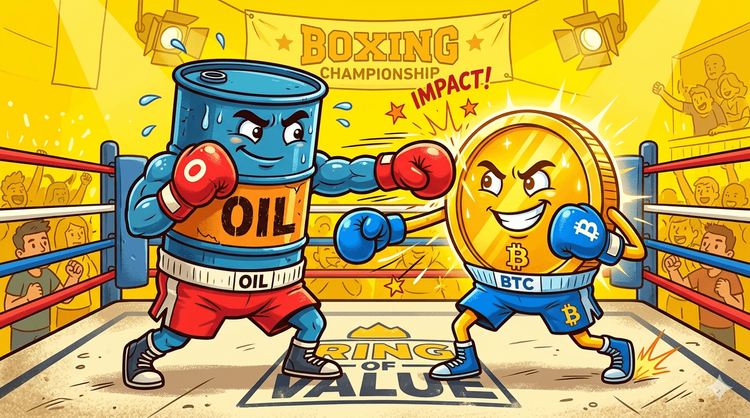
How the US-Iran War Could Affect Oil and Bitcoin Prices (Latest Analysis)
The outbreak of the US-Iran war on February 28, 2026, has provided an unprecedented real-time laboratory for understanding how geopolitical oil shocks interact with an increasingly institutionalized cryptocurrency market. This article examines the relationship between crude oil prices and Bitcoin throughout the conflict, analyzing price movements, correlation patterns, and the underlying transmission mechanisms.

OpenAI Wants to Write Its Own Rules|Rewire News Brief

Chaos Labs Exits, Who Will Pick Up Aave's Risk?
Stealthy Financial War? Iran Collects Strait Transit Fees in Stablecoin

OpenAlice: One Person, That's a Jane Street | Project Overview

The Small-Town Youth Labeling Big AI Models

Morning Report | Strategy increased its holdings by 4,871 BTC last week; Toss plans to develop its own blockchain and issue a native cryptocurrency; OpenAI's CFO privately questioned the timing of the IPO in 2026

Research: Stablecoins have a trading volume of 35 trillion a year, how much of it is real payment?

Galaxy Research: AI agents are giving rise to new species on the blockchain, how zero-human companies activate the financial flywheel

Data Research: How big is the liquidity gap between Hyperliquid and CME crude oil?
Why Are GPU Prices Skyrocketing Out of Control?

How to Master Claude Cowork Completely?

70-Page Confidential Letter Alleges First Charge of 'Lying,' Altman Tells Board 'I Can't Change My Personality'
Is Altcoin Season Starting in 2026? What Traders Should Watch Now
Altcoin season signals are becoming clearer in 2026 as capital rotation across crypto markets accelerates. Here’s what traders should watch and how strategy-based participation is evolving in the current market cycle.
Bitcoin ETF Inflows in 2026: Impact on BTC Price and Crypto Market Trends
Bitcoin ETF inflows are reshaping BTC price trends and crypto market liquidity in 2026. See how institutional capital is influencing volatility, trading behavior, and portfolio allocation strategies across crypto markets.
Visa's Stablecoin Strategy: Cards, Settlement, and the Future

Stock Market Split

How to capture the next Alpha in the narrative of predictive markets?
How the US-Iran War Could Affect Oil and Bitcoin Prices (Latest Analysis)
The outbreak of the US-Iran war on February 28, 2026, has provided an unprecedented real-time laboratory for understanding how geopolitical oil shocks interact with an increasingly institutionalized cryptocurrency market. This article examines the relationship between crude oil prices and Bitcoin throughout the conflict, analyzing price movements, correlation patterns, and the underlying transmission mechanisms.


 App
App