
 Buy Crypto
- Markets
 Futures
- Spot
- Copy Trade
- Earn
- More
Autonomous World Engine (AWE): Empowering AI-driven World with Multi-Agent Simulation

Source: AWE
Introduction
The concept of "Autonomous Worlds" (AW) in the Web3 space has undergone significant evolution. From its origins as a fully on-chain gaming environment—based on the blockchain's promises of transparency and immutability—it has now evolved into a grander vision: a sustainable ecosystem driven by tokenized AI agents that interact, adapt, and self-govern. This transformation reflects a deeper conception of the virtual world: transcending static rules and embracing dynamic emergent behavior driven by autonomous agents.
This article traces the redefinition of the AW concept, focusing on pioneering projects in the field, exploring the challenges of scaling multi-agent simulations, and innovative solutions, revealing the evolution from micro AI towns to mega AI metropolises.
Redefining Autonomous Worlds
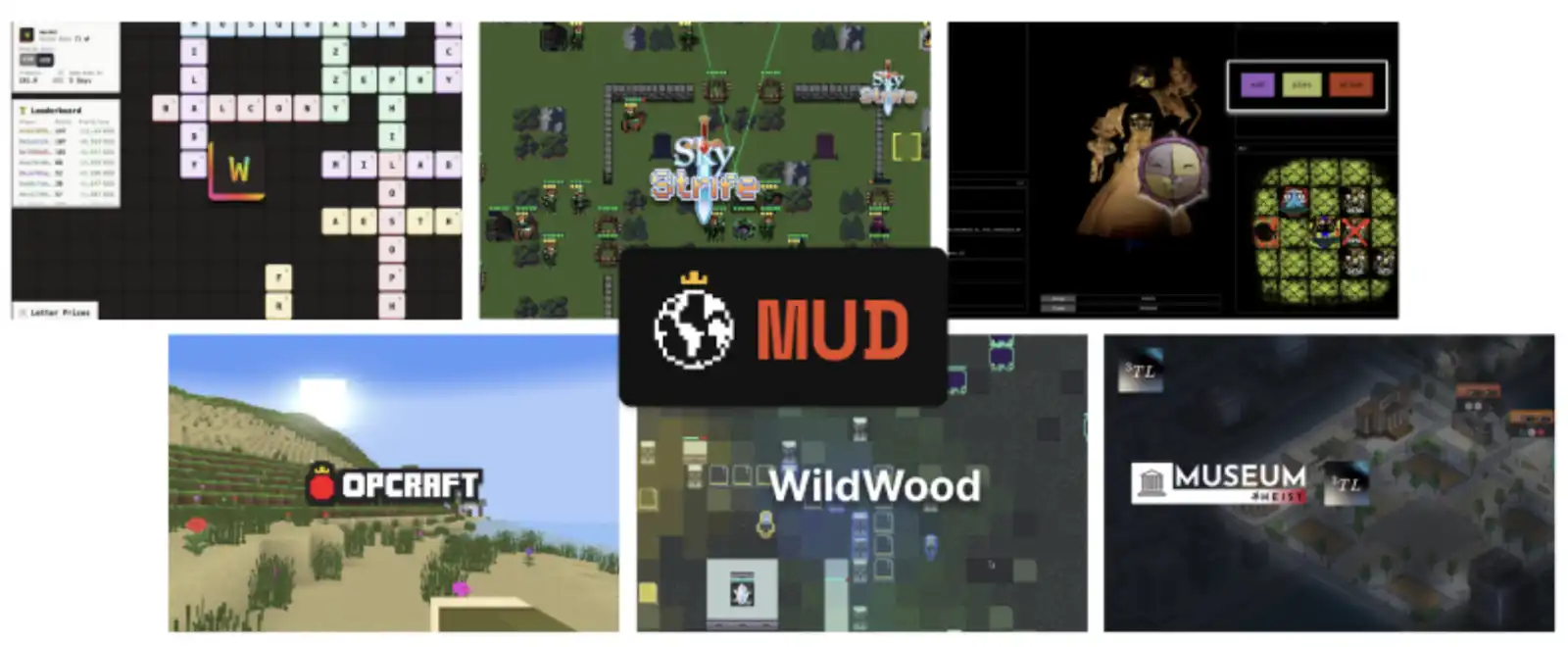
Early AW emphasized immutable states and decentralized logic, focusing on the blockchain's ability to eliminate centralized control. But true autonomy requires not only transparency but also the system's capacity for autonomous evolution. Today, AW should be understood as a sustainable environment with the following core features:
1. Decentralized control: No single authority dictates operations
2. Self-organizing capability: Agents dynamically build structures and adapt to change
3. Emergent behavior: Naturally occurring adaptive outcomes without predefined rules
Under this refined definition, AW is not just a persistent system but also a digital life form capable of autonomous operation, self-organization, and self-evolution, forming a dynamic ecosystem beyond scripted scenarios.
Pioneering Projects
Smallville (Stanford AI Town)
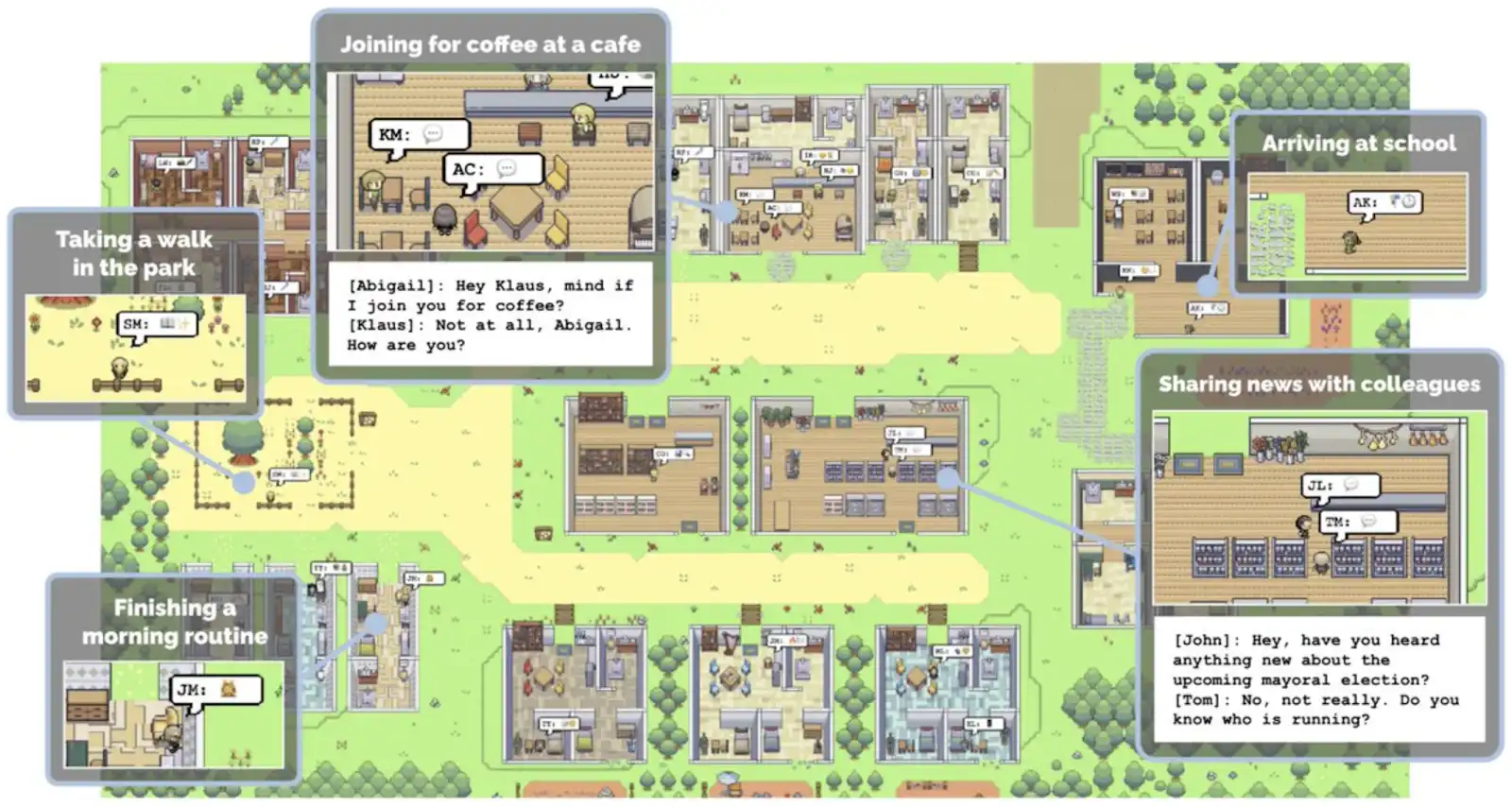
As one of the first sustainable AI-driven social simulation projects, Smallville has achieved significant breakthroughs. Its personified agents possess:
· Memory-based decision-making
· Organization of spontaneous activities (e.g., Valentine's Day party)
· Emergent social behaviors in the absence of explicit guidance
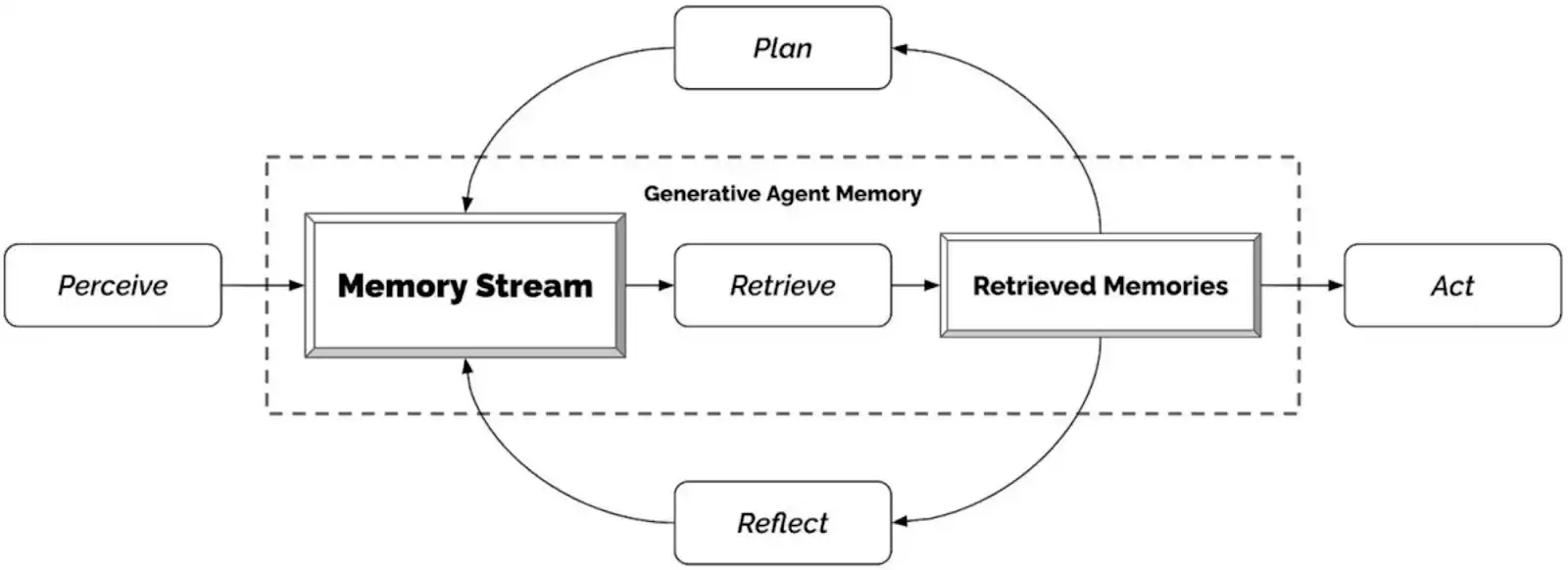
Through the fusion of memory and rational decision-making, Smallville has showcased the potential for large-scale autonomous social interactions.
Voyager (NVIDIA Minecraft Agent)
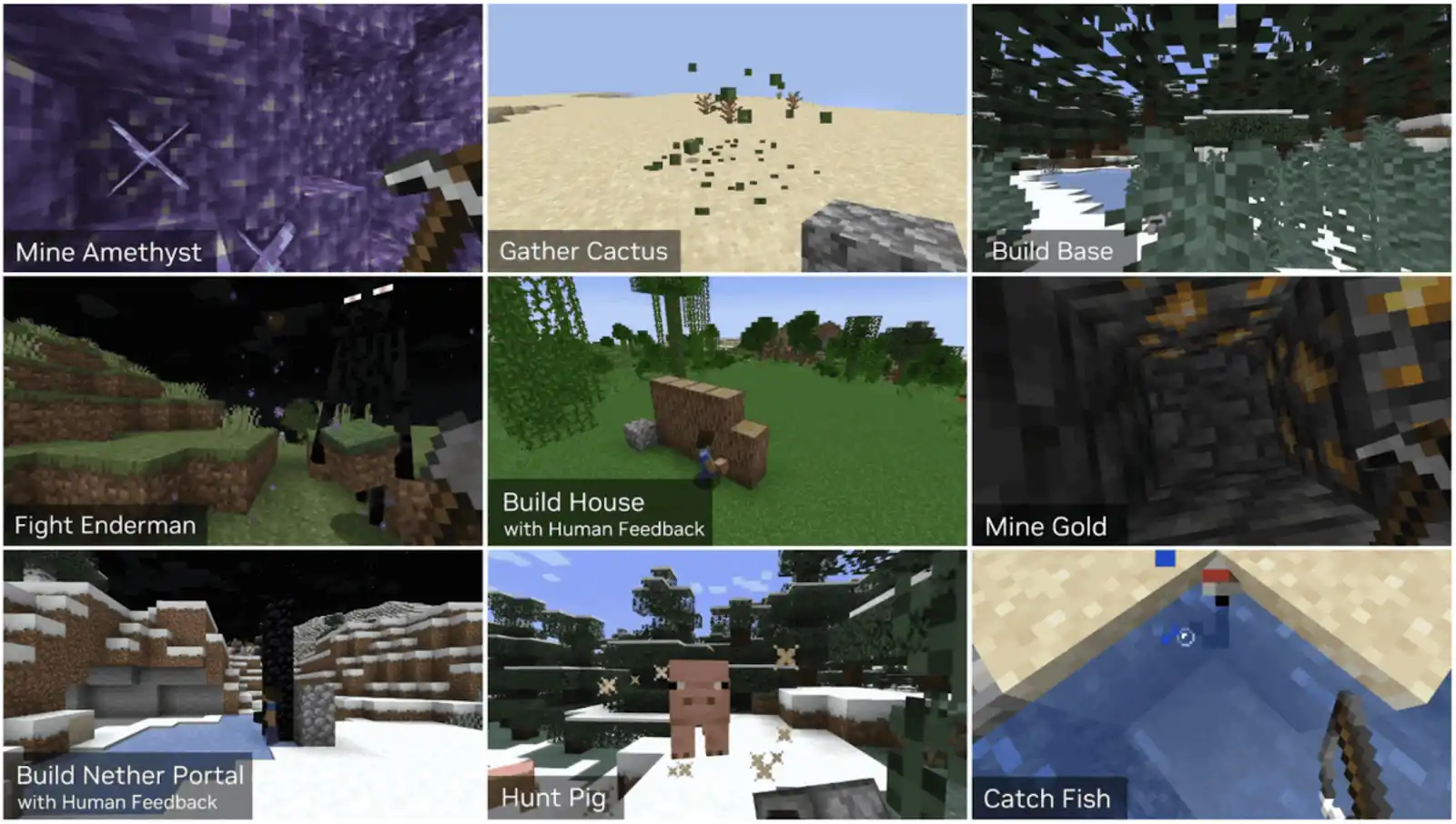
Voyager takes a different approach by deploying an LLM-driven Agent in the open world of Minecraft, with the following key highlights:
· Exploration-based learning without predefined goals
· Mastery of complex skills (crafting/navigation)
· Autonomous acquisition and application of knowledge
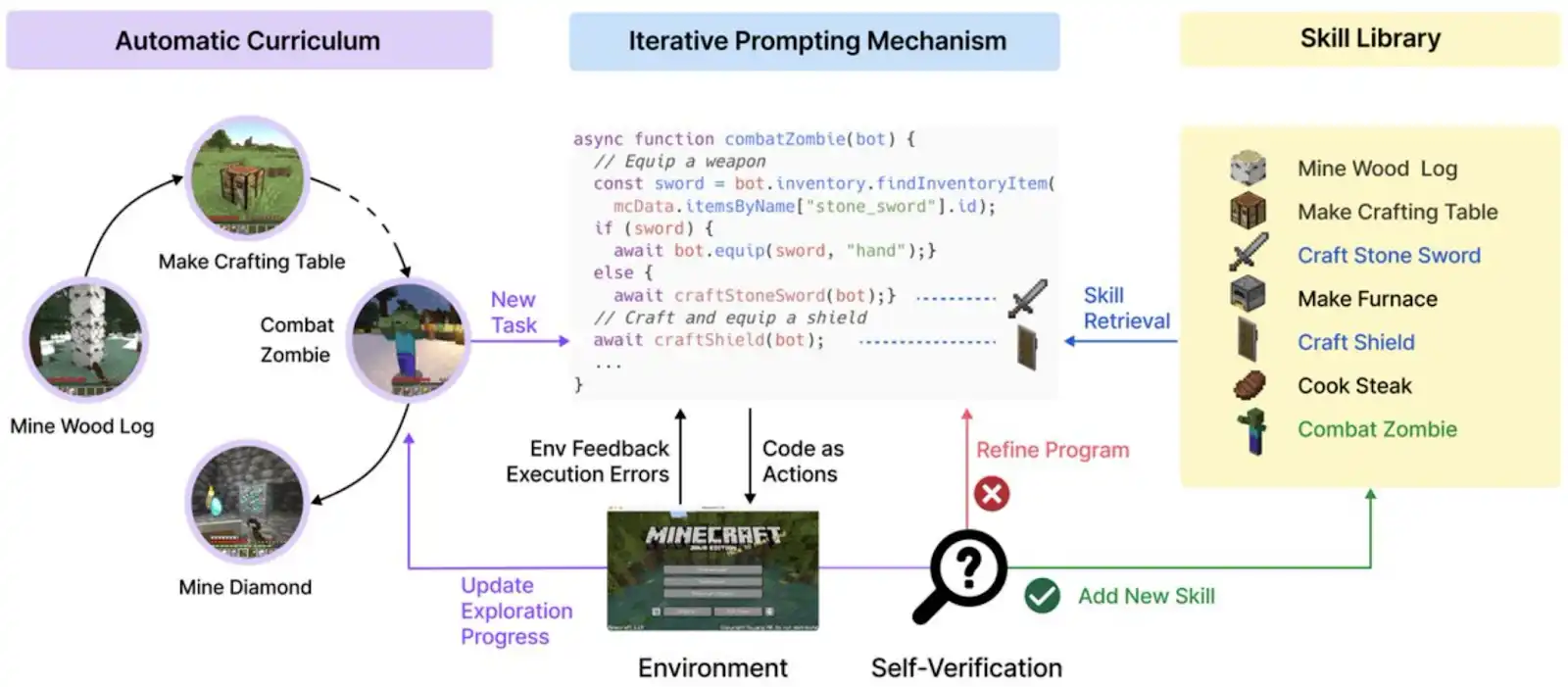
Through iterative prompting and a self-built skill library, Voyager has demonstrated the Agent's evolutionary capabilities in an unstructured environment, which has also been a key breakthrough in scalable autonomy.
Challenges of Scaling Autonomy in the World
While some pioneering projects have laid the groundwork, expanding AW to larger-scale complex systems still faces the following challenges:
· Inefficiency in cost: Running 25 Agents in Smallville consumes approximately $500 per day, with Voyager's single Agent costing even more
· Concurrent conflicts: Resource contention leads to system instability
· Stagnation of emergent behavior: Agents get stuck in repetitive loops (e.g., infinite farming) hindering development
· Autonomy validation: Centralized storage of prompts and memories undermines claims of decision-making independence
These challenges reveal a core paradox: AW must strike a balance between computational demands and decentralized commitment.
Analysis of Scalable Solutions
AI Town (a16z Development)
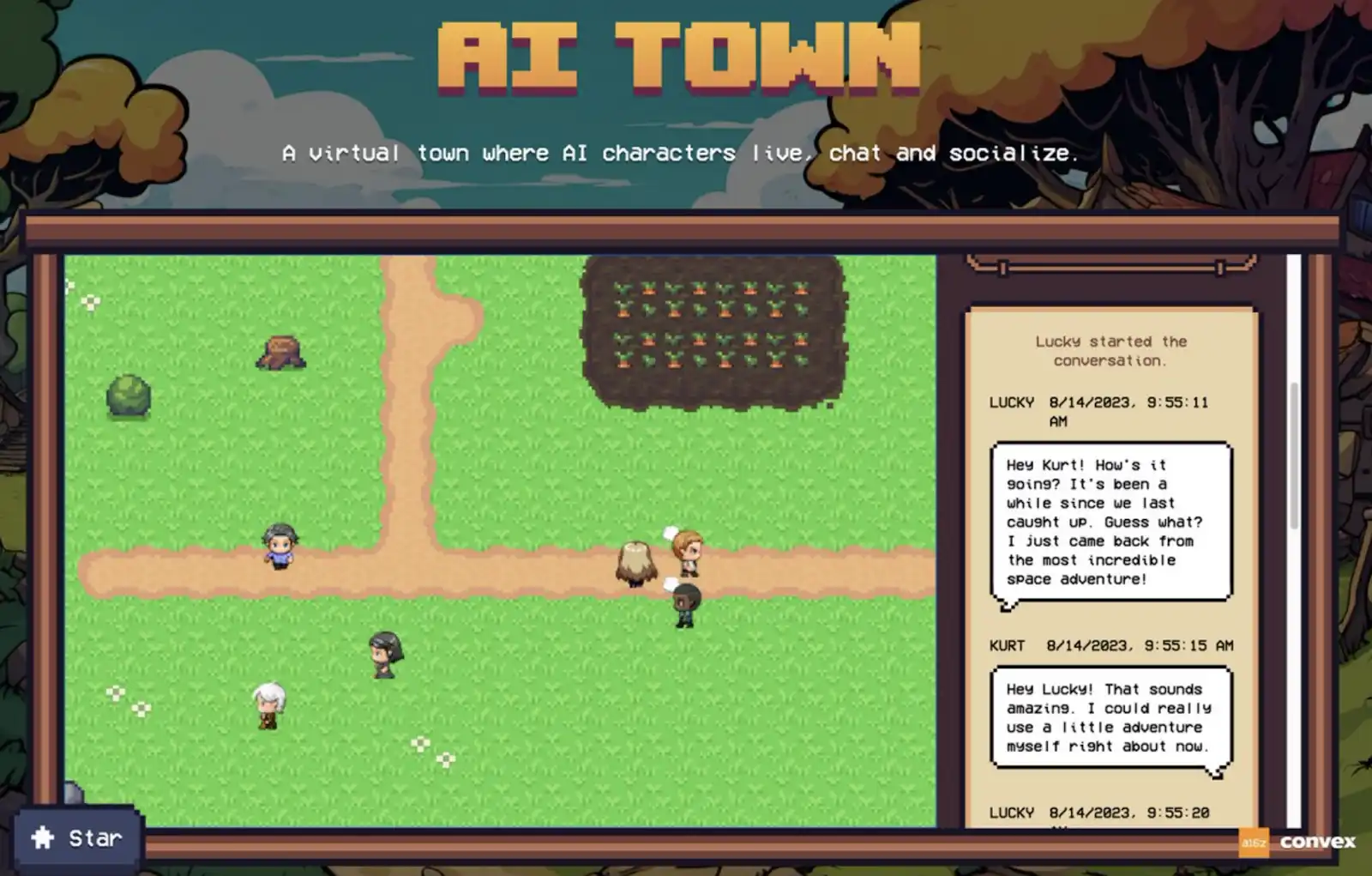
AI Town focuses on usability, providing a modular lightweight AW simulation platform with the following features:
· Modular architecture: Simplifying development for customization
· LLM-agnostic framework: Supporting multiple AI models
· Cloud-native deployment: Enabling rapid testing and iteration
· Community templates: Offering prefabricated starting points
By lowering the barriers, AI Town empowers developers to explore autonomous ecosystems.
Project Sid (Altera Development)
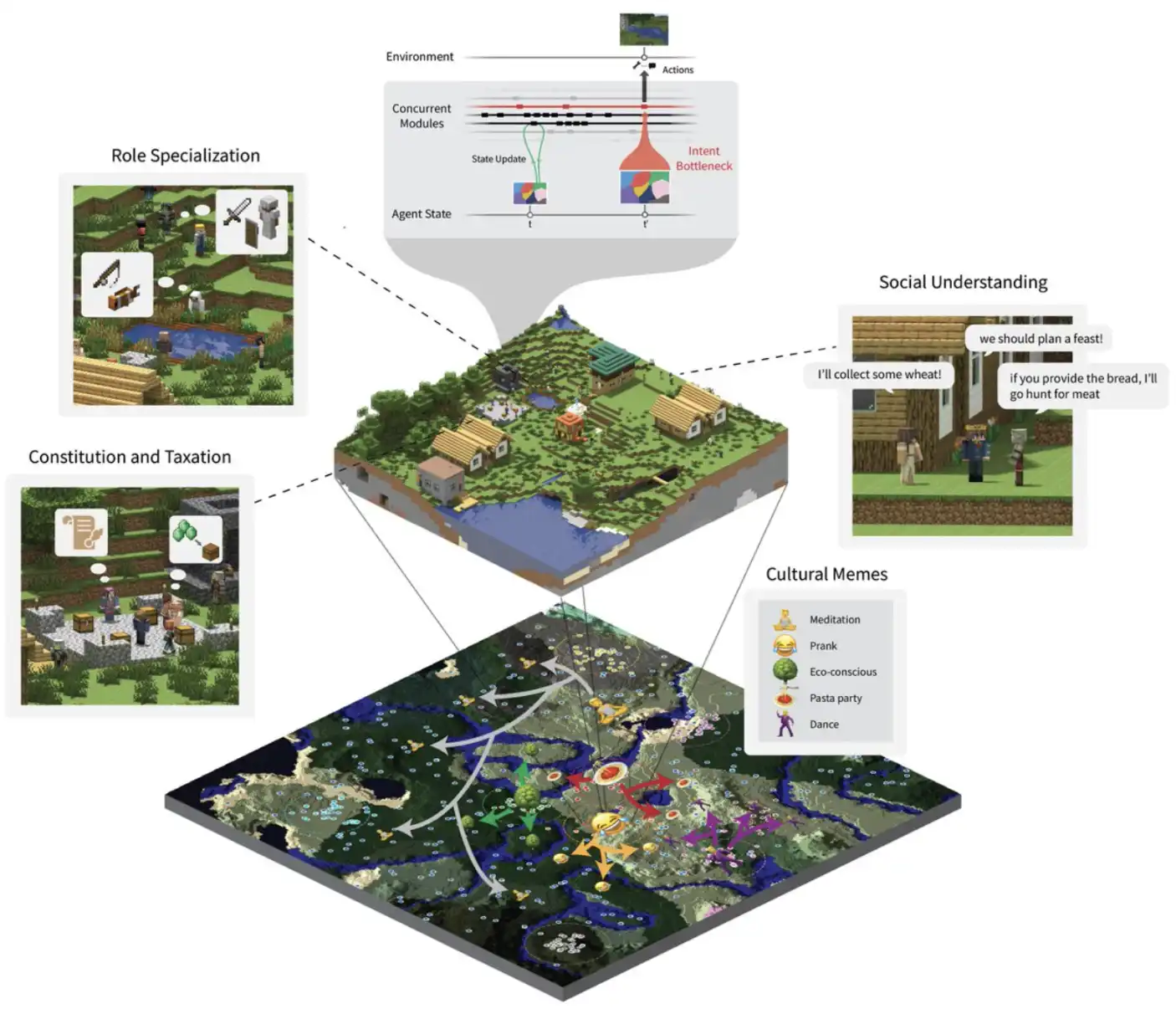
Project Sid Breakthrough: Supporting a self-organizing economic-political system with 1000+ Agents, featuring:
· Social Scaffold: Dynamically forming groups and making voting decisions
· Decentralized Arbitration: Consensus mechanism for conflict resolution
· Role Specialization: Autonomous task assignment
This solution has nurtured a non-hierarchical large-scale complex social structure.
AI Metropolis (developed by Zhiqiang Xie)
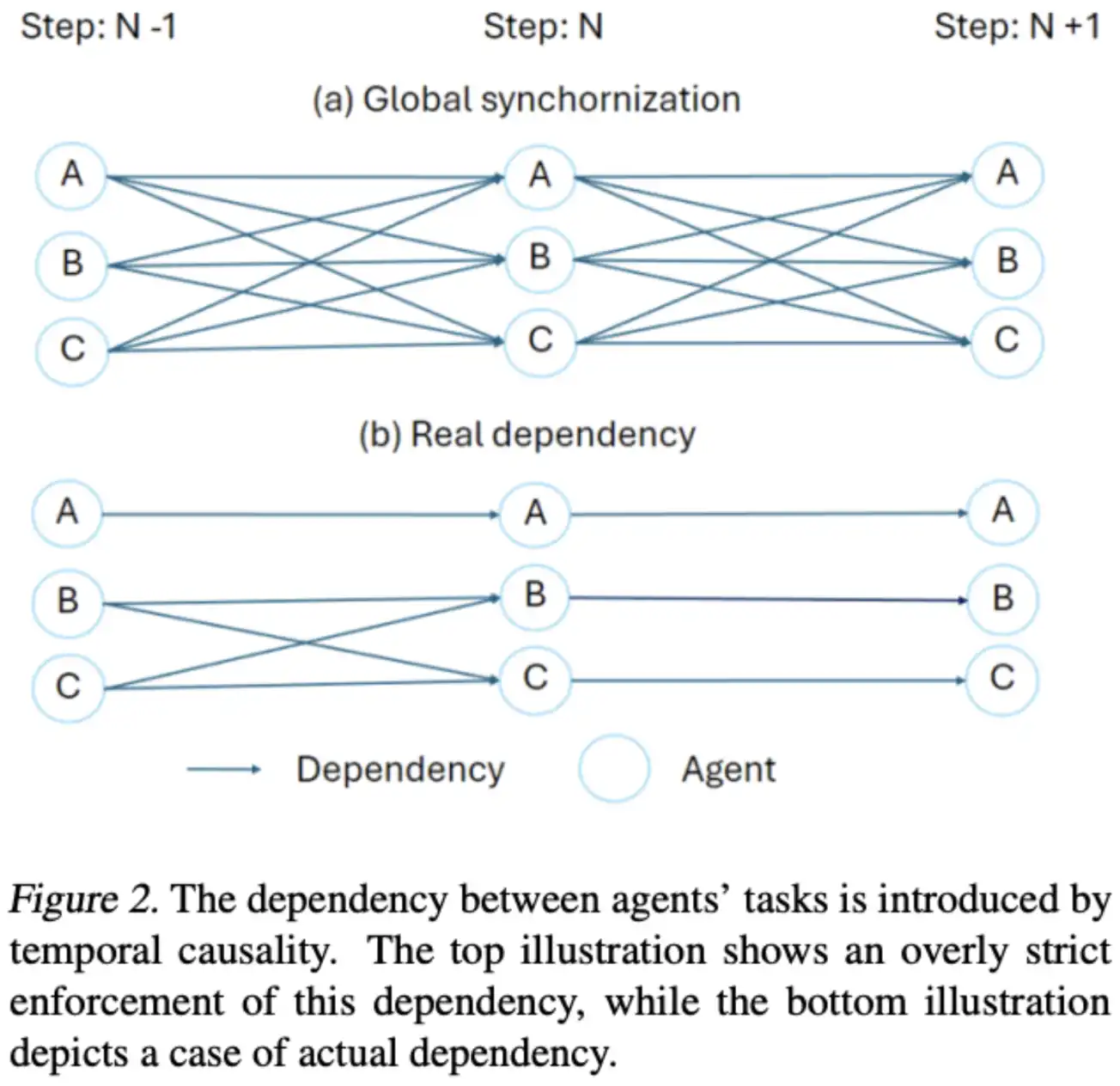
AI Metropolis addresses the cost-efficiency pain point, achieving large-scale simulation optimization through:
Randomized Execution: Skipping unnecessary interactions
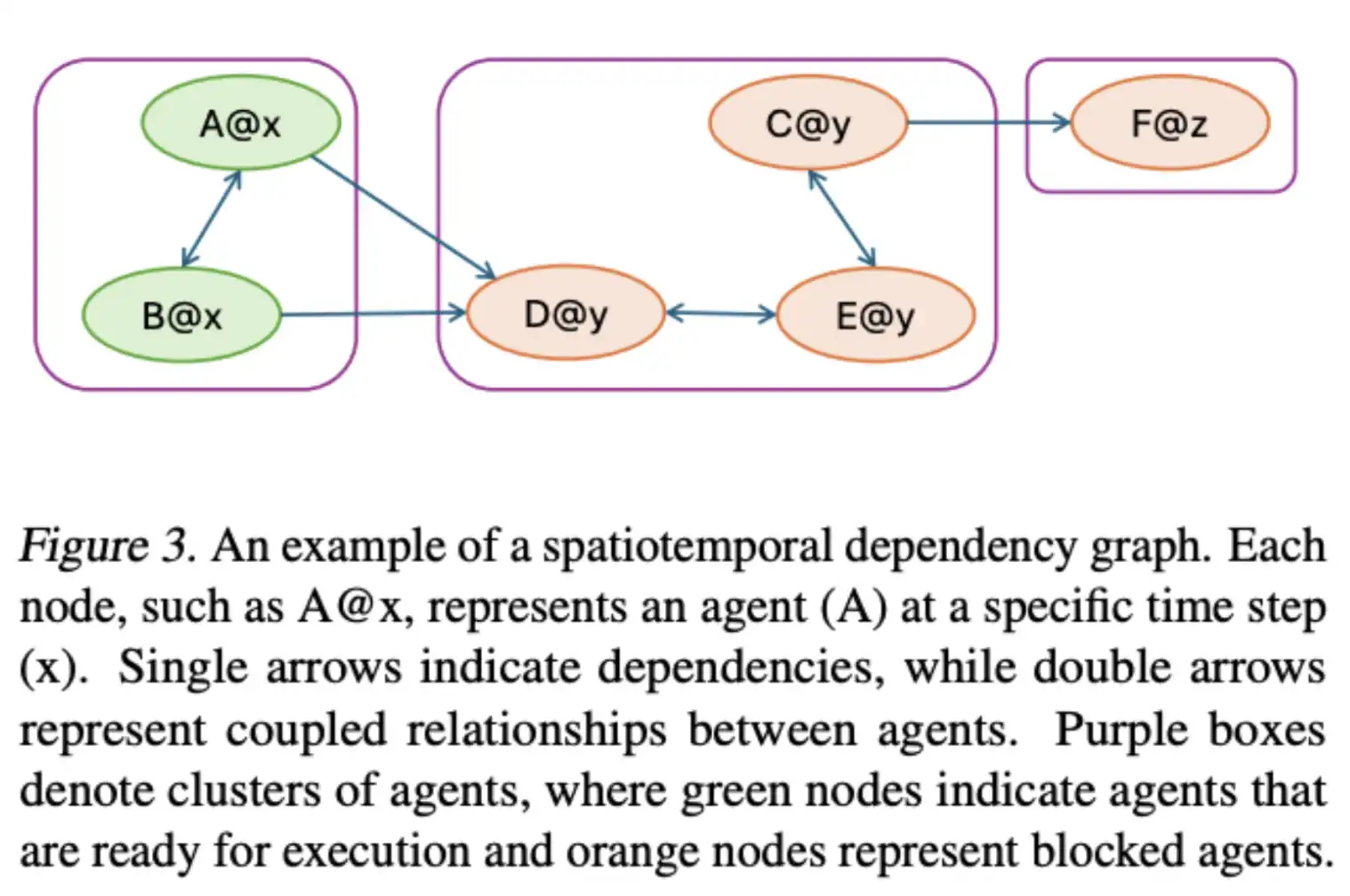
Dependency-Driven Parallel Execution: Asynchronous actions in non-dependent scenarios
Shared LLM Context: Reducing redundant computations
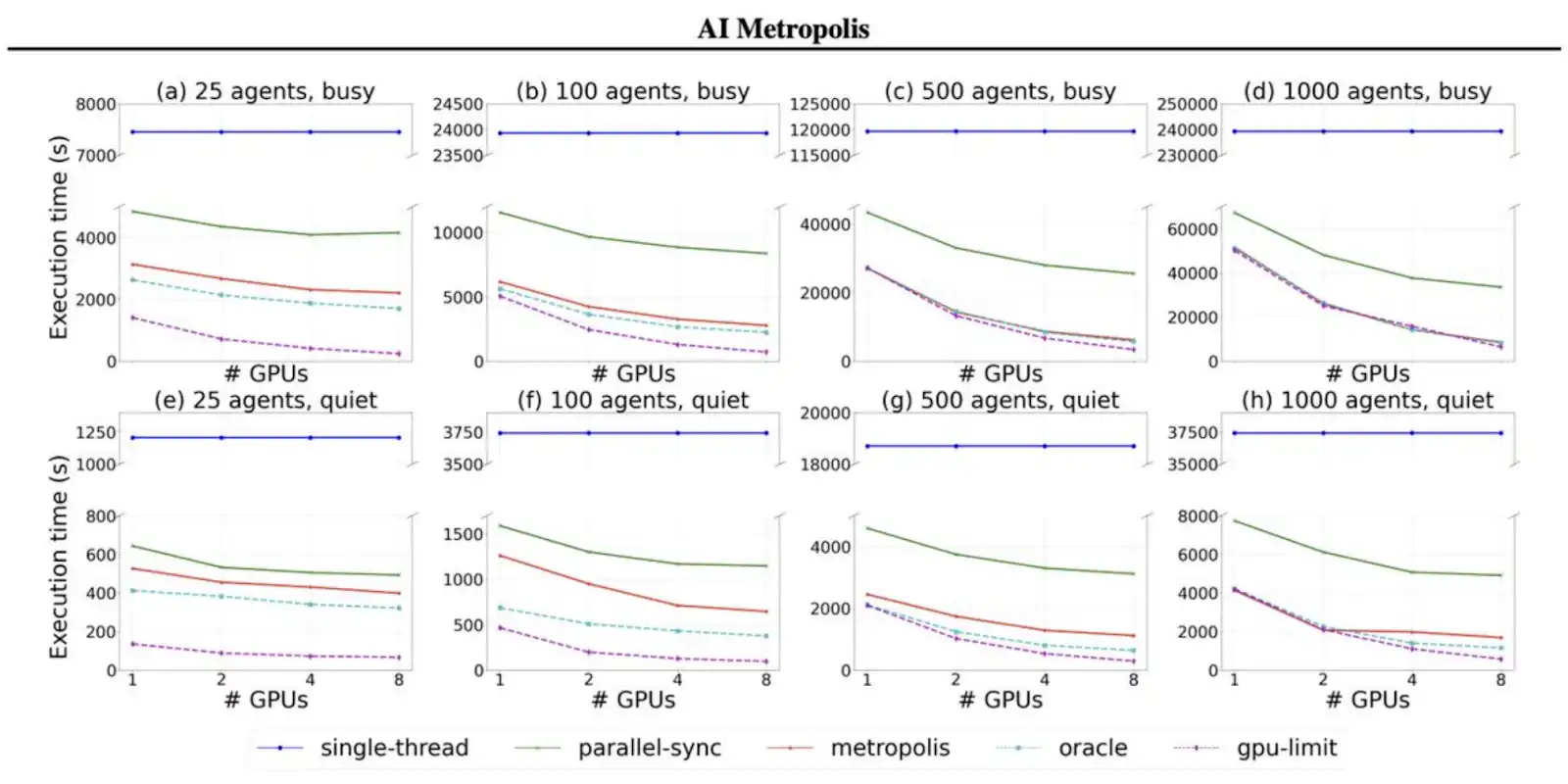
These technologies achieve a 4x cost reduction, making the thousand-agent simulation both practical and economical.
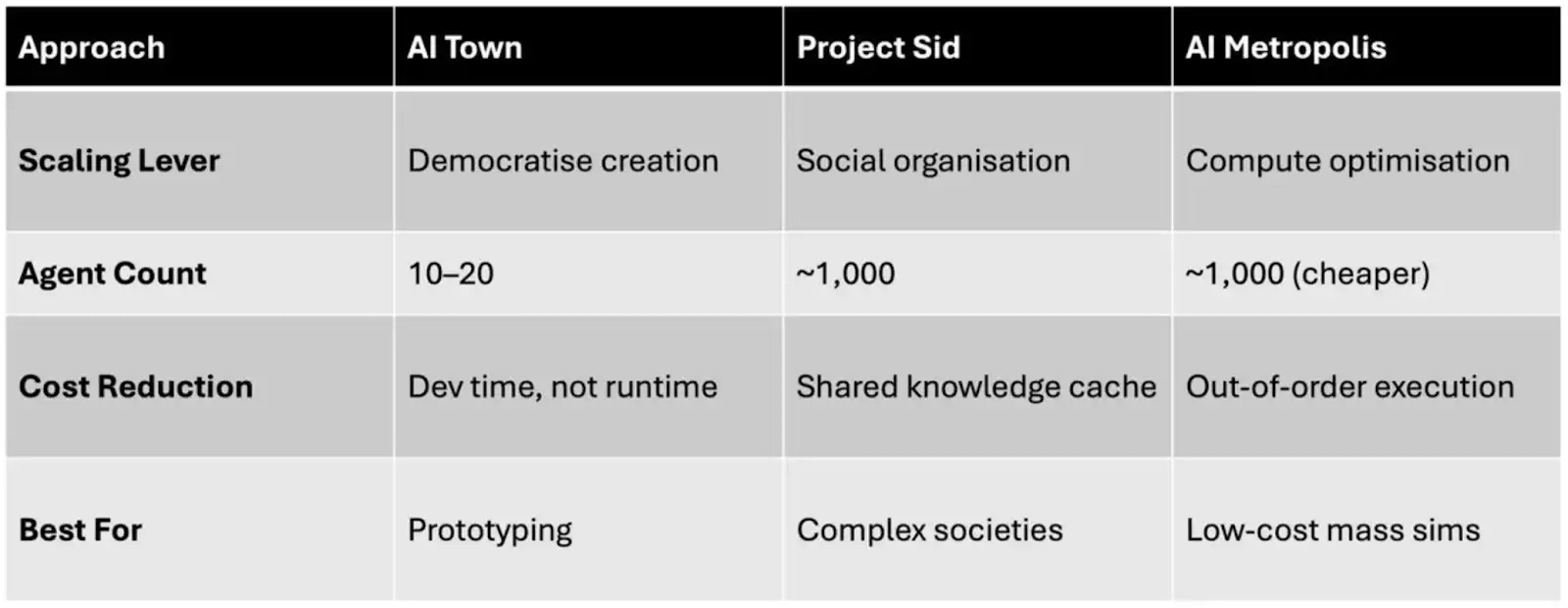
Scalability Scheme Comparative Analysis
Autonomous World Engine (AWE) Debuts
Scalable Multi-Agent Simulation Framework
The Autonomous World Engine (AWE) launched by SPT Network as a modular solution supports running thousands of autonomous Agents in a persistent digital environment. Through off-chain simulation, on-chain validation, and integration with the economic system, AWE ensures transparency, adaptability, and decentralization.
Technical Collaboration with Zhiqiang Xie
AWE strengthens performance through collaboration with AI Metropolis founder Zhiqiang Xie. Expertise in randomized execution, dependency tracking, and asynchronous Agent actions significantly reduces costs and improves performance, enabling AWE to seamlessly handle thousands of Agents.
Milestone: 1000-Agent Demonstration
AWE recently successfully showcased the operation of 1000 autonomous Agents in a dynamic evolutionary simulation, demonstrating that through thoughtful architecture design, large-scale AW can achieve a balance of efficiency, scalability, and cost-effectiveness.
AWE Core Features
· Multi-Agent Simulation: Achieving interactions at scale through parallel processing and dependency management
· Event-Driven Evolution: Triggering new behaviors through internal and external events, fostering emergent societies
· Blockchain Integration: Anchoring critical states and actions on-chain to ensure immutability
· Self-Governance Assurance: Encrypting Agent memory and decision-making to ensure tamper-resistant autonomy
AWE not only simulates AW but also lays the foundation for a fully on-chain decentralized AI society.
STP Network: A New Chapter in Branding
The STP Network is soon rebranding as the AWE Network, reflecting its focus on a scalable autonomous world. Serving as the infrastructure for multi-agent simulation, on-chain economy, and persistent AI environments, the AWE Network bridges AI and Web3, pioneering a new paradigm of governance, economic models, and digital experiences.
Future Outlook: Integration of AI and On-Chain Systems
The fusion of AI and blockchain unlocks transformative possibilities for AW:
Gaming Sector: AI-driven NPCs constructing emergent narratives in an on-chain world
DeSci: AI city simulations for pandemics/economic policies
On-Chain Economy: AI agents autonomously trading, managing DAOs, participating in DeFi
As AI Town lowers entry barriers, Project Sid enables governance innovation, and AI Metropolis breaks cost barriers, the next leap will fully integrate these advancements into on-chain systems.
The Autonomous World is the Future
From isolated AI experiments to thriving digital metropolises, AW signifies a paradigm shift in virtual environments. As Web3 and AI converge deeply, we stand at the forefront of a decentralized autonomous world. The clear mission is to enhance infrastructure and unleash limitless potential.
The autonomous world is not just possible—it is inevitable.
This article is a contributed submission and does not represent the views of BlockBeats
You may also like

The flow of stablecoins and the spillover effects in the foreign exchange market

After two years, Hong Kong's first batch of stablecoin licenses finally issued: HSBC, Standard Chartered make the cut
The person who helped TAO rise by 90% has now single-handedly crashed the price again today

3-Minute Guide to Participating in the SpaceX IPO on Bitget

Top 5 Cryptos to Buy in 2026 Q1: A ChatGPT Deep Dive Analysis
Explore the top 5 cryptos to buy in Q1 2026 including BTC, ETH, SOL, TAO, and ONDO. See price outlooks, key narratives, and institutional catalysts shaping the next market move.

How to Earn $15,000 with Idle USDT Before Altcoin Season 2026
Wondering if altcoin season is coming in 2026? Get the latest market update, and learn how to turn your idle stablecoins waiting for entry into extra rewards up to 15,000 USDT.
Can You Win Joker Returns Without Large Trading Volume? 5 Mistakes New Players Make In WEEX Joker Returns Season 2
Can small traders win WEEX Joker Returns 2026 without huge volume? Yes—if you avoid these 5 costly mistakes. Learn how to maximize card draws, use Jokers wisely, and turn small deposits into 15,000 USDT rewards.

Altcoin Season 2026: 4 Stages to Profit (Before the Crowd FOMO In)
Altcoin Season 2026 is starting — discover the 4 key stages of capital rotation (from ETH to PEPE) and how to position before the peak. Learn which tokens will lead each phase and avoid missing the rally.

Will Alt season come in 2026? 5 Tips to Spot the Next 100x Crypto Opportunities
Will altcoin season arrive in 2026? Discover 5 rotation stages, early signals smart traders watch, and the key crypto sectors where the next 100x altcoin opportunities may emerge.

The bear market has arrived, and cryptocurrency ETF issuers are also getting involved

The richest man had a quarrel with his former boss

BTC Firm Above 70K! Saylor’s "Institutional Logic" vs. Moon’s "Retail Faith": Who is Really Harvesting the Market?
Bitcoin is holding firm above the $70,000 support level following a massive short squeeze that liquidated $427 million. As the "Four-Year Cycle" narrative shifts, the market is split: Michael Saylor’s cold, institutional "indiscriminate stacking" vs. Carl Moon’s high-energy retail "hopium." This article decodes these two polar-opposite strategies for the 2026 bull run and reveals how WEEX’s institutional-grade liquidity and AI trading tools empower every type of investor to convert market volatility into profit.

The Girl Who Created the SBTI Test: A Story of a Doomed Cyber Love, an E-Widow Ratfolk

B.AI Officially Launched: Building AI Agent Financial Bedrock Platform, Driving AGI Era Business Underlying Logic

B.AI Officially Launched: Breaking Down A2A Collaboration Barriers to Unlock the Smart Body Economy's Full Potential
We helped Xu Mingxing write a book called "<OK Life>".

Rare APY of 400%, is TradeXYZ handing out money to oil bulls?
a16z: Perpetual Contracts are Rewriting Global Trading Rules
The flow of stablecoins and the spillover effects in the foreign exchange market
After two years, Hong Kong's first batch of stablecoin licenses finally issued: HSBC, Standard Chartered make the cut
The person who helped TAO rise by 90% has now single-handedly crashed the price again today
3-Minute Guide to Participating in the SpaceX IPO on Bitget
Top 5 Cryptos to Buy in 2026 Q1: A ChatGPT Deep Dive Analysis
Explore the top 5 cryptos to buy in Q1 2026 including BTC, ETH, SOL, TAO, and ONDO. See price outlooks, key narratives, and institutional catalysts shaping the next market move.
How to Earn $15,000 with Idle USDT Before Altcoin Season 2026
Wondering if altcoin season is coming in 2026? Get the latest market update, and learn how to turn your idle stablecoins waiting for entry into extra rewards up to 15,000 USDT.


 App
App