
 Buy Crypto
- Markets
 Futures
- Spot
- Copy Trade
- Earn
- More
Forbes: Cryptocurrency Will Be Redefined by 2025

Original Article Title: 7 Reasons Why 2025 Could Redefine Crypto
Original Article Author: Nina Bambysheva, Forbes
Original Article Translation: Luffy, Foresight News
Crypto winter? Over. The decline of the crypto empire and courtroom drama? Things of the past. Survivors? Tested in the battlefield, with a keen eye, as if this were a new gold rush.
After years of conflict with the U.S. Securities and Exchange Commission (SEC), Bitcoin and Ethereum exchange-traded funds (ETFs) have finally arrived. According to the cryptocurrency research firm K33 Research, as of December 16, the U.S. Bitcoin ETF held assets worth $129 billion, surpassing the $125 billion of gold ETFs.
The post-election market excitement in the U.S., coupled with Donald Trump's promise to make the U.S. the "crypto capital of the world" and establish a strategic Bitcoin reserve, led to Bitcoin briefly surpassing $100,000.
Solana is seeing development opportunities, thanks to the rise of memecoin hype and new narratives like DePIN. DePIN is a network that uses blockchain technology to decentralize control and ownership of physical infrastructure. Platforms like Polymarket (where users can bet on the outcome of the U.S. presidential election) and the survival game Off The Grid have already found success in the mainstream market. A new wave of "degens" are betting on tokens like fartcoin and dogwifhat, both of which currently have market capitalizations exceeding $1 billion.
Rob Hadick, a general partner at the San Francisco-based cryptocurrency venture capital firm Dragonfly, said: "This year, cryptocurrency entered the mainstream consciousness in a way not seen since 2021, and now it is a sustainable, long-term asset class that will have a voice and play a significant role." "If you only look at the impact of cryptocurrency on elections, whether it's cryptocurrency political donations or its promotion among legislative bodies and presidential candidates, this is unprecedented, and it represents a major step forward in cryptocurrency legalization."
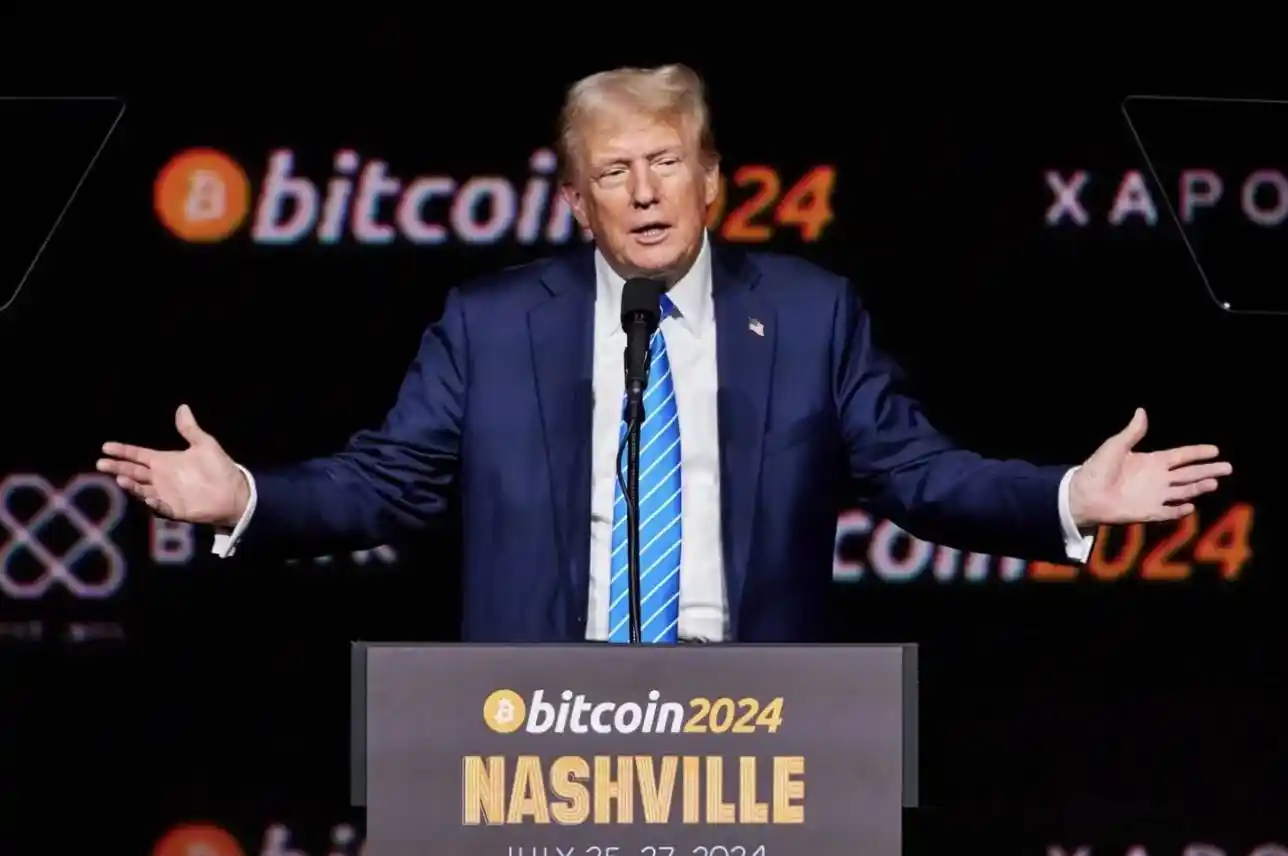
Donald Trump at the 2024 Bitcoin conference in Nashville, Tennessee. Photo Source: The Washington Post
With Trump and a cohort of crypto-friendly officials preparing to take office, the so-called "Cryptocurrency Golden Age" is upon us. Here are the emerging trends:
All-Time Highs and Bitcoin Reserves in the U.S.
The art of making bold price predictions is back in vogue. Cryptocurrency asset management company Bitwise predicts that if the U.S. were to establish a strategic reserve similar to oil or gold, Bitcoin's price could reach $200,000, or even $500,000. The logic is that the official U.S. Bitcoin reserves would trigger global FOMO.
At the July Nashville Bitcoin Conference, Trump proposed using 200,000 bitcoins confiscated from criminals (worth $21 billion) to kickstart the reserve. However, the legal path is still unclear—whether it requires congressional approval or if the executive branch can act unilaterally. Senator Cynthia Lummis, a cryptocurrency advocate, proposed a reserve scheme operated by the Treasury Department in July. Skeptics argue that Bitcoin's volatility could destabilize the financial system. Trump has remained silent on whether the U.S. will continue to purchase more Bitcoin in the open market, further adding to the fog.
Cryptocurrency Regulation Reset: Crypto-Friendly Washington
The new administration is poised to be the most crypto-friendly government to date. Some key government appointments related to cryptocurrency include:
· Securities and Exchange Commission (SEC): Former SEC Commissioner and cryptocurrency supporter Paul Atkins is set to replace cryptocurrency foe Gary Gensler, who was known for lawsuits and enforcement actions against crypto companies during his tenure.
· Commodity Futures Trading Commission (CFTC): Andreessen Horowitz's policy head and former CFTC Commissioner Brian Quintenz is a top contender to lead the agency.
· Treasury Department: Hedge fund billionaire and Bitcoin advocate Scott Bessent is Trump's pick for Treasury Secretary.
· Department of Commerce: Cantor Fitzgerald's CEO Howard Lutnik, the primary custodian of Tether's USDT reserves, will lead the department.
· AI and Crypto Tsar: David Sacks, a longtime venture capitalist who also worked with Elon Musk at PayPal, will be overseeing policy in two key areas of Trump's strategy to enhance national competitiveness.
· House Financial Services Committee: Arkansas Republican Congressman French Hill, along with outgoing committee chair Patrick McHenry, are advocating for crypto-friendly legislation. Hill plans to prioritize the Crypto Market Structure Bill within the first 100 days and investigate the so-called "Choke Point 2.0," which many believe unfairly targets the crypto industry through de-risking practices.
"This is a real opportunity to craft good policy for the industry," said Kristin Smith, CEO of the Washington, D.C.-based Blockchain Association, representing over 100 cryptocurrency companies. "The White House has indicated this is a priority. I think we will see a concerted effort across government agencies, legislation driving market structure and stablecoins, and a significant shift of innovation back to the U.S.," she added.
New Crypto IPOs and Venture Capital Inflows
The crypto IPO wave is heating up. Bitwise has listed five companies that may go public next year:
· Circle: The issuer of the second-largest stablecoin USDC, which secretly filed for an IPO in January of this year.
· Figure: Known for blockchain-based financial services such as home equity loans, personal loans, and asset tokenization, the company has been exploring going public since last year.
· Kraken: The U.S.-based cryptocurrency exchange's IPO plans date back to 2021.
· Anchorage Digital: Its status as a federally chartered bank may pave the way for its listing.
· Chainalysis: A leader in blockchain compliance and intelligence services, is poised for a listing.
Additionally, Hadick from Dragonfly stated, "I expect the LP market to get better; they will want to put more money into cryptocurrency. Many traditional Web2 crossover funds will re-enter the Web3 space. We have already seen this trend in certain areas, such as stablecoins and payments." He added that venture capital transactions often lag one or two quarters behind public market price increases.
Crypto-Related Companies Included in Major Stock Indexes
MicroStrategy's stock price has risen over 400% this year. Due to new accounting rules allowing companies to reflect their Bitcoin investments at market value in financial statements, the company is now part of the Nasdaq 100 index, and analysts predict the company will next be included in the S&P 500 index. This change could see MicroStrategy enter index-tracking funds, joining the portfolios of countless American investors. MicroStrategy co-founder and CEO Michael Saylor's "Bitcoin Treasury" strategy (issuing bonds and stocks to hoard Bitcoin) has propelled the $86 billion-valued company into the top 100 of the S&P 500 index. Analysts suggest that Coinbase, up 70% this year, may also join this coveted index.
Surge in Stablecoins
With the highly anticipated stablecoin legislation set to be introduced in the United States, the stablecoin industry is poised for explosive growth, with a market cap expected to double to $400 billion. According to Bitwise data, stablecoin transactions are projected to reach $83 trillion by 2024, nearly on par with Visa's $99 trillion in payment volume.
Tether and Circle still hold a dominant position. However, Hadick warns that if they continue to operate more like asset management firms than payment companies, their growth may quickly stagnate.
In October, Stripe invested $1.1 billion to acquire the stablecoin platform Bridge, sending a signal that stablecoins could become a cornerstone of fintech. Stripe refers to it as a "superconductor for financial services," touting its unparalleled speed, low costs, and global impact. Robinhood is also following suit, exploring the creation of a global stablecoin network.
Meanwhile, the next-generation "Stablecoin 2.0" model is quietly emerging. Ceteris, research lead at New York-based crypto analysis firm Delphi Digital, explains, "There are many new stablecoin models that are providing token holders or applications that attract actual users with revenue sharing. I think these models are disruptive."
Accelerated Traditional Asset Tokenization
BlackRock CEO Larry Fink has long been an advocate for tokenization. From real estate to art, everything may soon have a token. The biggest benefits of tokenization are instant settlement, lower costs than traditional securitization, round-the-clock liquidity, and transparency.
Three years ago, the cryptocurrency industry only tokenized $2 billion in real-world assets (RWA), including private credit, U.S. debt, commodities, and stocks. Today, this number has nearly reached $14 billion. Venture capital firm ParaFi predicts that by 2030, the tokenized RWA market size could soar to $2 trillion, signaling a significant shift in asset ownership and trading.
New Applications, Better Infrastructure
The buzzword at the end of 2024 is AI Agents. Get ready to witness the convergence of artificial intelligence with cryptocurrency, a fusion closer to science fiction.
This trend is already taking shape. Take TruthTerminal, for example, this AI Agent not only received $50,000 from Marc Andreessen but also became a millionaire using X social media. Its success stems from promoting a token based on an absurd meme from the early 2000s (the token's anonymous creator transferred a large sum of money to TruthTerminal's wallet managed by Andy Ayrey).
However, analysts are cautious about this. Practical artificial intelligence agents (such as those attempting to represent users in cross-blockchain complex transactions) are scarce and still in the early stages. "The reason agents are exciting is because they are very novel," said Delphi's Ceteris, "but for better or for worse, it could be the biggest bubble of this cycle."
Despite the fragmented nature of the blockchain industry, most decentralized applications have not yet gone mainstream, but the work of building robust infrastructure continues. Ceteris explained: "Solana has set the trend for the high-throughput blockchain era, with almost every new chain launching under this trend, thus birthing a plethora of cheap block space."
And so, the narrative theme of cryptocurrency has shifted from survival to prosperity. This is just a part of what may bring surprises next year. You can choose to prepare popcorn for this performance or dig into your wallet for this opportunity. Caution is essential as the market will experience highs and lows. This time, the stakes seem higher than ever.
You may also like

a16z: After securities are on the blockchain, why will intermediary institutions be replaced by code?

XRP Tokyo Is Here: What We Learn and What’s Next for XRP Price
Key Takeaways: Ripple’s 2025 XRP Tokyo event highlights a projected $33 trillion on-chain stablecoin volume by 2026. Significant…

Solana’s Future: Navigating the $285M Hack, Rug Pulls, and Milei Libra Scandal
Key Takeaways: Multiple Crises: Solana faces a $285 million hack, allegations of rug pulls, and the Milei Libra…

BTC USD Faces Tension: Markets React to Trump’s Dire Warning
Key Takeaways: Bitcoin’s price drops sharply below $70,000 amid geopolitical tensions, playing off Trump’s dramatic 8 PM ultimatum…
Bitcoin Price Surge: Ceasefire Sparks Optimism Hits $71K
Key Takeaways: After the US-Iran ceasefire announcement, Bitcoin surged beyond $71,000, marking its highest in a month. A…

Ethereum Price Forecast: Record $180 Billion Stablecoin Supply Marks Buyers’ Return
Key Takeaways: Ethereum’s stablecoin supply has surged to a record $180 billion, marking a 150% increase over the…

Emerging Evidence Links Argentina’s Milei to LIBRA Crypto Scandal
Key Takeaways: Evidence unveiled by Argentina’s federal prosecutors links President Javier Milei to the LIBRA token through call…

US Spot Bitcoin ETFs See Surge as BTC Nears $70K; LiquidChain and Layer-3 DeFi Rise
Key Takeaways: U.S. spot Bitcoin ETFs absorbed $471 million in a single day, moving BTC closer to the…

Bitcoin Price Prediction: Decoupling from Tech Stocks, Shaped by Geopolitics and AI Turmoil
Key Takeaways: Bitcoin is decoupling from tech stocks as geopolitical tensions and AI crises reshape the market, currently…

Chaos Labs Departure Leaves Aave Without Risk Management Amidst Governance Conflict
Key Takeaways: Aave, with a $50 billion TVL, is currently operating without a risk manager due to Chaos…

Grayscale Ethereum ETF Staking: A New Catalyst for $5,700?
Key Takeaways: Grayscale’s Ethereum Staking ETF introduces a yield-bearing structure that could significantly reshape investor sentiment. Ethereum’s price…

Polygon Crypto Enhances Finality Through the Giugliano Hardfork
Key Takeaways: Polygon’s Giugliano hardfork is operational on the mainnet, effectively reducing transaction finality by 2 seconds. The…

Senate’s Three-Week Deadline: Ripple XRP and the CLARITY Act’s Critical Moment
Key Takeaways: The Senate Banking Committee’s decision on the CLARITY Act in late April could define XRP’s future…
Solana Foundation Introduces STRIDE for DeFi Security
Key Takeaways: STRIDE is a structured security evaluation program for Solana’s DeFi ecosystem, managed by Asymmetric Research. It…
Trump Iran Doomsday Deadline Revisited: How Will Bitcoin and SPX Respond?
Key Takeaways: The geopolitical tension surrounding the Trump Iran deadline poses significant risks to Bitcoin prices and the…

XRP Crypto Slips to $1.31: Liquidity Challenges and Market Movement
Key Takeaways: XRP has fallen to $1.31, struggling after a rejection at the $1.35 level, showing potential liquidity…
Bitcoin Decoupling from Fed and ETFs in 2026
Key Takeaways: Bitcoin’s correlation with the Global Easing Breadth Index has reversed, showing a significant -0.778 correlation by…
BTC USD Price Trends: Saylor Strategy Seizes Moment in Market Rally
Key Takeaways: Strategy’s recent buy of 4,871 BTC reveals a robust conviction despite roughly $5 billion in unrealized…
a16z: After securities are on the blockchain, why will intermediary institutions be replaced by code?
XRP Tokyo Is Here: What We Learn and What’s Next for XRP Price
Key Takeaways: Ripple’s 2025 XRP Tokyo event highlights a projected $33 trillion on-chain stablecoin volume by 2026. Significant…
Solana’s Future: Navigating the $285M Hack, Rug Pulls, and Milei Libra Scandal
Key Takeaways: Multiple Crises: Solana faces a $285 million hack, allegations of rug pulls, and the Milei Libra…
BTC USD Faces Tension: Markets React to Trump’s Dire Warning
Key Takeaways: Bitcoin’s price drops sharply below $70,000 amid geopolitical tensions, playing off Trump’s dramatic 8 PM ultimatum…
Bitcoin Price Surge: Ceasefire Sparks Optimism Hits $71K
Key Takeaways: After the US-Iran ceasefire announcement, Bitcoin surged beyond $71,000, marking its highest in a month. A…
Ethereum Price Forecast: Record $180 Billion Stablecoin Supply Marks Buyers’ Return
Key Takeaways: Ethereum’s stablecoin supply has surged to a record $180 billion, marking a 150% increase over the…


 App
App