
 Buy Crypto
- Markets
 Futures
- Spot
- Copy Trade
- Earn
- More
Grayscale 2025 Q1 Top Picks: 20 Tokens with High Growth Potential

Original Title: Grayscale Research Insights: Crypto Sectors in Q1 2025
Original Source: Grayscale Research
Original Translation: Golem, Odaily Planet Daily
Summary:
· The crypto market saw a significant surge in Q4 2024, with the FTSE/Grayscale Crypto Sectors Index demonstrating strong market performance. The rally largely reflected the market's positive response to the outcome of the U.S. presidential election.
· Competition in the smart contract platform sector remains intense. The price performance of sector leader Ethereum has lagged behind its second-largest competitor Solana, and investors are increasingly focusing on other Layer 1 networks such as Sui and The Open Network (TON).
· Grayscale Research updated the Top 20 token list, representing diversified assets in the cryptocurrency industry that may have high potential in the next quarter. New assets added in Q1 2025 include HYPE, ENA, VIRTUAL, JUP, JTO, and GRASS. All assets in the Top 20 list exhibit high price volatility and should be considered high-risk.
Grayscale Crypto Sectors Index
The Grayscale Crypto Sectors provide a comprehensive framework for understanding the range of investable digital assets and their relationship to underlying technologies. Building on this framework and in collaboration with FTSE Russell, Grayscale has developed the FTSE Grayscale Crypto Sectors Index series to measure and monitor crypto assets (Figure 1). Grayscale Research incorporates this index into its analysis of the digital asset market.
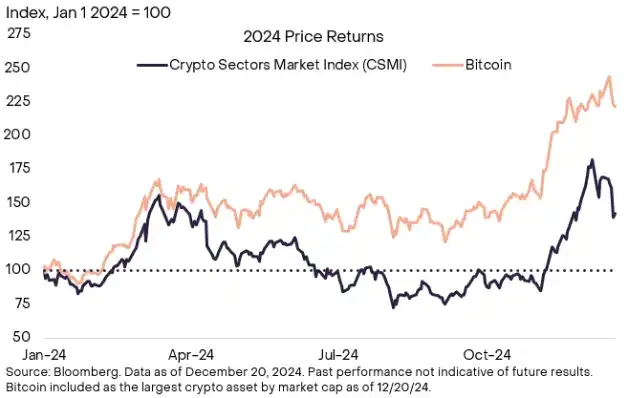
Figure 1: Positive Returns of the 2024 Grayscale Crypto Sectors Index
Cryptocurrency valuations soared in the fourth quarter of 2024, primarily due to the market's positive reaction to the U.S. election results. According to the Crypto Sector Market Index (CSMI), the industry's total market cap increased from $1 trillion to $3 trillion in this quarter. Figure 2 compares the total cryptocurrency market cap to various traditional public and private market asset categories. For instance, the current market value of the digital asset industry is roughly equivalent to the global inflation-linked bond market – more than double the U.S. high-yield bond market, yet still significantly below the global hedge fund industry or the Japanese stock market.
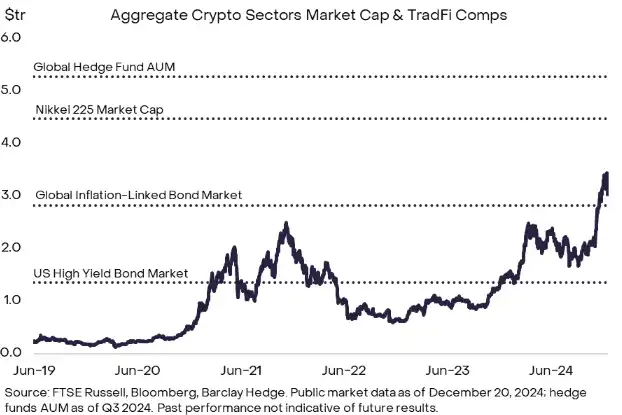
Figure 2: Cryptocurrency Market Cap Increases by $1 Trillion in Q4 2024
Due to the valuation increase, many new tokens met the inclusion criteria of Grayscale's Crypto Sectors framework (which sets a minimum market cap requirement of $1 billion for most tokens). In this quarter's rebalance, Grayscale added 63 new assets to the index series, now totaling 283 tokens. The consumer and culture sectors saw the most new token additions, reflecting the ongoing strong performance of meme coins and the appreciation of various assets related to gaming and social media.
By market cap, the largest new asset in Crypto Sectors is Mantle, an Ethereum Layer 2 protocol, which now meets the minimum liquidity requirement (for more detailed information on Grayscale index inclusion criteria, please refer to here).
Smart Contract Platform Competition
The smart contract platform space may be the most fiercely competitive submarket in the digital asset industry. While 2024 was a milestone year for the leader in this space, Ethereum—receiving approval for a U.S. exchange-traded product (ETP) and undergoing significant upgrades—ETH's performance lags behind some competitors like Solana, the second-largest asset by market cap in the space. Investors are also turning their attention to other L1 networks, including high-performance blockchains like Sui and the blockchain TON integrated with the Telegram platform.
When building infrastructure for application developers, architects of smart contract blockchains face a variety of design choices. These design choices impact the three factors that make up the "blockchain trilemma": network scalability, network security, and network decentralization. For example, prioritizing scalability often manifests as high transaction throughput and low fees (e.g., Solana), while prioritizing decentralization and network security may result in lower throughput and higher fees (e.g., Ethereum). These design choices lead to different block times, transaction throughputs, and average transaction fees (Figure 3).
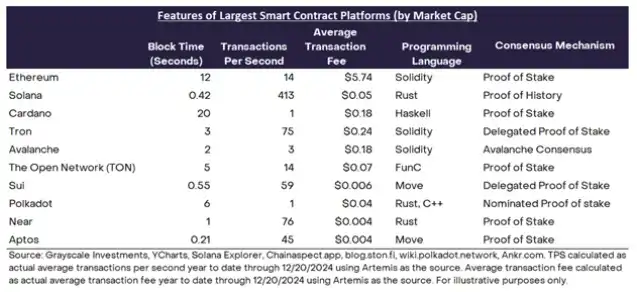
Figure 3: Smart Contract Platforms Have Different Technical Features
Regardless of design choices and network trade-offs, smart contract platforms derive their value through network fee revenue. While other metrics such as total TVL are also crucial, fee revenue can be seen as a primary driver of token value accumulation in this market segment (related reading: The Value War in Smart Contract Platforms).
As shown in Figure 4, there is a statistical relationship between smart contract platform fee revenue and market capitalization. The stronger the network's ability to generate fee revenue, the greater its ability to pass value to the network in the form of token burning or staking rewards. This quarter, the Top 20 token list listed by Grayscale Research includes some smart contract platform tokens: ETH, SOL, SUI, and OP.
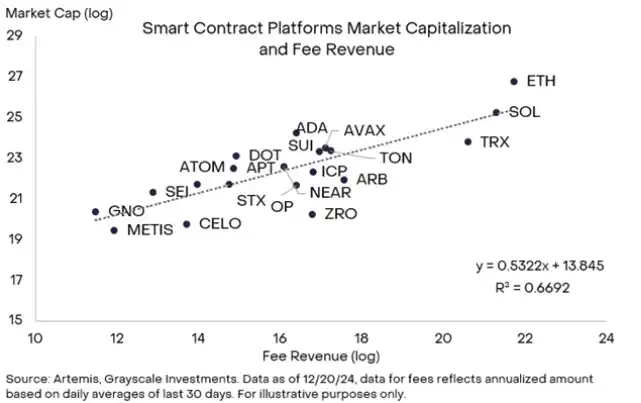
Figure 4: All smart contract platforms are competing for fee revenue
Grayscale Research Top 20 Token List
Each quarter, the Grayscale Research team analyzes hundreds of digital assets to provide insights for the rebalancing process of the FTSE/Grayscale Crypto Sectors index series. Following this process, Grayscale Research generates a list of the top 20 assets within the Crypto Sectors domain. The top 20 represent diversified assets across Crypto Sectors and these assets may have high potential in the upcoming quarter (Figure 4). The selection of this list combines a range of factors, including network growth/adoption, upcoming catalysts, sustainability of fundamentals, token valuation, token supply inflation, and potential tail risks.
In Q1 2025, Grayscale will focus on tokens that are involved in at least one of the following three core market themes:
· The U.S. election and its potential impact on industry regulation, especially in decentralized finance (DeFi) and staking;
· Continued breakthroughs in decentralized AI technology and the use of AI agents in blockchain;
· Growth of the Solana ecosystem.
Based on these themes, the following six assets have been added to the Top 20 list for the first quarter of 2025:
1. Hyperliquid (HYPE): Hyperliquid is an L1 blockchain designed to support on-chain financial applications. Its primary application is a decentralized exchange (DEX) for perpetual futures with a fully on-chain order book.
2. Ethena (ENA): The Ethena protocol has evolved into the new stablecoin USDe, primarily collateralized by Bitcoin and Ethereum hedge positions. Specifically, the protocol holds long positions in Bitcoin and Ether as well as short positions in perpetual futures contracts of the same assets. The staked version of this token provides yield through the price differential between spot and futures.
3. Virtual Protocol (VIRTUAL): Virtual Protocol is a platform built on the Ethereum L2 network Base to create AI agents. These AI agents are designed to mimic human decision-making and autonomously perform tasks. The platform allows for the creation and co-ownership of tokenized AI agents that can interact with their environment and other users.
4. Jupiter (JUP): Jupiter is a top-tier DEX aggregator on Solana with the highest TVL in the network. With retail traders increasingly entering the cryptocurrency market through Solana and speculative activities surrounding Solana-based memecoins and AI agent tokens on the rise, we believe Jupiter is well-positioned to capitalize on this growing market.
5. Jito (JTO): Jito is a liquidity protocol on Solana. Jito has seen significant adoption over the past year and boasts the best financials in the cryptocurrency space, with fee revenue surpassing $5.5 billion in 2024.
6. Grass (GRASS): Grass is a decentralized data network that rewards users for sharing their unused internet bandwidth through a Chrome extension. This bandwidth is used to scrape online data, which is then sold to AI companies and developers for training machine learning models, effectively enabling web data scraping while compensating users.
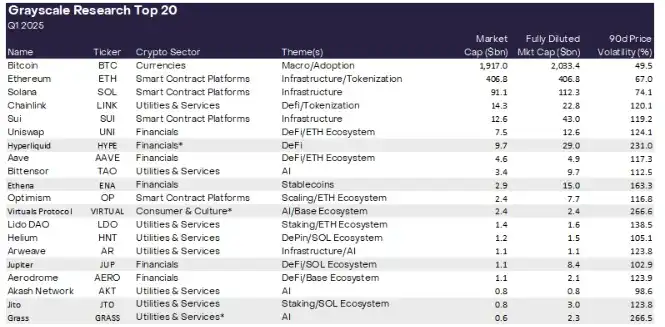
Figure 5: Top 20 Additions including DeFi Applications, AI Agents, and the Solana Ecosystem
Note: Shadow denotes new tokens coming in the upcoming quarter (Q1 2025). "*" denotes sector-related assets not included in the Crypto Sectors index. Data Source: Artemis, Grayscale Investments. Data as of December 20, 2024, for reference only. Assets are subject to change. Grayscale and its affiliates and clients may hold positions in the digital assets discussed in this document. All Top 20 assets are highly price volatile and should be considered high-risk assets.
In addition to the new themes mentioned above, Grayscale remains bullish on themes from the past few quarters, such as Ethereum scaling solutions, tokenization, and Decentralized Physical Infrastructure (DePIN). These themes are still reflected through protocols re-entering the Top 20, such as Optimism, Chainlink, and Helium.
This quarter, we have removed Celo from the Top 20. Grayscale Research continues to be optimistic about these projects and believes they remain integral to the crypto ecosystem. However, the revised Top 20 list may offer a more compelling risk-reward profile in the next quarter.
Investing in crypto assets carries risks, some of which are unique to the asset class, including smart contract vulnerabilities and regulatory uncertainty. Furthermore, all assets in the Top 20 exhibit high volatility and should be considered high-risk, making them unsuitable for all investors. Given the risks of the asset class, any investment in digital assets should be considered in the context of a portfolio and with respect to an investor's financial goals.
You may also like

The New Yorker in-depth investigation interpretation: Why do OpenAI insiders consider Altman untrustworthy?
Two Divided Worlds: Insights from the New York Digital Asset Summit, the Most Institutionalized Blockchain Conference

Top Ten Reveals of CZ's New Book: Advance Knowledge of "94", the Inside Story of Huobi's Change of Ownership Made Public for the First Time

Ceasefire Overnight Erases War Premium, Three Fault Lines Only One Sealed | Rewire News Morning Brief

Robinhood Secures 'Trump Account': Enabling Millions of Newborns to Access the Stock Market

Afraid to Open the Pandora's Box? Anthropic's Most Powerful Model Ever Dares Not Be Disclosed

US-Iran Ceasefire: A Temporary Pause or Prelude to Renewed Conflict? Market Outlook for Oil, Gold, and Bitcoin
April 8, 2026 – A temporary ceasefire between the U.S. and Iran has provided some immediate relief to the global markets, but the fundamental question remains: Will the cessation of hostilities hold, or is this merely a brief reprieve before a resumption of conflict? As the situation unfolds, market observers are closely monitoring how key assets like oil, gold, and Bitcoin will react in the coming weeks. This article explores whether the ceasefire is a sign of lasting peace, assesses the short-term market implications, and delves into the evolving role of Bitcoin in the global financial landscape.

WEEX Market Update: U.S.-Iran Ceasefire Sparks Bitcoin Price Surge
April 8, 2026 – In a significant shift in global geopolitics, U.S. President Donald Trump has announced a temporary two-week ceasefire with Iran, resulting in a notable market reaction across various asset classes. This development comes after discussions between Trump, Pakistani Prime Minister Shahbaz Sharif, and Army Chief General Asim Munir. The announcement is already reverberating through markets, particularly in oil, gold, and cryptocurrencies.
Morning Report | South Korean financial institutions pilot stablecoin payments for foreign users; Morgan Stanley Bitcoin ETF is about to be listed; CME plans to launch AVAX and SUI futures contracts

EigenCloud Founder: AI and Cryptocurrency are Creating the Next Trillion-Dollar Asset Class
From Panic to Pumps: How Bitcoin Traders Are Playing the 2-Week US-Iran Ceasefire
For most people, the two-week US-Iran ceasefire is about geopolitics, oil prices, and whether World War III gets postponed. But for crypto traders glued to their screens late Sunday night, it was something else entirely: the clearest risk-on signal in months.

US-Iran Ceasefire Triggers Oil Plunge, Bitcoin Surge, and Gold Rally
Despite the sharp rally, caution is warranted. The $70,000–$72,000 zone has historically been strong resistance. The ceasefire is only temporary (two weeks), and any breakdown in negotiations could trigger a sell-off toward the $62,000–$65,000 support zone. For now, Bitcoin needs to close decisively above $72,500 to confirm a true breakout; failure to do so within 48–72 hours could lead to a swift retracement.

OpenAI has no "New Deal," a blueprint for AI that refuses to pay.

Wall Street Flash Mob Run? Mega-Cap Stock Plunge, Goldman's Great Escape, Illustrated Guide to Private Credit Crisis

OpenAI Feud: Power, Trust, and the Uncontrollable Boundaries of AGI
「AI Doomsday Cult」 Sends Operatives into the Strait of Hormuz: What Did They Find?
Everyone is waiting for the war to end, but is the oil price signaling a prolonged conflict?


 App
App