
 Buy Crypto
- Markets
 Futures
- Spot
- Copy Trade
- Earn
- More
Hyperliquid Whale Holding Positions Reach $56.52 Billion

Key Takeaways
- Hyperliquid platform whales currently hold an impressive $56.52 billion in positions.
- The long to short position ratio on the platform stands at 0.89, indicating a slight preference for short positions.
- Out of the total holdings, $26.54 billion is allocated to long positions, representing 46.96% of the total.
- In contrast, short positions account for $29.98 billion, which is 53.04% of the total holdings.
- This data provides insights into the strategic positioning of large investors on Hyperliquid.
WEEX Crypto News, 26 January 2026
Understanding Hyperliquid’s Current Whale Holdings
Hyperliquid, a significant player in the cryptocurrency market, has shown intriguing dynamics concerning the positioning of whale investors. According to data provided by Coinglass, these large-scale investors currently hold a monumental $56.52 billion in various positions. The platform’s long to short position ratio, a crucial metric for understanding market sentiment, is recorded at 0.89. This ratio suggests a marginal lean towards short positions among these major traders.
Breakdown of Hyperliquid Whale Positions
Diving deeper into the composition of these holdings reveals that $26.54 billion is dedicated to long positions, forming 46.96% of the total whale positions on Hyperliquid. Long positions generally indicate an expectancy of rising asset prices, but in this scenario, they are slightly outnumbered by short positions. The short bets, amounting to $29.98 billion, make up 53.04% of the holdings. This larger portion of short positions reflects a more conservative or bearish outlook from these whales, perhaps anticipating market corrections or taking advantage of current market structures.
Strategic Implications of Whale Movements
The insights gained from this data offer a unique perspective on the strategic behavior of prominent investors in the cryptocurrency realm. The slightly higher percentage of short positions may indicate that these investors are hedging their bets against potential market downturns. The substantial amount held in short positions can also suggest these whales are positioning themselves to profit from any downward price movement in the assets they are involved with.
The behavior of whale investors like those on Hyperliquid can significantly influence market trends due to the large volumes they handle. Their decisions often ripple through the market, affecting prices and potentially guiding smaller investors’ strategies.
Visualizing Whale Liquidation Dynamics
Hyperliquid also provides tools such as the liquidation map offered by CoinGlass. This visualization aids in tracking the liquidation amounts across various price levels, offering a granular view of where significant activity might occur when market conditions trigger stop losses or liquidation points. Such tools are essential for traders aiming to optimize their strategies by anticipating potential shifts in the market driven by whale movements.
Recent Losses in Whale Trades
Recent reports indicate that whales engaged in shorting trades on platforms like Hyperliquid have faced notable losses. For instance, a particular whale reportedly faced a loss of approximately $4.77 million after an aggressive short sale of Ethereum (ETH) using maximum leverage. Such events highlight the risks even experienced traders face and the complexity of predicting market movements accurately.
Implications for the Broader Market
These losses can serve as cautionary tales for the wider trading community, showing that even substantial market players with significant resources at their disposal are not immune to market volatility. As such events unfold, they may impact market confidence and alter trading behaviors, potentially leading to shifts in liquidity and volatility levels.
Contrasting Data Points and Market Insights
While the aforementioned Coinglass data provides a snapshot of current holdings, it’s crucial to recognize discrepancies or evolving narratives presented by other platforms. For instance, another set of data cited Hyperliquid whale holdings at $62.86 billion with a similar long to short ratio of 0.89, showcasing how whale positions may fluctuate over time.
These variations underline the importance of cross-referencing data sources for traders and analysts aiming to construct the most accurate pictures of market conditions. Engaging with multiple datasets ensures a broader understanding of market sentiment and whale activity, guiding more informed decisions.
FAQs
What is the significance of the long-to-short ratio in cryptocurrency trading?
The long-to-short ratio helps traders and analysts gauge market sentiment by comparing the amount of long (bullish) and short (bearish) positions. A ratio below 1 suggests a preference for short positions among traders, indicating a bearish outlook.
How do whale trades affect the cryptocurrency market?
Whale trades, due to their size and volume, can significantly impact market prices and liquidity. Large buy or sell orders from whales often lead to rapid price increases or decreases, influencing overall market dynamics.
Why is the Hyperliquid platform closely observed by investors?
Hyperliquid is observed by investors due to its significant whale activity, which provides insights into the strategies and market expectations of these large market participants. Their actions can foreshadow broader market movements.
How can traders benefit from using tools like the liquidation map on CoinGlass?
Tools like the liquidation map provide valuable insights into where major liquidations occur, helping traders anticipate potential price movements and adjust their strategies accordingly to optimize entry and exit points in the market.
What are the risks associated with shorting cryptocurrencies at high leverage?
Shorting cryptocurrencies at high leverage exposes traders to increased risks of substantial losses if the market moves against their position. Given the volatile nature of cryptocurrencies, such trades require careful risk management and consideration of market trends.
You may also like
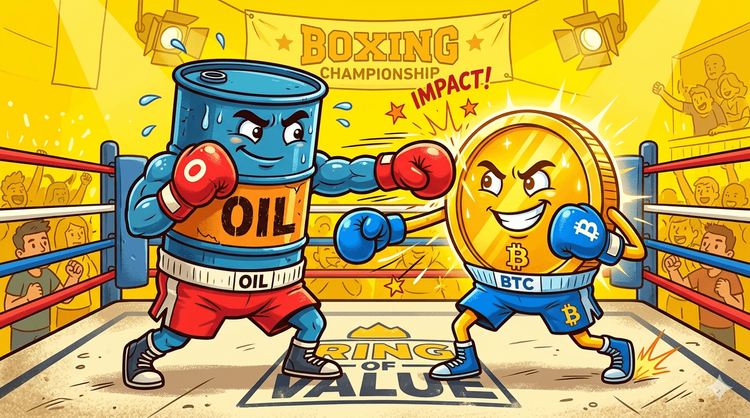
How the US-Iran War Could Affect Oil and Bitcoin Prices (Latest Analysis)
The outbreak of the US-Iran war on February 28, 2026, has provided an unprecedented real-time laboratory for understanding how geopolitical oil shocks interact with an increasingly institutionalized cryptocurrency market. This article examines the relationship between crude oil prices and Bitcoin throughout the conflict, analyzing price movements, correlation patterns, and the underlying transmission mechanisms.

OpenAI Wants to Write Its Own Rules|Rewire News Brief

Chaos Labs Exits, Who Will Pick Up Aave's Risk?
Stealthy Financial War? Iran Collects Strait Transit Fees in Stablecoin

OpenAlice: One Person, That's a Jane Street | Project Overview

The Small-Town Youth Labeling Big AI Models

Morning Report | Strategy increased its holdings by 4,871 BTC last week; Toss plans to develop its own blockchain and issue a native cryptocurrency; OpenAI's CFO privately questioned the timing of the IPO in 2026

Research: Stablecoins have a trading volume of 35 trillion a year, how much of it is real payment?

Galaxy Research: AI agents are giving rise to new species on the blockchain, how zero-human companies activate the financial flywheel

Data Research: How big is the liquidity gap between Hyperliquid and CME crude oil?
Why Are GPU Prices Skyrocketing Out of Control?

How to Master Claude Cowork Completely?

70-Page Confidential Letter Alleges First Charge of 'Lying,' Altman Tells Board 'I Can't Change My Personality'
Is Altcoin Season Starting in 2026? What Traders Should Watch Now
Altcoin season signals are becoming clearer in 2026 as capital rotation across crypto markets accelerates. Here’s what traders should watch and how strategy-based participation is evolving in the current market cycle.
Bitcoin ETF Inflows in 2026: Impact on BTC Price and Crypto Market Trends
Bitcoin ETF inflows are reshaping BTC price trends and crypto market liquidity in 2026. See how institutional capital is influencing volatility, trading behavior, and portfolio allocation strategies across crypto markets.
Visa's Stablecoin Strategy: Cards, Settlement, and the Future

Stock Market Split

How to capture the next Alpha in the narrative of predictive markets?
How the US-Iran War Could Affect Oil and Bitcoin Prices (Latest Analysis)
The outbreak of the US-Iran war on February 28, 2026, has provided an unprecedented real-time laboratory for understanding how geopolitical oil shocks interact with an increasingly institutionalized cryptocurrency market. This article examines the relationship between crude oil prices and Bitcoin throughout the conflict, analyzing price movements, correlation patterns, and the underlying transmission mechanisms.


 App
App