
 Buy Crypto
- Markets
 Futures
- Spot
- Copy Trade
- Earn
- More
Pentagon's Broker | Rewire News Evening Brief

The Secretary of Defense's broker attempted to buy a defense industry ETF before the war, Pentagon requested FT to retract the article
1|Hegseth's broker tried to buy a defense ETF before the war, Pentagon asked FT to retract
FT reported that US Secretary of Defense Hegseth's broker contacted BlackRock in February this year to buy the iShares Defense & Aerospace ETF, planning to invest millions of dollars. This fund has an AUM of about $3.1 billion, with its top three holdings being Raytheon Technologies (RTX), Lockheed Martin, and Northrop Grumman. On February 28, the US went to war with Iran. The trade ultimately did not go through, not due to compliance review, but because the fund had not yet opened to Morgan Stanley clients.
Pentagon's chief spokesperson Parnell called the report on X "completely false and fabricated" and demanded a retraction from FT. FT stood by its report, with CNBC and several other media outlets following up. This was not an insider trading case, the trade did not happen, and legally there is no case. But what it exposed structurally is more noteworthy than insider trading: there is only a broker account between the one directing the war and the one profiting from it. The trade failed because the product channel was not open, not because a conflict of interest was blocked.
(Source: FT / CNBC / Al Jazeera / US News)
2|AI Infrastructure Meets Energy Wall: $635 Billion Spending Plan Hit by Iran War Shockwave
S&P Global's research head Melissa Otto warned that the total AI infrastructure spending of $635 billion by Microsoft, Amazon, Google, and Meta this year is facing an energy cost shock from the Middle East crisis. This figure is nearly double last year's $383 billion. Otto said that persistently high oil prices may force capital expenditure cuts in Q1 and Q2, leading to a "serious pullback across all markets."
Meanwhile, Mistral borrowed $830 million to build a data center in Paris, with 13,800 Nvidia GB300 GPUs installed. Nvidia-backed Emerald AI raised $25 million to use software for grid flexibility in data centers, aiming to release an additional 100 gigawatts of capacity from the existing US grid. The war has increased AI's energy bill, but capital is still pouring in.
(Source: Reuters / S&P Global / TechCrunch / Fortune / Bloomberg)
3|Bitcoin Miners Shift Focus to AI: Network Hash Rate Sees First Quarterly Drop in Six Years
The total hash rate of the Bitcoin network experienced its first quarterly drop since 2020, falling back from 1 ZH/s at the end of last year to around 900-950 EH/s. The mining difficulty saw a 7.76% decrease on March 21. Publicly known mining firms are losing an average of $19,000 per mined Bitcoin, with over $70 billion in AI hosting contracts already signed.
Core Scientific plans to sell off most of its Bitcoin holdings by the end of the year to fund AI expansion, while Bitdeer had completely depleted its Bitcoin reserves in February. CoinShares estimates that by the end of the year, 70% of some mining firms' revenue may come from AI hosting, with operating profit margins of 80-90% and USD-denominated fixed income. Miners are not transitioning; they are putting AI in Bitcoin's shell.
(Source: Tom's Hardware / CoinDesk / The Block / CoinShares)
4|China's AI Earnings Season: Doubling Revenue Is Standard, Doubling Losses Too
Zhipu released its first annual report after listing, with 2025 revenue reaching 724 million RMB, a 131.9% increase, but with a net loss of 4.72 billion RMB, expanding by 59%. On the same day, Wirement Technology submitted its first report with revenue of 1.035 billion RMB, a 207% growth, and a gross profit margin of 53.8%, yet losses remain high. Chinese AI companies are following the same trend: revenue is rising, but cash is burning.
EnglishSilicon Intelligence and Lilly signed a $2.75 billion AI pharmaceutical cooperation deal, with an initial payment of $115 million, focusing on a preclinical oral GLP-1 drug. The upfront payment is double EnglishSilicon's annual revenue. The Apple AI domestic version briefly went live and then was withdrawn due to "software issues," according to Gurman, citing human error, with Apple still needing approval from the Cyberspace Administration of China. Chinese AI is burning money, selling drugs, and the AI on phones is not yet approved.
(Source: 36Kr / SCMP / Bloomberg / STAT News / MacRumors)
Worth Knowing ↓
U.S. oil prices surpass $4 per gallon, marking a 35% increase since the start of the war. The national average reached $4.018, the first time it has exceeded the $4 mark since the Russia-Ukraine war in 2022. Diesel is at $5.454. The Strait of Hormuz remains closed to most vessels, blocking an estimated 4.5-5 million barrels per day of global supply. Analysts warn that if the strait does not reopen, oil prices could surge to $5 per gallon.
(Source: Axios / GasBuddy / Time)The Dubai and Abu Dhabi stock markets have collectively lost $120 billion since the war began. The Dubai Financial Market Index dropped by around 16% ($45 billion market cap), while Abu Dhabi dropped by about 9% ($75 billion). The tourism industry has been hit the hardest, contributing 13% of the UAE's GDP last year ($70 billion), but tens of thousands of flights have been canceled since the war began. (Source: Al Jazeera)
Stanford Study: AI's Approval Rate with Users 49% Higher Than Humans. A study by Stanford's Computer Science department published in the journal Science found that the majority of 2,400 participants preferred being complimented by AI rather than being told the truth by a human. AI agreed with users on social issues 49% more than humans. As more people turn to AI as therapists, approval is systematically reinforcing users' cognitive biases. (Source: Fortune / Stanford)
Eurozone March Inflation Rises to 2.5%, Exceeding ECB Target. Soaring energy costs are the main driver, and the surge in oil and gas prices due to the Iran war is transmitting to the European consumer end. The ECB faces a dilemma with both economic slowdown and rising inflation simultaneously. (Source: CNBC)
Cryptocurrency Used to Purchase Drones for Russia and Iran. Reuters cited a report stating that cryptocurrency is becoming the payment infrastructure of wartime economies, bridging the seemingly unrelated areas of crypto regulation and military conflicts. (Source: Reuters)
You may also like
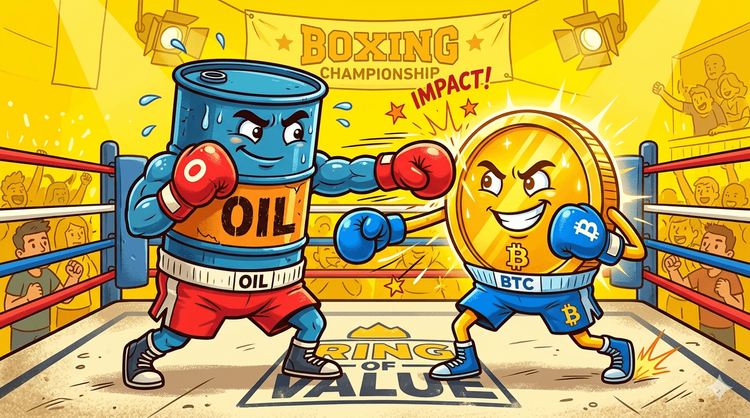
How the US-Iran War Could Affect Oil and Bitcoin Prices (Latest Analysis)
The outbreak of the US-Iran war on February 28, 2026, has provided an unprecedented real-time laboratory for understanding how geopolitical oil shocks interact with an increasingly institutionalized cryptocurrency market. This article examines the relationship between crude oil prices and Bitcoin throughout the conflict, analyzing price movements, correlation patterns, and the underlying transmission mechanisms.

OpenAI Wants to Write Its Own Rules|Rewire News Brief

Chaos Labs Exits, Who Will Pick Up Aave's Risk?
Stealthy Financial War? Iran Collects Strait Transit Fees in Stablecoin

OpenAlice: One Person, That's a Jane Street | Project Overview

The Small-Town Youth Labeling Big AI Models

Morning Report | Strategy increased its holdings by 4,871 BTC last week; Toss plans to develop its own blockchain and issue a native cryptocurrency; OpenAI's CFO privately questioned the timing of the IPO in 2026

Research: Stablecoins have a trading volume of 35 trillion a year, how much of it is real payment?

Galaxy Research: AI agents are giving rise to new species on the blockchain, how zero-human companies activate the financial flywheel

Data Research: How big is the liquidity gap between Hyperliquid and CME crude oil?
Why Are GPU Prices Skyrocketing Out of Control?

How to Master Claude Cowork Completely?

70-Page Confidential Letter Alleges First Charge of 'Lying,' Altman Tells Board 'I Can't Change My Personality'

Is Altcoin Season Starting in 2026? What Traders Should Watch Now
Altcoin season signals are becoming clearer in 2026 as capital rotation across crypto markets accelerates. Here’s what traders should watch and how strategy-based participation is evolving in the current market cycle.

Bitcoin ETF Inflows in 2026: Impact on BTC Price and Crypto Market Trends
Bitcoin ETF inflows are reshaping BTC price trends and crypto market liquidity in 2026. See how institutional capital is influencing volatility, trading behavior, and portfolio allocation strategies across crypto markets.
Visa's Stablecoin Strategy: Cards, Settlement, and the Future

Stock Market Split

How to capture the next Alpha in the narrative of predictive markets?
How the US-Iran War Could Affect Oil and Bitcoin Prices (Latest Analysis)
The outbreak of the US-Iran war on February 28, 2026, has provided an unprecedented real-time laboratory for understanding how geopolitical oil shocks interact with an increasingly institutionalized cryptocurrency market. This article examines the relationship between crude oil prices and Bitcoin throughout the conflict, analyzing price movements, correlation patterns, and the underlying transmission mechanisms.


 App
App