
 Buy Crypto
- Markets
 Futures
- Spot
- Copy Trade
- Earn
- More
PIPPIN and Other Cryptocurrencies Face Market Pressure

Key Takeaways
- The cryptocurrency PIPPIN saw a significant 9.10% decline in its value, attributed primarily to concentrated coin ownership and a lack of advancements in its basic infrastructure.
- Starknet (STRK), although down by 1.94%, displayed resilience typical of Layer 2 blockchain solutions, indicating a moderate market reaction.
- VeChain (VET), maintaining a minor decline of 1.32%, benefitted from its practical applications in supply chain management, preserving its market stability.
- Polkadot (DOT) and Sei (SEI) dipped modestly by 1.16% and 0.99% respectively, underscoring how larger blockchain networks and practical application ecosystems withstand market contractions better.
- Current market conditions underscore the heightened volatility of altcoins, particularly emphasizing cautious engagement and risk management for investors.
WEEX Crypto News, 29 December 2025
An Overview of the Market Decline
In the volatile world of cryptocurrencies, the market’s risk contraction phase has been prominently affecting altcoins. Among the hardest hit is PIPPIN, a relatively new entrant, which fell by 9.10% to a current price of $0.42. This decline reflects broader market sentiments where altcoins endure substantial pressure due to inherent weaknesses in their foundational dynamics. Approximately 84.73% of altcoins have dipped below their Token Generation Event (TGE) levels, indicating a prevalent trend for newly issued tokens to perform poorly post-release.
PIPPIN: The Struggles of a New Entrant
PIPPIN’s price is not only impacted by market forces but also by internal structural issues. The high concentration of supply—where only about 93 wallets control 80% of the token distribution—raises significant concerns about price stability. With such a level of centralized control, PIPPIN’s value is particularly vulnerable to abrupt fluctuations. Furthermore, updates on its project fundamentals are considerably lacking, contributing further to its precarious situation.
Starknet and VeChain: Resilience Amid Turbulence
In contrast, Starknet (STRK) has shown a smaller decline of 1.94%, illustrating the resilience associated with infrastructure-based blockchain solutions. Layer 2 solutions like Starknet are regarded for their ability to maintain better market stability compared to more speculative tokens.
VeChain (VET) also exhibited a relatively stable performance despite a 1.32% drop. Its application-driven approach, especially in the supply chain sector, provides a foundational layer of support, which helps buffer it against wide market volatility. The stability of VeChain underscores the importance of tangible application use cases in safeguarding an asset’s value.
Other Noteworthy Movements: Polkadot and Sei
Polkadot (DOT), another significant player, saw a slight decrease of 1.16%. Despite this minimal drop, it stands as a testament to the project’s large market cap and its established position among top blockchain solutions, contributing to its robustness against larger market dips. Similarly, the Sei ecosystem experienced a more subdued decline of 0.99%. Though Sei’s ecosystem once enjoyed exponential growth, a curtailed investment sentiment currently weighs it down.
Market Analysis: Navigating through a Risk-Intense Environment
As these varying movements indicate, the current market environment stresses the volatility and risk endemic to the altcoin sector. With most new projects struggling to maintain their valuation post-launch, the risks associated with highly concentrated token ownership become even more prominent.
Investors would do well to approach these markets with caution. Focusing on assets with real-world application and robust infrastructure, like VeChain and Polkadot, could potentially offer more stability. Conversely, new entrants such as PIPPIN, lacking in these areas, amplify investment risks.
FAQ
What has caused the sharp decline in PIPPIN’s value?
PIPPIN experienced a steep decline largely due to a high concentration of its tokens in a small number of wallets, alongside insufficient updates to its project fundamentals, making it vulnerable to price volatility.
Why are VeChain and Starknet less affected by the current market downturn?
VeChain and Starknet are less affected due to their intrinsic application in real-world scenarios, which provides a buffer against market volatility. These blockchain solutions are valued for their technological utility, contributing to their resilience.
How does Polkadot maintain stability in turbulent markets?
Polkadot’s larger market capitalization and its role as a significant player in blockchain infrastructure help cushion its value against severe market fluctuations, making it more stable compared to speculative altcoins.
Should new investors consider investing in newly issued tokens during a market downturn?
Investors should exercise caution with newly issued tokens during downturns due to their historical trend of underperformance post-launch. Diversified investment in projects with solid foundations and practical applications is advisable.
What strategies can investors use to manage risk in volatile crypto markets?
Investors can manage risk by diversifying their portfolio, focusing on cryptocurrencies with real-world applications, avoiding tokens with concentrated supplies, and employing disciplined risk management strategies like setting stop-loss orders and reducing leverage.
You may also like
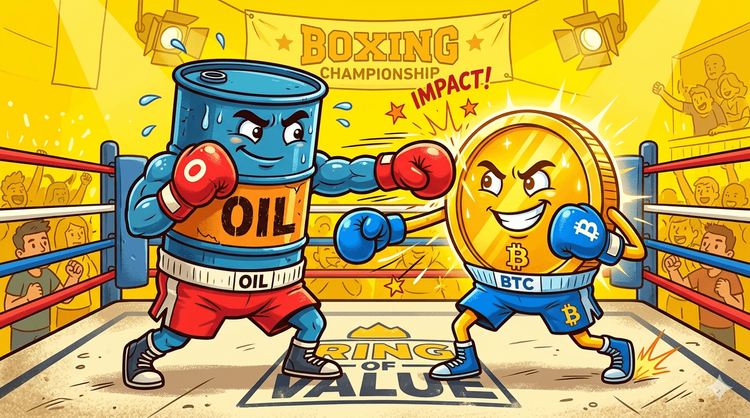
How the US-Iran War Could Affect Oil and Bitcoin Prices (Latest Analysis)
The outbreak of the US-Iran war on February 28, 2026, has provided an unprecedented real-time laboratory for understanding how geopolitical oil shocks interact with an increasingly institutionalized cryptocurrency market. This article examines the relationship between crude oil prices and Bitcoin throughout the conflict, analyzing price movements, correlation patterns, and the underlying transmission mechanisms.

OpenAI Wants to Write Its Own Rules|Rewire News Brief

Chaos Labs Exits, Who Will Pick Up Aave's Risk?
Stealthy Financial War? Iran Collects Strait Transit Fees in Stablecoin

OpenAlice: One Person, That's a Jane Street | Project Overview

The Small-Town Youth Labeling Big AI Models

Morning Report | Strategy increased its holdings by 4,871 BTC last week; Toss plans to develop its own blockchain and issue a native cryptocurrency; OpenAI's CFO privately questioned the timing of the IPO in 2026

Research: Stablecoins have a trading volume of 35 trillion a year, how much of it is real payment?

Galaxy Research: AI agents are giving rise to new species on the blockchain, how zero-human companies activate the financial flywheel

Data Research: How big is the liquidity gap between Hyperliquid and CME crude oil?

WEEX P2P now supports GHS, ETB & ZAR—Merchant Recruitment Now Open
To make crypto deposits easier, WEEX has officially launched its P2P trading platform and continues to expand fiat support. We're excited to announce that the Ghana Cedi (GHS), Ethiopian Birr (ETB) and South African Rand (ZAR) are now available on WEEX P2P!
Why Are GPU Prices Skyrocketing Out of Control?

How to Master Claude Cowork Completely?

70-Page Confidential Letter Alleges First Charge of 'Lying,' Altman Tells Board 'I Can't Change My Personality'
Is Altcoin Season Starting in 2026? What Traders Should Watch Now
Altcoin season signals are becoming clearer in 2026 as capital rotation across crypto markets accelerates. Here’s what traders should watch and how strategy-based participation is evolving in the current market cycle.
Bitcoin ETF Inflows in 2026: Impact on BTC Price and Crypto Market Trends
Bitcoin ETF inflows are reshaping BTC price trends and crypto market liquidity in 2026. See how institutional capital is influencing volatility, trading behavior, and portfolio allocation strategies across crypto markets.
Visa's Stablecoin Strategy: Cards, Settlement, and the Future

Stock Market Split
How the US-Iran War Could Affect Oil and Bitcoin Prices (Latest Analysis)
The outbreak of the US-Iran war on February 28, 2026, has provided an unprecedented real-time laboratory for understanding how geopolitical oil shocks interact with an increasingly institutionalized cryptocurrency market. This article examines the relationship between crude oil prices and Bitcoin throughout the conflict, analyzing price movements, correlation patterns, and the underlying transmission mechanisms.


 App
App