
 Buy Crypto
- Markets
 Futures
- Spot
- Copy Trade
- Earn
- More
StandX launches SIP1 and SIP2: Position subsidy mechanism goes live, reshaping on-chain trading and revenue structure

In the context of the continuous evolution of decentralized derivatives trading, StandX is constantly strengthening its competitiveness through product innovation. Recently, StandX officially launched two core upgrade proposals, SIP1 (Block Trade) and SIP2 (Position Yield), which comprehensively enhance user experience and strategy efficiency from the dimensions of trade execution and capital returns. This also marks a further deepening of StandX's product mechanisms and yield design, signaling the project's ongoing advancement.
- SIP1: On-chain Bulk Trading Price Discovery Mechanism
The launch of SIP1 is primarily aimed at users with large trading needs, providing a more efficient and low-impact on-chain transaction method.
In a traditional on-chain trading environment, large orders often face issues such as severe slippage, high market impact costs, and insufficient liquidity. SIP1 introduces a mechanism similar to "over-the-counter matching + on-chain settlement," allowing users to complete price discovery and execution for bulk trades on-chain.
Its core value lies in:
Reducing slippage impact: Achieving an almost "no slippage" trading experience through specialized price negotiation and matching mechanisms.
Optimizing transaction efficiency: Avoiding the costs and delays associated with filling orders one by one in a public order book.
Enhancing capital utilization: More suitable for institutions, whale users, or high-frequency strategies with large entry and exit needs.
The essence of SIP1 is to bring the mature Block Trade mechanism from traditional finance onto the chain, providing DeFi users with more professional trading tools and enabling the on-chain market to have stronger capacity.
- SIP2: Embedding "Yield" into the Position Itself
If SIP1 addresses "how to trade better," then SIP2 answers another key question: how to ensure that the position itself continuously generates yield.
The core of SIP2 is to further enhance user returns based on the existing DUSD yield mechanism, binding returns directly to the positions. This means:
Trading users: When engaging in contract trading, the margin can not only earn DUSD yield but also continuously generate returns from the position.
Conservative users: Even without frequent trading, they can achieve stable returns by holding DUSD and participating in related strategies.
This design essentially breaks the "idle capital" problem found in traditional trading platforms, allowing user assets to have earning potential in any state.
- Strategy Yield Enhancement: Making Professional Trading More Advantageous
A key highlight of SIP2 is its significant enhancement effect on various strategies. Taking the common funding rate arbitrage as an example:
Traditional strategy yield source: Funding rate difference.
On StandX:
During the position opening process, the margin is DUSD, which can continuously earn basic returns.
At the same time, through SIP2, additional yield rewards can be obtained during the holding period.
This means that users not only gain returns from the strategy itself but also accumulate "margin yield + enhanced position yield." As a result,
this dual yield structure will significantly improve the overall ROI of strategies, making StandX more attractive to traders and quantitative teams.
- SIP1 + SIP2: Innovative Combination of Trading and Yield
Moreover, SIP1 and SIP2 do not exist in isolation but can form a synergistic effect:
Through SIP1: Users can complete large position openings with near-zero slippage.
Through SIP2: Continuously obtain enhanced returns during the holding period.
This combination means that the entire trading lifecycle is optimized from "entry" to "holding." Users can not only enter the market at better prices but also gain additional returns during the holding phase. This integrated design is a particularly innovative approach in the current DeFi derivatives market.
- StandX: Continuously Building a Differentiated PerpDEX
As a decentralized trading platform built by the core team of former Binance contracts, StandX has always focused on innovation in product mechanisms and user experience since its launch.
Currently, StandX has achieved the following key progress:
Daily trading volume exceeds $500 million.
DUSD TVL exceeds $100 million.
Built a yield-oriented trading system centered around DUSD (trading equals yield).
Unlike traditional PerpDEXs, StandX's core philosophy is to embed "earning capability" into the trading infrastructure itself, rather than relying on external incentives. The launch of SIP1 and SIP2 is a further embodiment of this philosophy, enhancing trading efficiency while strengthening capital returns, creating a clear differentiation for the platform in the competitive PerpDEX space.
You may also like
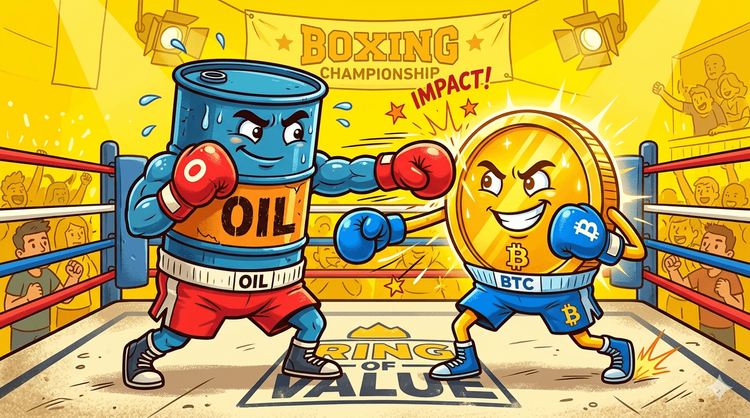
How the US-Iran War Could Affect Oil and Bitcoin Prices (Latest Analysis)
The outbreak of the US-Iran war on February 28, 2026, has provided an unprecedented real-time laboratory for understanding how geopolitical oil shocks interact with an increasingly institutionalized cryptocurrency market. This article examines the relationship between crude oil prices and Bitcoin throughout the conflict, analyzing price movements, correlation patterns, and the underlying transmission mechanisms.

OpenAI Wants to Write Its Own Rules|Rewire News Brief

Chaos Labs Exits, Who Will Pick Up Aave's Risk?
Stealthy Financial War? Iran Collects Strait Transit Fees in Stablecoin

OpenAlice: One Person, That's a Jane Street | Project Overview

The Small-Town Youth Labeling Big AI Models

Morning Report | Strategy increased its holdings by 4,871 BTC last week; Toss plans to develop its own blockchain and issue a native cryptocurrency; OpenAI's CFO privately questioned the timing of the IPO in 2026

Research: Stablecoins have a trading volume of 35 trillion a year, how much of it is real payment?

Galaxy Research: AI agents are giving rise to new species on the blockchain, how zero-human companies activate the financial flywheel

Data Research: How big is the liquidity gap between Hyperliquid and CME crude oil?

WEEX P2P now supports GHS, ETB & ZAR—Merchant Recruitment Now Open
To make crypto deposits easier, WEEX has officially launched its P2P trading platform and continues to expand fiat support. We're excited to announce that the Ghana Cedi (GHS), Ethiopian Birr (ETB) and South African Rand (ZAR) are now available on WEEX P2P!
Why Are GPU Prices Skyrocketing Out of Control?

How to Master Claude Cowork Completely?

70-Page Confidential Letter Alleges First Charge of 'Lying,' Altman Tells Board 'I Can't Change My Personality'

Is Altcoin Season Starting in 2026? What Traders Should Watch Now
Altcoin season signals are becoming clearer in 2026 as capital rotation across crypto markets accelerates. Here’s what traders should watch and how strategy-based participation is evolving in the current market cycle.
Bitcoin ETF Inflows in 2026: Impact on BTC Price and Crypto Market Trends
Bitcoin ETF inflows are reshaping BTC price trends and crypto market liquidity in 2026. See how institutional capital is influencing volatility, trading behavior, and portfolio allocation strategies across crypto markets.
Visa's Stablecoin Strategy: Cards, Settlement, and the Future

Stock Market Split
How the US-Iran War Could Affect Oil and Bitcoin Prices (Latest Analysis)
The outbreak of the US-Iran war on February 28, 2026, has provided an unprecedented real-time laboratory for understanding how geopolitical oil shocks interact with an increasingly institutionalized cryptocurrency market. This article examines the relationship between crude oil prices and Bitcoin throughout the conflict, analyzing price movements, correlation patterns, and the underlying transmission mechanisms.


 App
App