
 Buy Crypto
- Markets
 Futures
- Spot
- Copy Trade
- Earn
- More
Uniswap’s Proposal Drives UNI Price Surge Over 4%

Key Takeaways
- Uniswap’s UNI token saw a price spike of 4.35% in the last 24 hours, now priced at $6.27.
- A new proposal activating a mechanism to burn 100 million UNI tokens worth $5.96 billion was overwhelmingly approved by the community.
- Uniswap has eliminated all application and API interface fees, reducing costs for users and stimulating protocol adoption.
- The market has reacted positively, with strong price support from consistent net inflows.
- The initiative marks UNI’s transition from a governance token to a value-capturing asset with built-in deflationary measures.
WEEX Crypto News, 29 December 2025
In a remarkable turn of events, the price of Uniswap’s native token, UNI, has jumped by 4.35% within a single day, achieving a current price of $6.27. This uptick arrives in the wake of an approved governance proposal that introduces significant economic reforms aimed at enhancing the protocol’s utility and user involvement.
The Mechanism Behind UNI’s Rise
The recent rally in UNI’s price has been largely attributed to the successful passage of the ‘UNIfication’ proposal, which focuses on implementing a new fee mechanism and a token burn approach. After an impressive show of support—with around 125 million UNI in favor and only 742 against—the proposal enables the activation of a fee switch across both Uniswap v2 and v3 versions.
This fee switch signifies a major shift for UNI, evolving it from a simple governance token to a more robust value-capturing asset. The strategy involves the redeployment of protocol fees to systematically burn tokens, which directly reduces the circulating supply and establishes a deflationary trajectory for UNI. As a result, the $5.96 billion equivalent in UNI tokens will be burned, setting a precedent for continued price appreciation.
Zero Application and API Fees
Additionally, Uniswap has slashed all application and API fees to zero, thereby decreasing the cost for users within its ecosystem. This move is strategically aligned with the introduction of the fee switch, designed to balance user experience improvement with effective value capture. The aim is to foster a higher engagement rate and drive increased use of the platform, as cost reductions typically remove barriers for new and existing participants.
Market Reactions and Investor Sentiment
Since discussions surrounding the vote commenced on December 20, UNI’s price has risen significantly from approximately $5.30 to a peak of $6.52 before settling at its current rate. This represents an 18% increase over this period, reflecting the market’s active pricing in of these anticipated changes.
The optimism surrounding the governance changes is exemplified by sustained positive net capital flows into UNI, supporting its price movement. Both institutional and retail investors have shown confidence in the reformative measures introduced, suggesting a unified belief in the fundamental improvements to UNI’s financial architecture.
Strategic Implications for Investors
This initiative is considered transformative, not just for UNI but for the broader decentralized finance (DeFi) realm. By instituting a cost-free model alongside a deflationary supply model, Uniswap is positioning itself as a pioneer in operational efficiencies within the DeFi sector. For seasoned investors, this proactive adaptation signals a meaningful potential in value appreciation due to automated scarcity mechanisms.
FAQ
What is Uniswap’s new governance proposal about?
The ‘UNIfication’ proposal involves activating a fee switch to burn UNI tokens, reducing the supply and setting a deflationary pace for UNI as a value-capturing asset.
Why did UNI prices rise recently?
The price surged due to the market’s positive reaction to the governance changes, which included a token burn and zero-cost application and API interfaces, enhancing its economic model.
How did the community respond to the UNIfication proposal?
The community overwhelmingly supported it, with approximately 125 million UNI votes in favor, indicating near-unanimous consensus for the proposed changes.
What does the fee switch imply for the Uniswap protocol?
The activation of the fee switch entails using collected fees to burn UNI tokens, thus reducing the circulating supply and potentially increasing value through deflation.
Is Uniswap’s zero-fee strategy sustainable for the long term?
The zero-fee strategy aims to increase user adoption by lowering entry barriers and enhancing the user experience, which can lead to greater protocol usage and sustainability.
You may also like
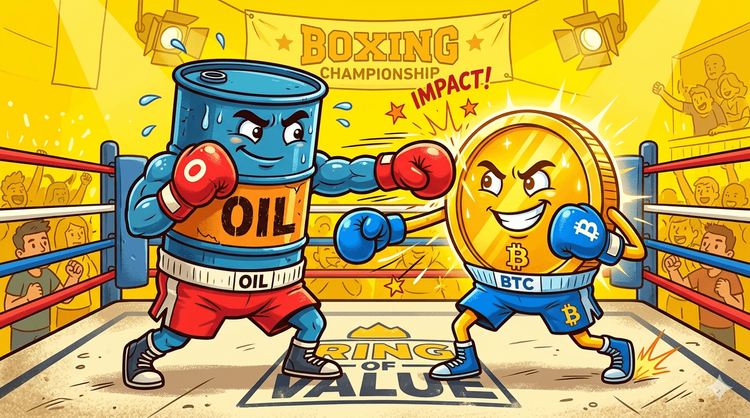
How the US-Iran War Could Affect Oil and Bitcoin Prices (Latest Analysis)
The outbreak of the US-Iran war on February 28, 2026, has provided an unprecedented real-time laboratory for understanding how geopolitical oil shocks interact with an increasingly institutionalized cryptocurrency market. This article examines the relationship between crude oil prices and Bitcoin throughout the conflict, analyzing price movements, correlation patterns, and the underlying transmission mechanisms.

OpenAI Wants to Write Its Own Rules|Rewire News Brief

Chaos Labs Exits, Who Will Pick Up Aave's Risk?
Stealthy Financial War? Iran Collects Strait Transit Fees in Stablecoin

OpenAlice: One Person, That's a Jane Street | Project Overview

The Small-Town Youth Labeling Big AI Models

Morning Report | Strategy increased its holdings by 4,871 BTC last week; Toss plans to develop its own blockchain and issue a native cryptocurrency; OpenAI's CFO privately questioned the timing of the IPO in 2026

Research: Stablecoins have a trading volume of 35 trillion a year, how much of it is real payment?

Galaxy Research: AI agents are giving rise to new species on the blockchain, how zero-human companies activate the financial flywheel

Data Research: How big is the liquidity gap between Hyperliquid and CME crude oil?

WEEX P2P now supports GHS, ETB & ZAR—Merchant Recruitment Now Open
To make crypto deposits easier, WEEX has officially launched its P2P trading platform and continues to expand fiat support. We're excited to announce that the Ghana Cedi (GHS), Ethiopian Birr (ETB) and South African Rand (ZAR) are now available on WEEX P2P!
Why Are GPU Prices Skyrocketing Out of Control?

How to Master Claude Cowork Completely?

70-Page Confidential Letter Alleges First Charge of 'Lying,' Altman Tells Board 'I Can't Change My Personality'
Is Altcoin Season Starting in 2026? What Traders Should Watch Now
Altcoin season signals are becoming clearer in 2026 as capital rotation across crypto markets accelerates. Here’s what traders should watch and how strategy-based participation is evolving in the current market cycle.
Bitcoin ETF Inflows in 2026: Impact on BTC Price and Crypto Market Trends
Bitcoin ETF inflows are reshaping BTC price trends and crypto market liquidity in 2026. See how institutional capital is influencing volatility, trading behavior, and portfolio allocation strategies across crypto markets.
Visa's Stablecoin Strategy: Cards, Settlement, and the Future

Stock Market Split
How the US-Iran War Could Affect Oil and Bitcoin Prices (Latest Analysis)
The outbreak of the US-Iran war on February 28, 2026, has provided an unprecedented real-time laboratory for understanding how geopolitical oil shocks interact with an increasingly institutionalized cryptocurrency market. This article examines the relationship between crude oil prices and Bitcoin throughout the conflict, analyzing price movements, correlation patterns, and the underlying transmission mechanisms.


 App
App