
 Buy Crypto
- Markets
 Futures
- Spot
- Copy Trade
- Earn
- More
U.S. Government Shutdown Threat Impacts Bitcoin and Crypto Markets

Key Takeaways
- The risk of a U.S. government shutdown has surged, with predicted odds now approaching 80% as January 31 nears.
- Political disagreements revolve around immigration enforcement and Department of Homeland Security (DHS) funding, exacerbating market volatility.
- The cryptocurrency Fear and Greed Index has plummeted into the “Extreme Fear” zone, highlighting increased investor anxiety.
- Precious metals such as gold and silver have seen significant price hikes as investors pivot towards traditional safe-havens.
- The ongoing political impasse could severely impact U.S. GDP and financial systems, further influencing cryptocurrency market dynamics.
WEEX Crypto News, 26 January 2026
The turmoil gripping U.S. political circles has escalated dramatically, creating a pronounced shift in market sentiment within both traditional and cryptocurrency sectors. As of January 26, the prospect of a government shutdown by January 31 has soared to a staggering 78%, a nearly overnight increase from a mere 10%. This potential standstill, driven by fierce disagreements over immigration policies and DHS appropriations, has thrown investors into a state of heightened anxiety.
U.S. Senate Democratic Leader Chuck Schumer has stated unequivocally that without amendments to curtail the powers of Immigration and Customs Enforcement (ICE), support for the provisional spending bill remains off the table. The absence of DHS funding casts a long shadow over the operational continuity of the federal government, sharpening fears of another significant operational roadblock.
Reflecting these tensions, the Fear and Greed Index for cryptocurrencies has descended into the “Extreme Fear” quadrant. Historically, such dips tend to accompany market fluctuations and often precede significant shifts in asset valuations. Consequently, Bitcoin and other primary digital currencies have demonstrated pronounced volatility, reacting sensitively to these developments.
Gold and silver have once again claimed the spotlight as market stalwarts, their values ascending over $5,000 per ounce for gold and above $100 for silver, respectively. This renaissance in traditional defensive assets reveals jittery fund reallocations as investors seek relative safety amidst chaos. Historical precedents back this shift; during the 2025 government shutdown, gold substantially outperformed risk-prone investments while Bitcoin endured a notable 20% decline, shuttering liquidity and macroeconomic data.
Analysts like Justin Wu underscore the far-reaching implications of a prolonged shutdown scenario. Beyond mere payroll and contractual disruptions, a sustained cessation would partly paralyze financial mechanisms, compressing risk appetites across the board. Should the logjam persist, estimates suggest a weekly GDP contraction of approximately 0.2%, accompanied by increased strain on repo markets and money funds. Such scenarios might see the crypto landscape oscillating violently, undermining its propensity to cultivate stable purchasing patterns.
Market participants are acutely attuned to the political goings-on, evaluating how fiscal policy trajectories might impact Bitcoin and cryptocurrencies more broadly. While opportunities for last-minute legislative settlements linger, including new appropriations or interim resolutions, traders are conscientiously integrating these probabilities into their valuations.
In the midst of these pressures, it is prudent for investors to keep a keen eye on fiscal and political updates from the U.S., as these could crucially influence Bitcoin’s trajectory and the wider cryptocurrency ecosystem.
Looking ahead, continued vigilance and strategic navigations are essential as stakeholders brace for potential fallout. Aligning with a reliable platform, like WEEX, offers investors a safe harbor amid market turbulence.
FAQs
What is prompting the current discussion about a potential U.S. government shutdown?
The possibility of a government shutdown is tied to unresolved issues over DHS funding, particularly concerning immigration enforcement powers. Disagreements along party lines have hindered the passage of necessary budget measures, precipitating the current deadlock.
How is the cryptocurrency market responding to the shutdown risk?
The cryptocurrency market, exemplified by the Fear and Greed Index, has responded with elevated anxiety, reflected in heightened volatility across Bitcoin and other major digital currencies.
Why are gold and silver gaining value amidst these developments?
Gold and silver traditionally attract investment during times of economic and political uncertainty as safe-haven assets. Their recent gains underscore a shift away from perceived riskier investments amidst impending U.S. policy stalemates.
What potential broader impacts could a U.S. government shutdown have on the economy?
A government shutdown could lead to delays in federal payroll and disrupt financial operations, adversely affecting GDP growth estimates and placing strain upon particular financial sectors such as repo markets and money funds.
How can investors protect themselves during such volatile times?
Investors might consider diversifying their portfolios, engaging with platforms known for stability, like WEEX, and staying informed about political and fiscal developments that could impact markets.
You may also like
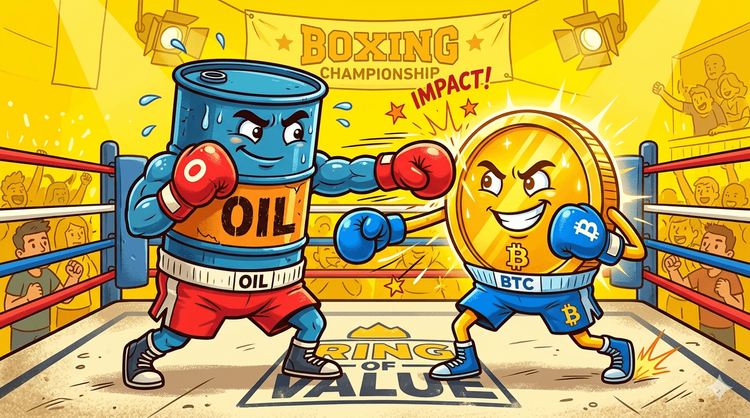
How the US-Iran War Could Affect Oil and Bitcoin Prices (Latest Analysis)
The outbreak of the US-Iran war on February 28, 2026, has provided an unprecedented real-time laboratory for understanding how geopolitical oil shocks interact with an increasingly institutionalized cryptocurrency market. This article examines the relationship between crude oil prices and Bitcoin throughout the conflict, analyzing price movements, correlation patterns, and the underlying transmission mechanisms.

OpenAI Wants to Write Its Own Rules|Rewire News Brief

Chaos Labs Exits, Who Will Pick Up Aave's Risk?
Stealthy Financial War? Iran Collects Strait Transit Fees in Stablecoin

OpenAlice: One Person, That's a Jane Street | Project Overview

The Small-Town Youth Labeling Big AI Models

Morning Report | Strategy increased its holdings by 4,871 BTC last week; Toss plans to develop its own blockchain and issue a native cryptocurrency; OpenAI's CFO privately questioned the timing of the IPO in 2026

Research: Stablecoins have a trading volume of 35 trillion a year, how much of it is real payment?

Galaxy Research: AI agents are giving rise to new species on the blockchain, how zero-human companies activate the financial flywheel

Data Research: How big is the liquidity gap between Hyperliquid and CME crude oil?

WEEX P2P now supports GHS, ETB & ZAR—Merchant Recruitment Now Open
To make crypto deposits easier, WEEX has officially launched its P2P trading platform and continues to expand fiat support. We're excited to announce that the Ghana Cedi (GHS), Ethiopian Birr (ETB) and South African Rand (ZAR) are now available on WEEX P2P!
Why Are GPU Prices Skyrocketing Out of Control?

How to Master Claude Cowork Completely?

70-Page Confidential Letter Alleges First Charge of 'Lying,' Altman Tells Board 'I Can't Change My Personality'

Is Altcoin Season Starting in 2026? What Traders Should Watch Now
Altcoin season signals are becoming clearer in 2026 as capital rotation across crypto markets accelerates. Here’s what traders should watch and how strategy-based participation is evolving in the current market cycle.
Bitcoin ETF Inflows in 2026: Impact on BTC Price and Crypto Market Trends
Bitcoin ETF inflows are reshaping BTC price trends and crypto market liquidity in 2026. See how institutional capital is influencing volatility, trading behavior, and portfolio allocation strategies across crypto markets.
Visa's Stablecoin Strategy: Cards, Settlement, and the Future

Stock Market Split
How the US-Iran War Could Affect Oil and Bitcoin Prices (Latest Analysis)
The outbreak of the US-Iran war on February 28, 2026, has provided an unprecedented real-time laboratory for understanding how geopolitical oil shocks interact with an increasingly institutionalized cryptocurrency market. This article examines the relationship between crude oil prices and Bitcoin throughout the conflict, analyzing price movements, correlation patterns, and the underlying transmission mechanisms.


 App
App