
 Buy Crypto
- Markets
 Futures
- Spot
- Copy Trade
- Earn
- More
White House Cryptocurrency Summit Behind the Scenes: 5 Closed-Door Proposals You Didn't Know About

Original Article Title: 5 Ideas Pitched at the White House Crypto Summit Behind Closed Doors
Original Article Author: Veronica Irwin, White House Author
Original Article Translation: zhouzhou, BlockBeats
Editor's Note: This article summarizes the key points of the White House cryptocurrency summit on March 7th, proposing multiple policy suggestions. Former CFTC Chairman Chris Giancarlo suggested reviving the concept of "privateers" from 200 years ago, allowing the government to authorize hackers to counter foreign cyberattacks, Michael Saylor advocated for the U.S. to acquire 5%-25% of the Bitcoin supply, becoming a "super whale," Paradigm's Matt Huang spoke out for the Tornado Cash developers, and Tenev pushed for the tokenization of financial assets.
The following is the original content (slightly edited for clarity):
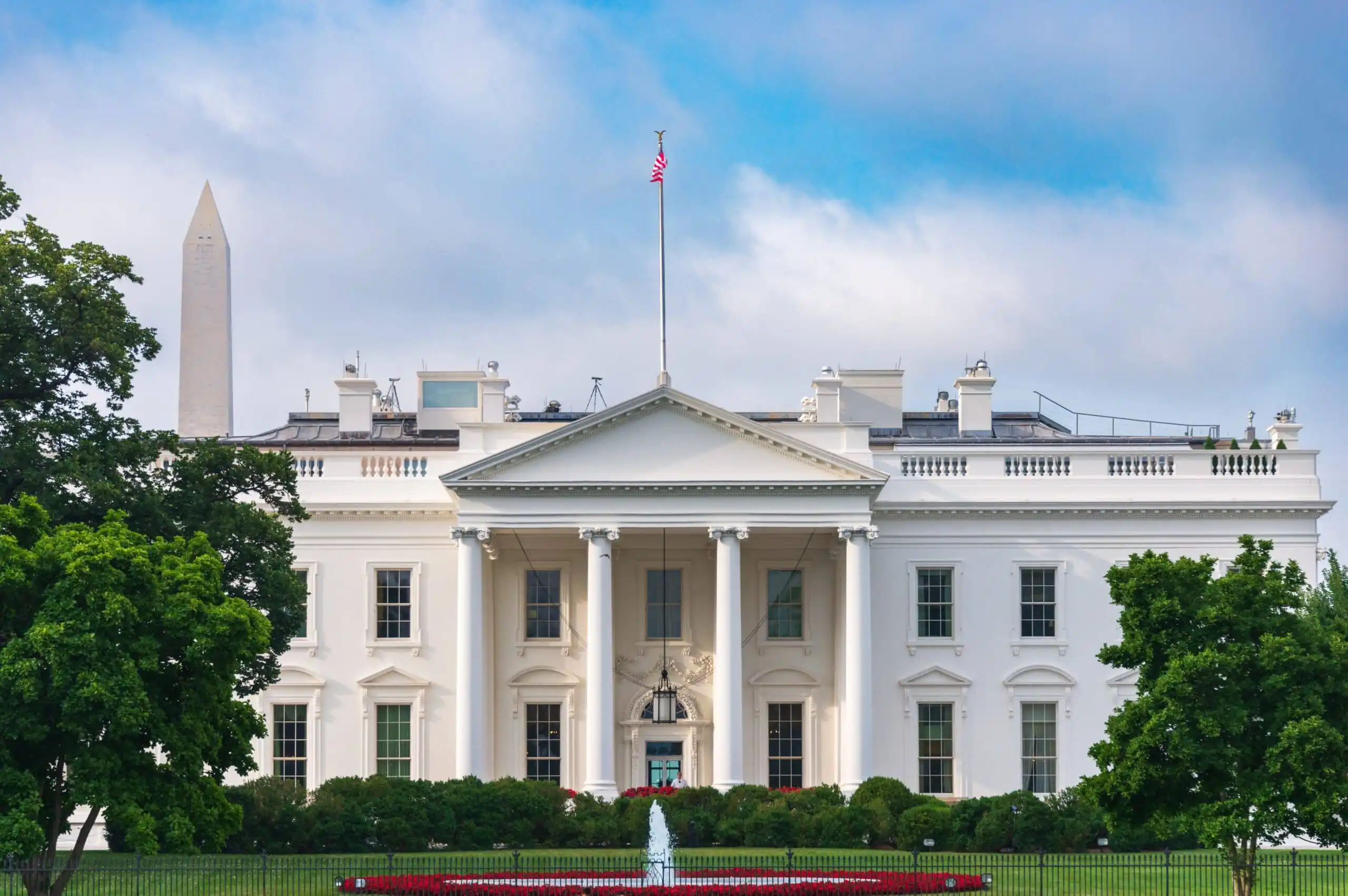
Prior to the start of the inaugural White House Crypto Summit on March 7th, attendees had the opportunity to present real-world cryptocurrency policy suggestions to the White House cryptocurrency team and top regulatory agencies.
President Trump himself did not participate in this discussion, only attending the broadcast portion of the summit for the first 30 minutes.
However, White House Digital Asset Advisory Council Executive Director Bo Heins, Treasury Secretary Scott Besent, SEC Commissioner Hester Pierce, CFTC Acting Chair Caroline Fan, SBA Administrator Kelly Loeffler, and House Majority Whip Tom Emmer all participated in this part of the event, according to one attendee.
Specifically, Sachs inquired about what new policy issues the White House should focus on. While the specific requests of the attendees are confidential, Unchained has learned that five proposals have been submitted for consideration.
Former CFTC Chairman Chris Giancarlo: Privateer White Hat Hackers
Former CFTC Chairman Chris Giancarlo was the only representative to attend the summit during Trump's first term, where he proposed that the U.S. government revive the "Letters of Marque and Reprisal" act, effectively allowing private companies to conduct hacker attacks on behalf of the U.S. against foreign adversaries, as Giancarlo explained in Unchained. These companies, referred to as "privateers" in the act, would be licensed by the U.S. government to take action to seize the property of foreign adversaries, such as the more than $6 billion funds stolen by the North Korean state-sponsored hacking group Lazarus.
The last time Congress granted such a charter was over 200 years ago when these charters were issued to merchant ships to encourage the looting of foreign rivals' vessels (such as the Royal Navy ships of England). At that time, private armed ships were required to report the property they seized to the U.S. government, even though piracy was a serious issue.
According to participants, Secretary Bassant requested to send Giancarlo and CoinFund Managing Partner and President Chris Perkins to publish an op-ed on this topic in Cointelegraph.
Michael Saylor, Strategic Corporate Founders: Large Bitcoin Purchases
Michael Saylor proposed during the summit that the U.S. should buy more Bitcoin—and a lot of it. As initially reported by CoinDesk, Saylor told attendees that he would like the U.S. to acquire between 5% and 25% of the total Bitcoin supply over the next 20 years, approximately 1,050,000 to 5,250,000 Bitcoins. Currently, this much Bitcoin is valued between $83 billion and $417 billion.
Saylor's proposal appears to be more ambitious than the recent reintroduction of the "Bitcoin Bill" by Senator Lummis, which suggests the U.S. acquire 1 million Bitcoins, roughly 5% of the total supply, over the same timeframe as Saylor's proposal. In the previous Congress, Lummis worked to move the "Bitcoin Bill" through committee consideration, but faced challenges due to congressional party divisions and insufficient support within the Republican Party. The government's proposal to acquire Bitcoin has also faced criticism, with some arguing that it contradicts the libertarian ideals behind Bitcoin's creation, and holding such a large portion of the supply by a single entity would lead to further centralization.
Legal experts suggest that if the U.S. government were to use federal funds to purchase Bitcoin (rather than adopting a budget-neutral strategy, as pledged by the President in his executive order to establish a reserve fund), it may require congressional approval since, under the Constitution, Congress holds the power of the purse—although some Bitcoin advocacy organizations have drafted potential executive orders seemingly pinpointing possible loopholes permitting executive departments to take such actions.
According to CoinDesk's report and photos of Saylor's notes posted on social media, he also proposed categorizing cryptocurrencies into four types: tokens backed by specific issuers and used for capital creation, tokens backed by securities and commodities, currency, and tokens used for capital preservation. He stated that adopting this classification would help address the legal uncertainty around how to regulate different types of digital assets.
Matt Huang, Paradigm Co-Founder and Managing Partner: Advocating for Justice for Roman Storm
Matt Huang did not directly ask the government to consider new policies, but called for attention to be focused on issues that the government has already deprioritized: the case of Roman Storm, the U.S.-based developer of the cryptocurrency mixer Tornado Cash, a person briefed after the meeting said.
The U.S. Department of Justice has charged naturalized U.S. citizen Roman Storm with money laundering, unlicensed money transmission, and sanctions violations for creating the tool, which effectively obfuscates cryptocurrency transactions to provide users with privacy. Huang stated that the DOJ should reconsider lawsuits initiated during the Biden administration.
In the six months leading up to Tornado Cash's sanction by OFAC in August 2022, it processed over $2.8 billion in transactions, with Storm being indicted a year later. Tornado Cash operates on the Ethereum blockchain autonomously, without the need for developer approval of users or transactions to function. However, the DOJ stated that the developers failed to effectively intervene to prevent sanctioned entities, including the North Korean hacker group Lazarus, from utilizing the tool.
DeFi advocates warned that holding Tornado Cash developers accountable for the malicious use of the software could deter developers from creating privacy-preserving tools and, worse, could potentially stifle the development of decentralized DeFi protocols altogether.
While the U.S. Securities and Exchange Commission has dropped dozens of civil cases against cryptocurrency companies, the DOJ's position on this criminal case remains unchanged, and the penalties in this case are harsher.
Paradigm donated $1.25 million to Storm's legal defense in January, preparing for the trial set to start in April. "The prosecution's case threatens to hold software developers criminally liable for the misdeeds of third parties, which could have a chilling effect on the crypto industry and other areas," Huang said on X at the time.
David Bailey, CEO of BTC Inc and Bitcoin Magazine: Urgent Bitcoin Purchase
At the summit, Bailey used his time to urge the White House to acquire more Bitcoin through various means. First, Bailey asked the White House's crypto team to push for the passage of the Bitcoin Bill, legislation proposed by Lummis aimed at having the U.S. acquire 1 million bitcoins over the next 20 years. Bailey stated that this is crucial because it would enshrine strategic Bitcoin reserves into federal law, making it less likely for the next presidential administration to overturn this law, even if the new government has a different view on the value of Bitcoin.
Bell also told attendees that he believes the government needs to urgently accumulate Bitcoin in order to compete with other countries that have already purchased Bitcoin, such as El Salvador and Bhutan, as well as other places he anticipates will follow suit after Trump's expected executive order this month to acquire Bitcoin. For example, politicians in Germany, Brazil, and Poland are considering establishing Bitcoin reserves. He even suggested the possibility of the U.S. government establishing a public-private partnership with Bitcoin miners, providing access to hydroelectric power in exchange for Bitcoin miners contributing to a strategic Bitcoin reserve.
Third, Bell proposed that the U.S. utilize a strategic Bitcoin reserve to issue Bitcoin-backed national debt in the future. His reasoning is that debt partially backed by appreciating assets like Bitcoin may reduce the interest the U.S. government needs to pay.
Vlad Tenev, Robinhood Markets CEO: Tokenization
Tenev focused his summit discussion on not just cryptocurrencies, but also on tokenizing traditional financial instruments using blockchain technology, such as equity in private companies.
Tenev stated that the tokenization of these crypto asset securities will give U.S. companies a competitive edge on the global stage. He said, "It benefits companies because it increases potential shareholders, it benefits the world because people can more easily access high-quality companies, and it benefits entrepreneurs because they can more easily raise capital."
Furthermore, he mentioned that those who currently do not meet the wealth requirements to become accredited investors should be able to purchase these tokenized equities, fundamentally changing the investment landscape in the U.S. and allowing ordinary people to invest in companies that are not yet publicly listed.
Currently, in the U.S., only individuals with a net worth exceeding $1 million or annual income exceeding $200,000 (or $300,000 combined with a spouse or partner) can be deemed accredited investors.
In an op-ed earlier this year, Tenev argued that these wealth-based requirements unfairly prevent ordinary people from maximizing their investments and called on the U.S. Securities and Exchange Commission to allow individuals to self-certify by demonstrating a deep understanding of investment risks. It is worth noting that Robinhood's app-based investment platform aims to make investing easier for low- and middle-income individuals, and expanding the types of assets available to this user base would undoubtedly be beneficial.
Outlook
Government representatives at the summit did not commit to implementing any of the proposals put forward to the attendees. However, according to White House sources, "The purpose of the summit was to solicit input and feedback from the cryptocurrency industry." "The summit was successful and received praise from government and industry leaders."
You may also like

The 17-Year Mystery Will Be Solved, Who is Satoshi Nakamoto?

5 Minutes to Make AI Your Second Brain

Uniswap is trapped in an innovation dilemma

What is the key to competition in crypto banking?

The flow of stablecoins and the spillover effects in the foreign exchange market

After two years, Hong Kong's first batch of stablecoin licenses finally issued: HSBC, Standard Chartered make the cut
The person who helped TAO rise by 90% has now single-handedly crashed the price again today

3-Minute Guide to Participating in the SpaceX IPO on Bitget

Top 5 Cryptos to Buy in 2026 Q1: A ChatGPT Deep Dive Analysis
Explore the top 5 cryptos to buy in Q1 2026 including BTC, ETH, SOL, TAO, and ONDO. See price outlooks, key narratives, and institutional catalysts shaping the next market move.

How to Earn $15,000 with Idle USDT Before Altcoin Season 2026
Wondering if altcoin season is coming in 2026? Get the latest market update, and learn how to turn your idle stablecoins waiting for entry into extra rewards up to 15,000 USDT.
Can You Win Joker Returns Without Large Trading Volume? 5 Mistakes New Players Make In WEEX Joker Returns Season 2
Can small traders win WEEX Joker Returns 2026 without huge volume? Yes—if you avoid these 5 costly mistakes. Learn how to maximize card draws, use Jokers wisely, and turn small deposits into 15,000 USDT rewards.

Altcoin Season 2026: 4 Stages to Profit (Before the Crowd FOMO In)
Altcoin Season 2026 is starting — discover the 4 key stages of capital rotation (from ETH to PEPE) and how to position before the peak. Learn which tokens will lead each phase and avoid missing the rally.

Will Alt season come in 2026? 5 Tips to Spot the Next 100x Crypto Opportunities
Will altcoin season arrive in 2026? Discover 5 rotation stages, early signals smart traders watch, and the key crypto sectors where the next 100x altcoin opportunities may emerge.

The bear market has arrived, and cryptocurrency ETF issuers are also getting involved

The richest man had a quarrel with his former boss

BTC Firm Above 70K! Saylor’s "Institutional Logic" vs. Moon’s "Retail Faith": Who is Really Harvesting the Market?
Bitcoin is holding firm above the $70,000 support level following a massive short squeeze that liquidated $427 million. As the "Four-Year Cycle" narrative shifts, the market is split: Michael Saylor’s cold, institutional "indiscriminate stacking" vs. Carl Moon’s high-energy retail "hopium." This article decodes these two polar-opposite strategies for the 2026 bull run and reveals how WEEX’s institutional-grade liquidity and AI trading tools empower every type of investor to convert market volatility into profit.

The Girl Who Created the SBTI Test: A Story of a Doomed Cyber Love, an E-Widow Ratfolk



 App
App