
 Buy Crypto
- Markets
 Futures
- Spot
- Copy Trade
- Earn
- More
ZKC Price Surge Shakes Crypto Market

Key Takeaways
- ZKC (Boundless) experienced a significant 20.72% increase over the past 24 hours, reaching $0.14.
- The transition to a fully decentralized proof service network has marked a new era for Boundless.
- A revamped proof competition market aims to improve economic efficiency in zero-knowledge proof services.
- ZKC has drawn increased market attention, especially after overcoming a significant drop post-TGE.
WEEX Crypto News, 29 December 2025
The world of cryptocurrency has witnessed a dynamic shift recently, as ZKC (Boundless) displayed a remarkable surge of 20.72% in its price within a 24-hour period. This surge has caught the eyes of investors and traders alike, with the price reaching $0.14. This drastic increase was recorded alongside a notable peak of $0.15 and a low of $0.10. The trading volume over this interval was $43.1 million, an impressive figure by any account. Moreover, the market capitalization of ZKC stands at approximately $31 million, marking an increase of $5.32 million from the previous day.
Boundless Network Embraces Full Decentralization
In a strategic move, Boundless has ushered in a new era by transitioning to a fully decentralized network. This transformation was signaled by Risc Zero’s decision to shut down its hosted proof service. Such a shift means that proof requests, which were formerly handled by centralized third-party services, are now processed by independent nodes within the Boundless network. This evolution aligns the network’s proof mechanism with the inherent resilience and neutrality of blockchain technology, significantly enhancing the system’s autonomy and reliability. For investors, this change strengthens confidence in the long-term potential of Boundless, assuring them of the project’s commitment to a decentralized identity.
Optimizing the Open Proof Market Mechanism
Central to Boundless’s current stride forward is the optimization of their proof market competition mechanism. Employing methods like Proof of Verifiable Work (PoVW), Boundless is fostering a highly competitive environment for provers. In this model, independent nodes receive rewards based on the actual computational work completed. This incentive structure encourages provers to boost efficiency and reduce operational costs. As a consequence, every connected blockchain can benefit from more efficient and user-friendly zero-knowledge proof services. The introduction of market-driven incentives not only maximizes the economic efficiency of the Network but also broadens the appeal of Boundless to a broad range of blockchain applications.
Technical Recovery After Significant Price Correction
Recent events underscore a rapid resurgence in ZKC’s value, particularly significant given the prior context of an 80% price decline post-Token Generation Event (TGE). The determined bounce back, highlighted by an approximate 30% increase over 24 hours, signifies revived market interest. The current circulating market capitalization is around $27 million, yet the daily trading volume has surpassed $90 million, indicating a pronounced boost in short-term trading activity. This resurgence can be attributed to a perfect storm of factors including Boundless’s continued efforts to address privacy computing demands and the “ZK infrastructure” trend within the cryptosphere.
Institutional Support and Strategic Collaborations
The Boundless project has capitalized on backing from notable investors such as Blockchain Capital, Bain Capital Crypto, and Delphi Ventures. This support has been instrumental to its ongoing technological advancements and market strategies. Furthermore, Boundless maintains strategic alliances with key players like Ethereum Foundation, Wormhole, and EigenLayer. These partnerships enhance Boundless’s capabilities to provide scalable and verifiable computing power across various blockchains, effectively positioning it within the burgeoning “privacy computing” space. The current valuation of Boundless, perceived as undervalued by many, continues to attract contributions from investors looking to capitalize on the rebound.
FAQ
How much has ZKC increased recently?
In the past 24 hours, ZKC has seen its price increase by 20.72%, bringing it up to $0.14.
What changes have been made to the Boundless Network?
Boundless has transitioned to a fully decentralized network, marking a departure from formerly using hosted proof services.
What is PoVW and how does it affect Boundless?
Proof of Verifiable Work (PoVW) is an incentive mechanism used to reward nodes based on their computational contributions, thereby fostering competition that enhances efficiency across the network.
Why is there an increased interest in ZKC now?
The heightened interest is partly due to Boundless’s strategic adjustments and growing integration in privacy computing trends, along with a marked recovery after previous price declines.
Which organizations are supporting Boundless?
Boundless has garnered support from institutions like Blockchain Capital, Bain Capital Crypto, and Delphi Ventures, alongside collaborative efforts with the Ethereum Foundation and others.
For those interested in expanding their crypto portfolio, consider exploring options such as [WEEX](https://www.weex.com/register?vipCode=vrmi) for a seamless trading experience.
You may also like
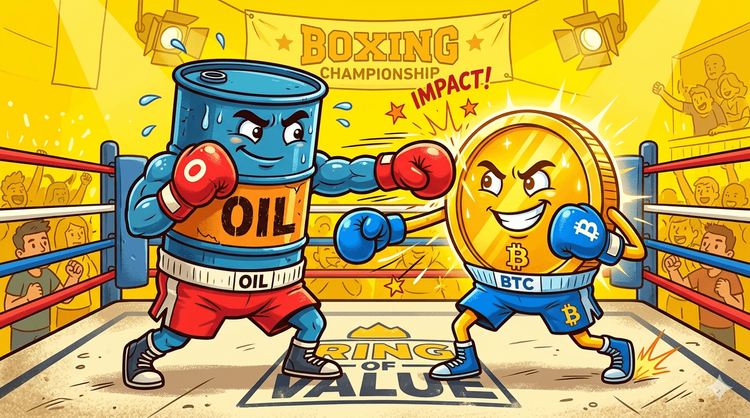
How the US-Iran War Could Affect Oil and Bitcoin Prices (Latest Analysis)
The outbreak of the US-Iran war on February 28, 2026, has provided an unprecedented real-time laboratory for understanding how geopolitical oil shocks interact with an increasingly institutionalized cryptocurrency market. This article examines the relationship between crude oil prices and Bitcoin throughout the conflict, analyzing price movements, correlation patterns, and the underlying transmission mechanisms.

OpenAI Wants to Write Its Own Rules|Rewire News Brief

Chaos Labs Exits, Who Will Pick Up Aave's Risk?
Stealthy Financial War? Iran Collects Strait Transit Fees in Stablecoin

OpenAlice: One Person, That's a Jane Street | Project Overview

The Small-Town Youth Labeling Big AI Models

Morning Report | Strategy increased its holdings by 4,871 BTC last week; Toss plans to develop its own blockchain and issue a native cryptocurrency; OpenAI's CFO privately questioned the timing of the IPO in 2026

Research: Stablecoins have a trading volume of 35 trillion a year, how much of it is real payment?

Galaxy Research: AI agents are giving rise to new species on the blockchain, how zero-human companies activate the financial flywheel

Data Research: How big is the liquidity gap between Hyperliquid and CME crude oil?
Why Are GPU Prices Skyrocketing Out of Control?

How to Master Claude Cowork Completely?

70-Page Confidential Letter Alleges First Charge of 'Lying,' Altman Tells Board 'I Can't Change My Personality'
Is Altcoin Season Starting in 2026? What Traders Should Watch Now
Altcoin season signals are becoming clearer in 2026 as capital rotation across crypto markets accelerates. Here’s what traders should watch and how strategy-based participation is evolving in the current market cycle.
Bitcoin ETF Inflows in 2026: Impact on BTC Price and Crypto Market Trends
Bitcoin ETF inflows are reshaping BTC price trends and crypto market liquidity in 2026. See how institutional capital is influencing volatility, trading behavior, and portfolio allocation strategies across crypto markets.
Visa's Stablecoin Strategy: Cards, Settlement, and the Future

Stock Market Split

How to capture the next Alpha in the narrative of predictive markets?
How the US-Iran War Could Affect Oil and Bitcoin Prices (Latest Analysis)
The outbreak of the US-Iran war on February 28, 2026, has provided an unprecedented real-time laboratory for understanding how geopolitical oil shocks interact with an increasingly institutionalized cryptocurrency market. This article examines the relationship between crude oil prices and Bitcoin throughout the conflict, analyzing price movements, correlation patterns, and the underlying transmission mechanisms.


 App
App